Understanding Garage Door Sensor Function
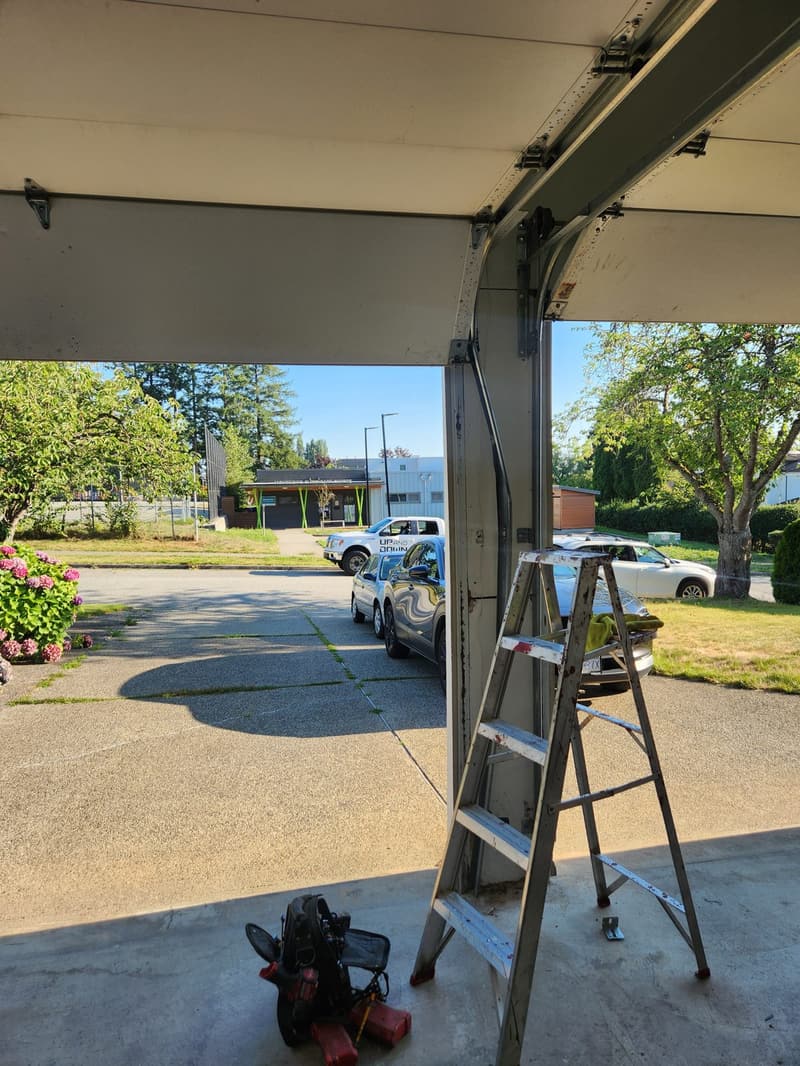
Garage door sensors, also called photo-eyes or safety reversing sensors, are low-voltage devices mounted near the floor on both sides of the door opening. They emit an infrared beam across the threshold. If the beam is interrupted while the door is closing, the opener reverses to prevent entrapment. This safety feature has been required on all residential garage door openers manufactured after 1993 under UL 325 standards. In Surrey homes, these sensors are commonly found on single-car and double-car garage doors attached to townhouses in Fleetwood, detached homes in Cloverdale, and newer builds in South Surrey. The sensors themselves are simple: a sending unit and a receiving unit, each with a small lens and indicator light. When properly aligned, both lights glow steadily. Any disruption to the beam or power supply triggers the safety reverse.
Common Failure Modes in Surrey Conditions
Several failure modes are specific to the local environment and typical installation practices in Surrey. Misalignment is the most frequent issue. Frost heave in winter can shift concrete slabs, especially in older neighbourhoods like Guildford or Whalley where foundations may not be reinforced. Even a few millimetres of movement can knock the sensors out of alignment. Vibration from heavy traffic on nearby roads such as King George Boulevard or 152nd Street can loosen mounting brackets over time. Moisture ingress is another concern. Surrey’s high rainfall, particularly in the fall and winter, can seep into conduit or cable joints if seals are degraded. Corroded wires increase resistance, reducing signal strength. Insects or spiders sometimes nest inside the sensor housing, blocking the lens. Finally, direct sunlight can interfere with the infrared beam, causing false obstructions during certain times of day—common on south-facing garages in areas like Panorama Ridge.
Diagnostic Process for Sensor Issues
When a garage door refuses to close and instead reverses immediately, the sensors are the first point of diagnosis. A technician begins by checking the indicator lights. If one or both lights are off, the problem is likely power-related: a tripped breaker, disconnected wire, or failed transformer. If both lights are on but flickering or dim, alignment or obstruction is suspected. The technician visually inspects the lens for dirt, condensation, or debris. They then use a laser alignment tool or sight down the length of the sensor to verify the beams are parallel and level. If alignment appears correct, they test continuity and resistance in the wiring run from the sensor to the opener unit, looking for breaks or shorts caused by nail punctures during drywall installation or rodent damage in garage ceilings. Voltage at the sensor terminals is measured to confirm proper supply—typically 5V DC. If voltage is present but the receiver does not activate, the sensor itself may be faulty and require replacement.
Repair and Replacement Procedures
Repair starts with safety: disconnecting power to the opener. The sensor brackets are loosened, and the units are carefully realigned using the indicator lights as feedback—both should glow steadily without flickering. The mounting surface is inspected; if the concrete or wood jamb is cracked or rotting, it is repaired or reinforced before reattaching the brackets. Wiring is examined for brittleness or corrosion; damaged sections are spliced with weatherproof connectors or replaced entirely with direct-burial rated cable if exposed to moisture. Lens surfaces are cleaned with isopropyl alcohol and a microfiber cloth to avoid scratching. If alignment cannot be achieved due to bent brackets or stripped threads, the mounting hardware is replaced. In cases where the sensor module is defective—confirmed by swapping with a known-good unit—the entire sending or receiving pair is replaced. It is critical to replace both units as a matched set, as mixing old and new components can cause compatibility issues with the opener’s logic board.
Preventive Measures and Maintenance
Homeowners in Surrey can reduce sensor issues with simple maintenance. Keep the sensor lenses clean—wipe them monthly with a dry cloth, more often if driving on gravel roads common in rural Surrey areas like East Clayton. Check the mounting brackets seasonally for tightness, especially after winter freeze-thaw cycles. Ensure nothing is stored near the sensors that could bump them—bicycles, lawn tools, or storage bins in garages along 168th Street or 88th Avenue are frequent culprits. Trim vegetation that grows close to the garage door threshold; overgrown ivy or shrubs can interfere with the beam. Consider installing a small drip shield or overhang above the sensors if the garage lacks adequate eaves protection, particularly in exposed locations near the Fraser River floodplain. If the door still reverses despite clear alignment and clean lenses, suspect wiring or opener failure and schedule a professional inspection.
Frequently Asked Questions
How do I know if my garage door sensors are bad or just misaligned?
If both indicator lights are off, check the power source and wiring. If both lights are on but the door still reverses, misalignment or obstruction is likely. Clean the lenses and sight along the sensor edges to verify they are pointing directly at each other. Flickering lights often indicate a loose wire or failing sensor.
Can sunlight really interfere with garage door sensors?
Yes, direct sunlight can overwhelm the infrared receiver, especially during low-angle sun in morning or evening. This is common on south-facing garages in Surrey neighbourhoods like Sullivan Heights or Morgan Creek. The door may appear to reverse for no reason at certain times of day. Shielding the sensors or replacing them with sun-resistant models can help.
Is it safe to bypass the sensors if they keep malfunctioning?
No. Bypassing safety sensors violates UL 325 and creates a serious entrapment hazard, particularly for children or pets. The door will not reverse if something is in the path. Repair or replace the sensors properly—do not disable this critical safety feature.