If your garage door is stuck, making noise, or won’t open, the problem is usually a worn spring, a broken cable, or a mis‑aligned opener. Below you’ll find the details that matter to Burnaby homeowners and what to expect from a professional service call.
Why are my garage door springs failing on Burnaby homes?
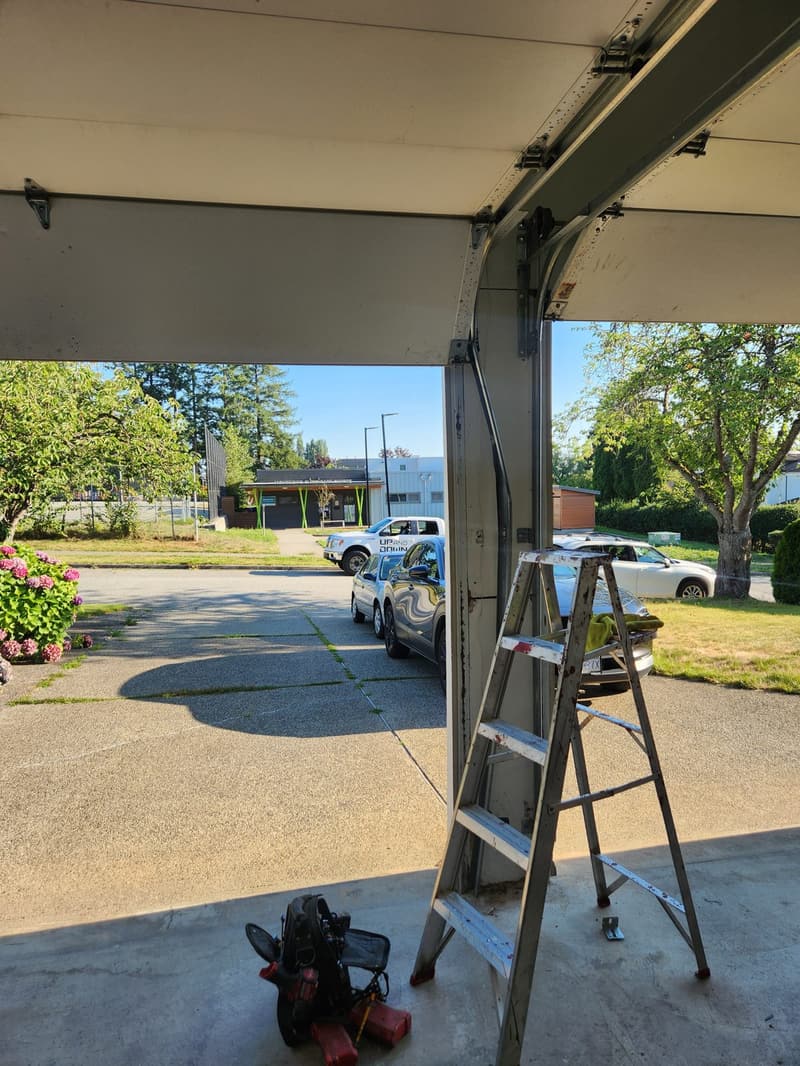
Most single‑family houses in Burnaby Heights, Capitol Hill, and Sperling‑Duthie were built between the 1950s and 1970s. Those homes typically have torsion‑spring systems that were designed for lighter modern cars and for a flat‑yard environment. Over the decades the springs have cycled well beyond their rated life, and the steep driveways on the hillier lots add extra load each time the door lifts. When a spring reaches the end of its service life it loses tension, makes a thumping sound, and eventually snaps, leaving the door immobile.
The same spring fatigue shows up in Brentwood’s newer townhouse rows. Those infill homes often reuse the original spring set from the 1960s‑80s era, but the tighter clearances and heavier doors of modern townhomes push the springs harder, causing premature wear. Recognizing a “soft‑close” feel on the opener’s first few inches can signal a spring that is already losing its bite.
How does Burnaby’s climate affect garage door components?
Rain, occasional snow, and frequent temperature swings accelerate corrosion on steel cables and springs. Moisture seeps into the track’s lubrication, turning it gummy, while cold makes nylon rollers brittle. In the spring, condensation can cause the opener’s motor windings to rust, leading to sluggish operation. Regular cleaning of the track, a fresh coat of silicone‑based lubricant, and checking for rust on the cable drums keep the system from seizing during a rainstorm.
Winter freeze‑thaw cycles also expand and contract the metal tracks. When a track section warps even a millimetre, the rollers can bind and the door will start to “hunt” for the correct path. A quick visual check after a heavy snowfall—looking for ice buildup in the track gutter—can catch the problem before the door jams.
What signs show my garage door opener needs replacement?
A healthy opener should open the door in 10‑15 seconds with a smooth start. If you hear a grinding motor, the door takes longer than 20 seconds, or the remote button no longer triggers movement, the gearbox or the drive‑belt is likely worn. Intermittent loss of power often points to a failing capacitor inside the motor housing. When these symptoms appear, replace the opener rather than keep repairing a dying unit.
Openers installed before 2010 often lack rolling‑code technology, meaning the same remote code can be intercepted. If you notice strangers’ remotes working on your door, that’s a safety red flag that warrants a full replacement, not just a motor swap.
When should I replace my garage door cables?
Cables are the only part of a residential door that works under constant tension. Look for frayed strands, a visible kink, or a cable that has stretched more than an inch beyond its original length. Even if the door still moves, a compromised cable can snap under load, causing the door to slam shut. Because cables are inexpensive but critical, replace them at the first sign of wear.
In Burnaby’s coastal rain, the cable sheath can develop rust pits that act as stress concentrators. Running a thin wire through a rusted sheath is a recipe for sudden failure, especially on the steep slopes of Capitol Hill where the cable bears extra weight.
Are my garage door sensors misaligned because of Burnaby’s trees?
Photo‑eyes are usually mounted 6‑12 inches above the floor on each side of the door. Overgrown maple or spruce branches can block the infrared beam, causing the door to reverse or refuse to close. Trim any foliage that hangs within the sensor’s line of sight, and verify the lenses are clean. If the door still won’t close, the sensor brackets may have shifted and need realignment.
Frost can also cause the sensor housing to contract, moving the lens just enough to mis‑register an object. A quick wipe with a soft cloth after a cold night often restores proper alignment without further adjustment.
How do sloped driveways on Capitol Hill impact garage door operation?
A driveway that drops 2‑3 feet from the house to the street adds a few extra pounds of gravitational force each time the door lifts. That extra load stresses the torsion springs and can cause the door to stop short of the fully open position. It also means the door may hit the uneven concrete slab, producing a “thump‑thump” noise at the end of travel. Reinforcing the spring set or adjusting the opener’s force settings compensates for the slope.
On the steepest sections of Burnaby Mountain, the door’s bottom edge can strike a raised slab edge, which not only damages the seal but also forces the opener to work harder. Installing a low‑profile threshold or a small ramp under the door eliminates the impact point.
What maintenance can prevent problems on older Burnaby Heights garages?
Start with a quarterly visual inspection. Tighten any loose bolts on the header bracket, lubricate all rollers and hinges with a silicone spray, and wipe the track clean of debris. Check the spring’s coils for cracks and the cable’s sheath for abrasions. Run the opener in “manual” mode and watch the door travel; any wobble or uneven speed signals a need for professional adjustment before a failure occurs.
Add a seasonal check in early fall: run the opener through ten full cycles while listening for any new squeaks. The extra wear from summer humidity often shows up as a faint grinding noise that can be addressed before the first winter storm.
Can I safely adjust my garage door springs myself?
Never attempt to unwind or tension a torsion spring without a professional. The spring stores up to 1,500 lb of force; a slip releases that energy instantly and can cause severe injury. Small adjustments such as tightening the set‑screws on the winding cones are best left to a technician who has the proper winding bars and safety restraints.
Even a seemingly minor change in the set‑screw position alters the door’s balance by a measurable amount. A door that is over‑balanced will slam shut, while an under‑balanced door will lift slowly and overheat the motor.
What to expect during a residential garage door service call in Burnaby?
The technician arrives, checks the door’s balance, inspects springs, cables, rollers, tracks, and the opener. They then run a diagnostic cycle while listening for abnormal sounds. If a part is out of spec, they explain the replacement options, show the worn component, and give a written estimate. After the repair, they test the door several times, verify sensor alignment, and walk you through basic maintenance steps.
During the visit the technician also verifies that the electrical wiring to the opener meets local code and that the grounding strap is intact. This extra safety check prevents hidden fire hazards that can develop in older homes with corroded conduit.
How do I choose the right garage door for a Burnaby townhouse?
Townhouses often have limited clearance between the door and the side wall. Measure the opening width and height precisely; most modern doors come in 7‑ft‑wide, 7‑ft‑tall standard sizes, but custom panels are available for tighter spaces. Insulated doors help counter the damp climate, while a low‑profile track works better on narrow driveways. Pick a material—steel, aluminum, or wood composite—that matches the home’s aesthetic and can handle the local moisture.
For townhouse rows built in the 2000s, a “double‑insulated” steel door with a 0.8 R‑value core reduces condensation on the interior side, which otherwise can drip onto flooring and cause mold.
Getting to Burnaby from Our Shop
We cross the Knight Street Bridge and follow SE Marine Drive for jobs in Edmonds and south Burnaby. For calls up toward Brentwood, Capitol Hill, or Burnaby Heights we take Highway 91 to Highway 1, then exit onto local arterial roads that lead directly into each neighbourhood. The route changes the further north you travel, but the bridge‑and‑highway combo lets us reach every corner of the city without detours.
Traffic on Marine Drive can slow us during the morning commute, so we often leave the shop early to stay ahead of the rush. On rainy days the bridge’s drainage system can cause temporary slick spots, but the trucks are equipped with winter‑grade tires for safe travel.
Frequently asked questions about garage doors in Burnaby
What repairs are most common for garage doors in Burnaby? Spring fatigue, cable fraying, and opener motor wear dominate because many homes have hardware from the 1960s‑80s that are now in their second renovation cycle.
Do I need a permit to replace a garage door in Burnaby Heights? A permit is required only if the new door changes the opening size or alters the façade. Replacing a door with the same dimensions generally does not need council approval.
How often should I lubricate my garage door rollers? Lubricate the rollers and hinges at least twice a year—once before the rainy season and once after the winter thaw—to keep moisture from turning the grease into a gummy mess.
Can a garage door sensor be repaired instead of replaced? Most misalignment issues are fixed by loosening the mounting brackets, repositioning the lenses, and tightening the set‑screws. Only a cracked housing or internal LED failure calls for a full replacement.
What’s the best way to protect my garage door from Burnaby’s rain? Install a weather seal along the bottom edge, keep the track clear of leaves, and apply a rust‑inhibiting spray to the steel components annually. The seal stops water from pooling and the spray slows corrosion on the springs and cables.
Why does my garage door reverse a few inches off the floor? A sensor that detects an object within its beam will cause a reverse. In Burnaby, the common culprits are overgrown shrubs, a loose floorboard, or a warped slab on a hillside lot. Clear the obstruction or adjust the sensor height to stop the premature reversal.
Should I replace my garage door opener if it’s over 10 years old? Openers older than ten years often lack modern safety features such as auto‑reverse and rolling‑code remotes. Upgrading improves reliability and brings the system up to current safety standards, even if the motor still works.
INTERNAL_LINKS:
- Garage door spring replacement guide -> /spring-replacement/
- How to maintain garage door tracks -> /track-maintenance/
- Choosing a garage door opener -> /opener-selection/
- Seasonal garage door care checklist -> /seasonal-maintenance/
FACTS_USED:
- Burnaby Heights, Capitol Hill, and Sperling‑Duthie contain 1950s‑70s detached homes -> LOCAL BUILDING STOCK
- Deer Lake, Edmonds, Southslope, Capitol Hill: single‑family, mostly 1960s‑1980s builds, entering second renovation cycle -> Burnaby facts
- Burnaby Mountain and Capitol Hill are steep – sloped driveways put extra load on springs and cables -> WHAT MAKES THIS CITY DIFFERENT
- Route description over Knight Street Bridge and Highway 91 -> ROUTE FROM OUR SHOP
—
Services in This Area
Related Pages
- broken spring repair in Burnaby
- emergency garage door repair in Burnaby
- cable repair in Burnaby
- opener repair in Burnaby
Also worth a look: new opener installs in Burnaby.