What Breaks on North Shore Garage Doors
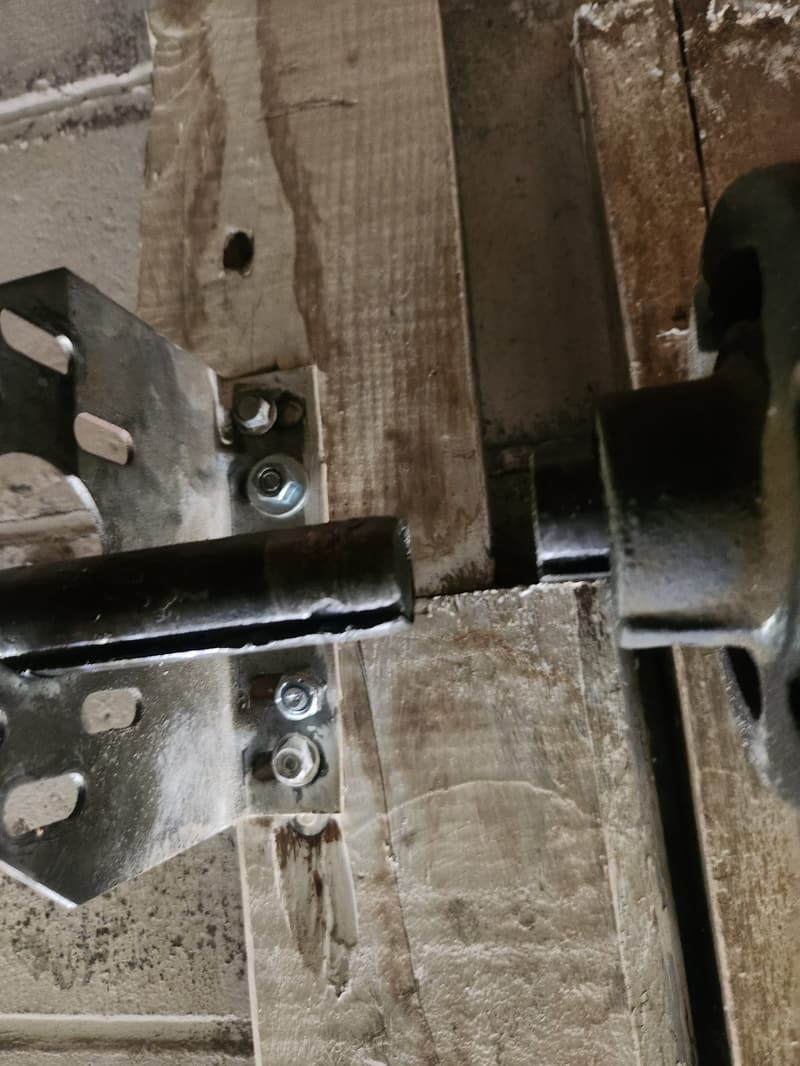
The North Shore takes more rain than anywhere else in Metro Vancouver. That water finds every unpainted surface — spring wire, cable drums, roller stems, hinge points — and turns it into rust. Add steep, treed lots and you get needles, moss and grit packed into tracks within weeks. The door still opens, but it groans, binds, and wears parts twice as fast as a door in Burnaby or Surrey.
Most homes here were built between the 1960s and 1980s. Original torsion springs are past their 10,000-cycle ratings. Nylon rollers have gone brittle. Cables have frayed where they wrap the drums. Openers from that era lack photo-eyes or have sensors that fog and fail in constant damp. The failure mode is rarely sudden — it is a slow grind that ends with a door that will not move at 6 a.m. on a work day.
Getting to North Vancouver from Our Shop
We run two routes depending on where the job sits. For Capilano, Edgemont and the Lonsdale corridors we take Oak Street to Granville and cross the Lions Gate Bridge. The bridge deck ices earlier than the approaches in winter, and the Stanley Park causeway backs up when a single vehicle stalls — so we leave earlier on frosty mornings.
For Lynn Valley, Seymour and Deep Cove we take Knight Street to Highway 1 and cross the Ironworkers Memorial Bridge. That span handles wind and volume better, but the Highway 1 merge at Main Street can add twenty minutes at 4 p.m. The difference is not distance — it is which bridge absorbs the weather and traffic that day.
Springs — Why They Snap Here First
A torsion spring rated for 10,000 cycles lasts about seven years on a door used four times daily. On the North Shore, rust cuts that life by 20 to 30 percent. The wire loses cross-section at the coil gaps where moisture sits, and the stress concentration does the rest. You hear a bang like a gunshot — that is the spring breaking — and the door becomes a 200-pound wall you cannot lift.
We replace with 25,000-cycle springs as standard. The wire is thicker, the coating holds up longer, and the cost difference is small compared to a second service call in three years. On heavier double doors in Edgemont and Capilano we often go to 50,000-cycle units. The labour is the same; the wire is not.
Extension springs on older single-car doors in Lower Lonsdale and Sapperton-adjacent blocks fail differently — they stretch until the safety cable catches, or they snap and whip. Either way the door jams crooked in the tracks. We convert to torsion where headroom allows. It is a cleaner, safer system and the parts are easier to source.
Cables, Drums and the Rain Factor
Lift cables fray at the drum groove. On the North Shore they also corrode inside the sheath where water wicks in. A frayed cable feeds unevenly, the door tilts, and the rollers pop the track. We see this most on hillside homes in Lynn Valley and Seymour where the door cycles more often — residents use the garage as the main entry.
Drums crack at the keyway on older cast units. Aluminum drums hold up better but the set-screws still back out on vibration. We replace cables and drums as a pair. Re-using a worn drum on a new cable guarantees a callback.
Openers — Damp Kills the Board
Chain-drive openers from the 1990s and 2000s are still common in Upper Lonsdale and Lynn Valley. The circuit boards fail when condensation cycles through the housing night after night. Symptoms: the remote works intermittently, the wall button works but the remotes do not, or the door reverses two inches off the floor because the logic board misreads the force sensor.
Belt-drive units are quieter and the boards are better sealed, but nothing is immune to North Shore humidity. We stock Chamberlain and LiftMaster boards for same-day swaps. If the opener is over fifteen years old, replacement is usually smarter — newer units have battery backup, smartphone control, and safety beams that meet current code.
Rollers, Hinges and Track Wear
Nylon rollers go brittle after ten years in this climate. They chip, flat-spot, and eventually shatter. Steel rollers last longer but rust on the stem, then seize. We install 13-ball-bearing nylon rollers with sealed races — they cost more and they stay quiet for the life of the door.
Hinges crack at the stamped holes on older 14-gauge hardware. Heavy doors in Capilano and Edgemont need 11-gauge hinges. We upgrade on every spring job because the labour is already paid for.
Tracks fill with fir needles, moss and grit. The door binds, the opener strains, and the top roller jumps the curve. A proper clean-out takes twenty minutes and prevents a track replacement. We do it on every service call.
Weather Seals — The First Line Against Rot
Bottom seals flatten and crack in two winters here. Side and top seals pull away from the jamb as the house settles on steep lots. Water runs down the door face, under the seal, and into the garage — then into the wall cavity. We see rotten bottom plates on garage walls in Deep Cove and Seymour every spring.
We use EPDM bulb seals that stay flexible below -20°C and vinyl-clad stops that shed water. The seal profile must match the door thickness and the floor slope. A flat seal on a sloped floor leaves a gap at one end. We cut and fit on site.
What You Can Check Safely
Pull the emergency release and lift the door manually. It should move smoothly and stay put at waist height. If it crashes down or flies up, the spring is wrong or broken. Do not try to adjust a torsion spring — the cone holds enough torque to take fingers off.
Check the photo-eyes. Wipe the lenses. Make sure the LEDs are solid, not blinking. Misaligned eyes are the number one reason a door reverses or will not close.
Listen. A healthy door is quiet. Grinding, popping, or a motor that labours means something is binding — usually rollers or track debris.
Lubricate the hinge points, roller stems and spring coils with a silicone spray. Not WD-40. Not grease. Silicone does not attract grit.
What a Service Call Involves
We arrive, verify the symptom, and test the system through a full cycle. We measure spring wire size, inside diameter and length — then calculate the correct replacement. We inspect cables, drums, rollers, hinges, tracks, opener, sensors and seals. We quote the repair before we start. Most spring-and-cable jobs take ninety minutes. Opener swaps take sixty. Track realignment or panel replacement takes longer.
We do not upsell. If the door is twenty-five years old, uninsulated, and the sections are delaminating, we will say so. A new door costs more now but less than repeated repairs on a failing shell. The decision is yours.
Neighbourhoods — What Differs Where
Lynn Valley — 1960s–70s split-levels on steep lots. Detached garages, heavy double doors, high cycle counts. Springs and cables wear fast. Tracks fill with debris from mature trees.
Lower Lonsdale — Older, smaller homes, many pre-1960. Single-car doors, low headroom, extension springs common. Conversion to torsion is frequent. Laneway access is tight.
Upper Lonsdale — Mid-century bungalows and two-storeys, larger lots. Mix of original and updated hardware. Openers often original to the 1990s renovation wave.
Edgemont — Larger properties, heavier doors, high-lift tracks on some custom builds. 50,000-cycle springs standard. Weather sealing critical on exposed elevations.
Capilano — Similar to Edgemont but more west-facing exposure. Wind-driven rain hits the door face directly. Bottom seals and side stops fail first.
Deep Cove — Marine air, constant damp, steep driveways. Rust on every unpainted surface. Cables corrode inside the sheath. Seals rot in two seasons.
Seymour — 1970s–80s development, standard suburban stock but heavy tree cover. Needles in tracks, moss on sensors, springs at end of life.
Maintenance That Actually Prevents Calls
Twice a year — spring and fall — wipe the photo-eyes, clean the tracks with a stiff brush, lubricate hinge points and roller stems with silicone, and check the bottom seal for gaps. Cycle the door manually with the opener disconnected. Feel for binding. Listen for noise.
Once a year, have a technician check spring tension, cable condition, drum wear, opener force limits, and safety-reverse function. The cost is roughly one hour of labour. It catches the frayed cable before it jams the door at 6 a.m.
Frequently Asked Questions
Who repairs garage doors in North Vancouver? Up & Down Garage Doors runs two routes onto the North Shore — Lions Gate for Lonsdale, Capilano and Edgemont; Ironworkers for Lynn Valley, Seymour and Deep Cove. We carry springs, cables, rollers, opener boards and seals on every truck.
What causes garage door springs to break in North Vancouver? Rain-driven rust reduces wire cross-section at the coil gaps. A 10,000-cycle spring that should last seven years often fails at five. We install 25,000-cycle springs as standard.
Why does my garage door reverse before hitting the floor in North Vancouver? Usually misaligned or fogged photo-eyes. Wipe the lenses and check the LEDs. If they are solid and the door still reverses, the opener force limit needs adjustment or the track is binding.
Can I replace a garage door spring myself in North Vancouver? No. A torsion spring under load stores enough energy to remove fingers or shatter an eye socket. The winding cones require specific bars and technique. This is not a DIY job.
How much does garage door repair cost in North Vancouver? Spring and cable replacement on a standard double door runs one to two hours of labour plus parts. Opener board swaps are roughly one hour. Full opener replacement adds the unit cost. We quote before we start.
Do you service Deep Cove and Seymour? Yes. We cross the Ironworkers Memorial Bridge via Highway 1. The route adds distance but avoids Lions Gate traffic. We carry the same inventory for those calls.
What garage door maintenance should I do in North Vancouver’s climate? Clean tracks monthly during needle drop. Lubricate with silicone every three months. Check seals after each winter. Book a professional inspection annually — rust moves fast here.
INTERNAL_LINKS:
- Garage door spring replacement
- Garage door opener repair
- Garage door cable repair
- Garage door maintenance
FACTS_USED:
- North Shore takes far more rain than the rest of the region -> “What makes this city different”
- Lots are steep and treed – constant damp, moss, needles and grit in the tracks, and rust on anything unpainted -> “What makes this city different”
- 1960s-70s hillside homes through Lynn Valley, Upper Lonsdale and Seymour -> “Local building stock”
- Older and smaller near Lower Lonsdale -> “Local building stock”
- Larger Edgemont and Capilano properties -> “Local building stock”
- Route: Up Oak Street and Granville and over the Lions Gate Bridge for Capilano, Edgemont and Lonsdale -> “Route from our shop”
- Route: Knight Street to Highway 1 and across the Ironworkers Memorial Bridge for Lynn Valley, Seymour or Deep Cove -> “Route from our shop”
- Neighbourhoods: Lynn Valley, Lower Lonsdale, Upper Lonsdale, Edgemont, Deep Cove, Capilano, Seymour -> “Real neighbourhoods”