Off Track Garage Door Repair Burnaby — Understanding Off-Track Garage Door Failures
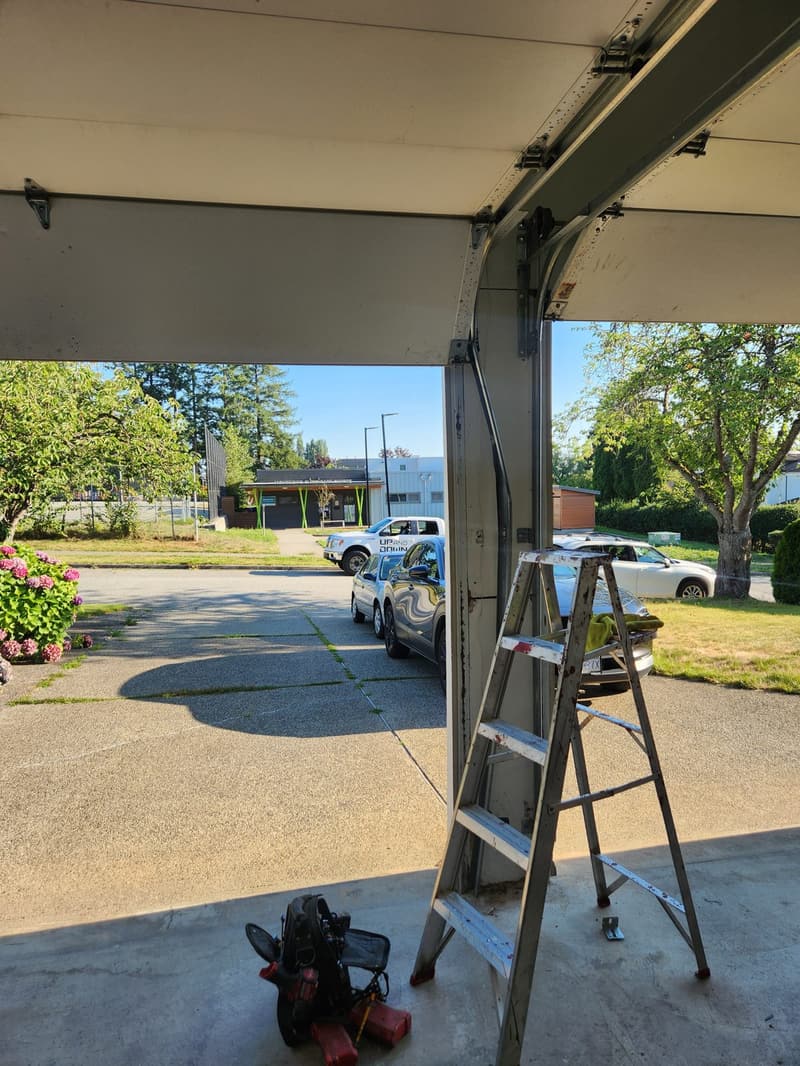
An off-track garage door occurs when one or more rollers disengage from the vertical track, usually due to impact, wear, or misalignment. In Burnaby’s older neighbourhoods like Capitol Hill or Edmonds, where many homes feature 1970s and 1980s-era sectional doors, this failure is common. The door may hang crooked, bind during operation, or refuse to move entirely. Attempting to force it can bend panels, snap cables, or damage the opener trolley. The root cause is rarely a single roller failure—it’s often a combination of track deformation, worn roller stems, or loose mounting brackets that allow lateral movement under load.
Common Causes in Burnaby Residential Doors
Burnaby’s mix of single-family homes and townhouses means varied door installations. In areas near Lougheed Highway or along Canada Way, older steel doors with thin gauge tracks are prone to twisting when struck by a vehicle or bicycle. Nylon rollers, while quieter, degrade faster under UV exposure and temperature swings, causing the stem to crack and detach from the wheel. Steel rollers last longer but can seize if bearings rust, especially in damp conditions near the Brunette River floodplain. Loose lag screws securing the track to the jamb—often overlooked during DIY maintenance—allow the track to shift inward or outward under door weight, creating a gap for rollers to escape.
Track Inspection and Realignment Process
Repair begins with a full track assessment. Technicians check vertical and horizontal track alignment using a level and straightedge, looking for bends, twists, or separation from the wall. In Burnaby homes with wood jambs—common in Cedar Cottage or Government Road areas—screw holes may strip, requiring reinforcement with longer screws or steel plates. If the track is bent, it’s carefully straightened using track-specific tools; hammering risks further damage. The horizontal track radius is verified to ensure smooth transition from vertical to ceiling track. Misalignment here causes the door to jam at the top of the travel path, a frequent issue in high-lift installations found in garages with overhead storage.
Roller and Hardware Replacement
Once the track is secure, rollers are inspected. Worn nylon shows flat-spotting or chunking; steel rollers are checked for rough rotation or seized bearings. Both stem and wheel are replaced as a unit—stem integrity is critical to prevent re-escape. In Burnaby’s climate, galvanized stems resist corrosion better than plain steel. Bottom brackets are examined for cracks or elongation; these bear the full door weight and cable tension. If the cable has frayed or come off the drum due to the off-track event, it’s replaced alongside the rollers to prevent sudden failure. All fasteners are torqued to manufacturer specs to avoid over-compression of the jamb.
Testing and Safety Verification
After reassembly, the door is cycled manually to check for smooth, quiet operation without binding. The opener is reconnected and tested for proper force settings—too much force masks underlying track issues, while too little prevents full closure. Photo-eye sensors are verified for alignment and function, especially important in Burnaby homes with frequent pedestrian traffic near the door. The emergency release cord is checked for accessibility. A final visual inspection ensures no gaps exist between roller and track, and that the door sits evenly in the opening when closed. This step prevents recurrence and confirms the repair addresses root causes, not just symptoms.
Preventive Maintenance for Burnaby Homeowners
To avoid future off-track events, homeowners should inspect tracks quarterly for dirt buildup, loose screws, or roller wear. Lubricate rollers, hinges, and springs with silicone-based spray—avoid WD-40, which attracts grime. In Burnaby’s wet winters, clear snow and ice from the door’s path to prevent uneven loading. If the door has been struck, even if it still operates, have it assessed—hidden track damage can worsen over time. Homes near industrial zones like along Boundary Road may experience more vibration; consider upgrading to heavier-duty tracks or reinforced brackets if recurring issues occur.
Frequently Asked Questions
Can I fix an off-track garage door myself?
Attempting to realign a door without proper tools risks worsening the bend in the track or causing the door to fall. The springs remain under high tension even when off-track, and sudden release can cause serious injury. Track straightening requires specific equipment to avoid kinking the metal, and roller replacement demands precise stem alignment. It’s safer and more effective to have a technician assess the full system, including cables and brackets, to prevent repeat failures.
How long does an off-track repair take?
Duration depends on the extent of track damage and component wear. A simple roller replacement with intact tracks may take under an hour. If the vertical track is bent or jamb screws are stripped, additional time is needed for straightening or reinforcement. Older Burnaby homes with wood framing may require plate installation to restore holding strength. Each job is assessed on-site to determine necessary parts and labor without compromising safety or longevity.
Will my garage door opener need replacement after an off-track incident?
Not necessarily. The opener is often unaffected unless the door jammed while it was running, which can strain the motor or strip the trolley. Technicians check the opener’s drive gear, belt or chain, and trolley for damage during assessment. If the door moves freely by hand after repair and the opener operates smoothly within normal force parameters, it can usually be retained. Replacement is only recommended if internal components show wear or failure linked to the incident.