Emergency Garage Door Repair Mission — Common Emergency Failures in Mission Homes
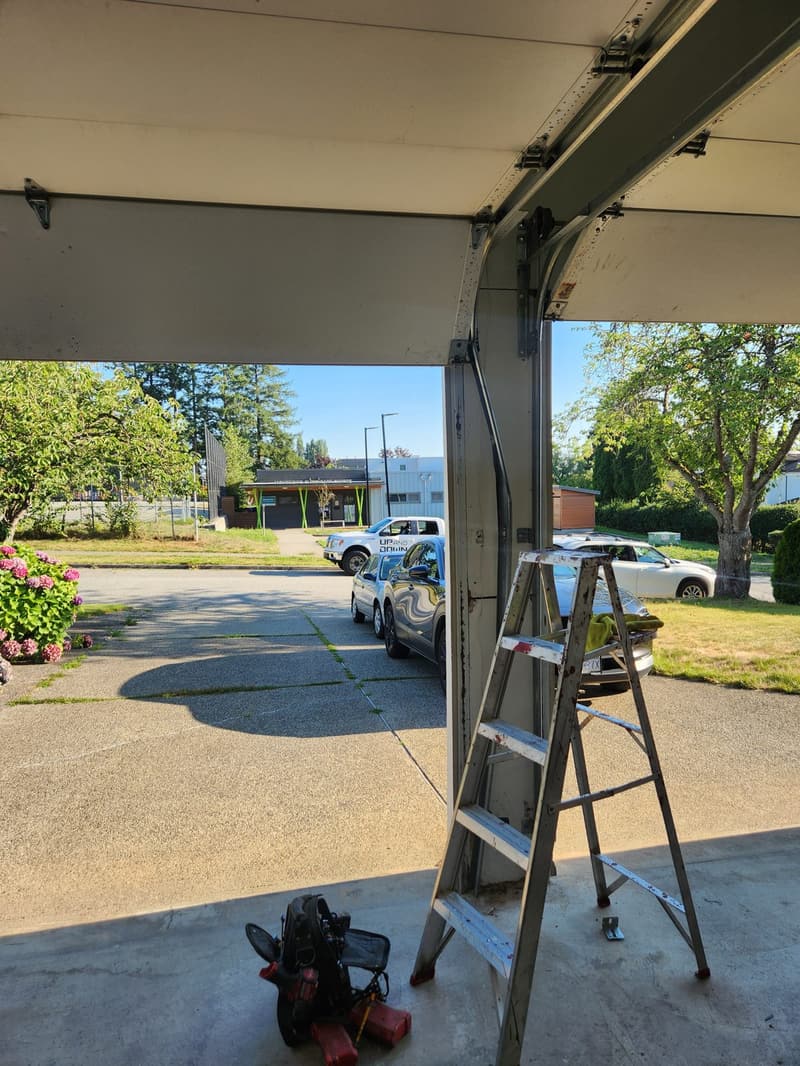
Garage doors in Mission, BC face unique stresses from the region’s climate and housing stock. Many homes in neighbourhoods like Cedar Valley, Hatzic Prairie, and the Silverdale area feature older wood-frame construction with single-car garages built in the 1980s and 1990s. These doors often use torsion spring systems rated for 10,000 cycles. After decades of daily use, especially in wet winters, springs lose tension and can fracture suddenly. A broken torsion spring releases stored energy violently, making the door impossible to lift manually and posing a serious safety risk. This is one of the most frequent emergency calls we receive.
Cable Failure and Door Imbalance
Steel lifting cables, typically 1/8-inch aircraft-grade, run from the bottom bracket to the cable drum. In Mission’s damp climate, corrosion weakens these cables over time, particularly where they bend around the drum or pass through pulleys. A frayed or snapped cable creates immediate imbalance—one side of the door drops while the other remains suspended. This jams the door in the tracks and can bend the horizontal or vertical rails. Operating the door in this state risks further damage to the opener, panels, or track system. We see this frequently in homes along Lougheed Highway and near the Mission Regional Sports Park where exposure to road salt and moisture accelerates wear.
Off-Track Doors from Impact or Track Damage
Garage doors in Mission often come off their tracks due to vehicle impact—common in narrow driveways on streets like Welton Avenue or Grand Street—or from accumulated debris in the tracks. Leaves, pine needles, and ice buildup in fall and winter can obstruct roller movement, causing the door to bind and jump the track. Once off-track, the door’s weight shifts entirely to the remaining rollers or the opener arm, which can shear bolts or bend the top fixture. Older steel tracks with worn seals allow water ingress, leading to rust that roughens the surface and increases friction. This is especially prevalent in rural properties east of the Stave River where gravel driveways contribute to track contamination.
Opener Electrical and Mechanical Failures
While not always structural, opener failures create emergency situations when the door is stuck open or closed. In Mission’s older housing stock, chain-drive openers from the 1990s are still common. Motor burnout, stripped gears, or failed limit switches prevent the door from moving. Power surges during winter storms—frequent in the Fraser Valley—can damage circuit boards. Additionally, rodent damage to wiring along ceiling joists in uninsulated garages is a known issue in rural areas. When the opener fails and the door is locked in position, manual release may not function if the torsion spring is already broken, necessitating immediate professional intervention.
Safety Sensor and Weather Seal Issues
Photo-eye sensors, required since the 1990s, can malfunction due to misalignment from foundation settling or physical knocks. In Mission’s clay-rich soil, seasonal swelling and shrinking shift garage floors slightly over time, tilting the sensor brackets. This causes the door to reverse unexpectedly or refuse to close. While not always an emergency, a door that won’t close compromises security and weather protection, especially during heavy rain events common in the Stave Valley. Similarly, degraded bottom seals allow water ingress, freezing to the concrete floor and bonding the door shut—a frequent winter emergency in areas like Silverdale and Hatzic.