A garage door that appears crooked or uneven during operation—where one side lags or lifts higher than the other—is typically a sign of mechanical imbalance, not just an opener malfunction. This symptom often shows as the door binding in the tracks, making grinding noises, or stopping mid-cycle when the opener strains to compensate. The root cause usually lies in the door’s moving components, not the motor itself, though a failing opener can exacerbate the issue by applying uneven force. Understanding what’s physically happening helps determine whether it’s a safe DIY check or requires professional service.
Checking Track Alignment and Roller Condition
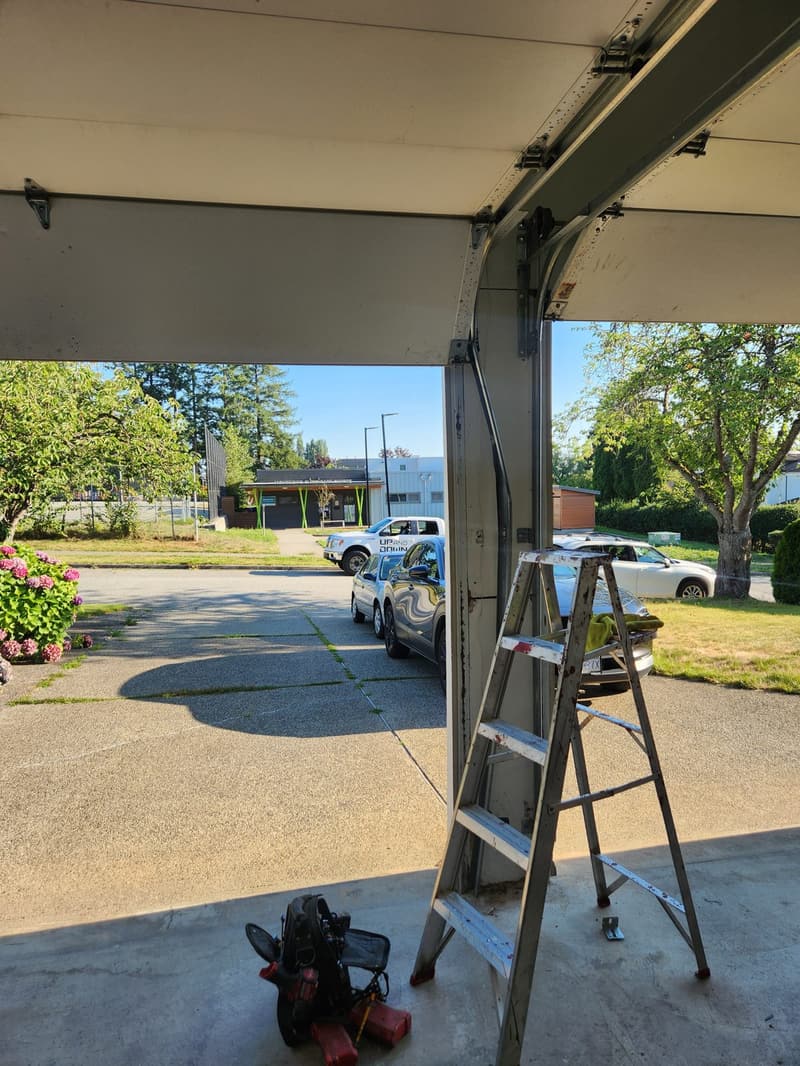
One of the most common reasons a garage door looks crooked when opening is misaligned vertical tracks. If the tracks are not perfectly parallel or have shifted due to loose mounting brackets, the rollers can bind on one side, causing that side to lag. Inspect the gaps between the door and the track on both sides—it should be uniform from top to bottom. Use a level on the vertical track to confirm it’s plumb; even a few degrees of tilt can cause binding. Rollers themselves wear over time; cracked nylon or seized steel rollers increase friction on one side, making the door tilt as it moves. Spin each roller by hand—if it doesn’t turn freely or feels gritty, it needs replacement. Never attempt to adjust or replace the bottom roller bracket on your own; it’s under extreme tension from the lift cables and can cause serious injury if released unexpectedly.
Inspecting Lift Cables and Drum Attachment
Lift cables run from the bottom corner brackets to the cable drums at the top of the springs. If a cable frays, slips off the drum, or breaks on one side, that side of the door loses lift support, causing it to hang crooked or jerk during operation. Visually inspect the cables for rust, broken strands, or looseness—especially near the bottom bracket where they bend. If the cable is slack on one side while taut on the other, or if you see it riding unevenly on the drum, the door is out of balance. Frayed cables are a failure precursor; they can snap without warning, sending the door crashing down. Do not attempt to adjust or replace lift cables yourself—they are under constant high tension when the door is closed and store dangerous energy even when the door is open.
Evaluating Torsion Spring Balance and Winding
Torsion springs counteract the door’s weight, and if they are unevenly wound, damaged, or broken on one side, the door will lift unevenly. A door with a failed spring on one side may feel extremely heavy when lifted manually and will appear crooked as the opener struggles to raise the unsupported side. You can test balance by disconnecting the opener and lifting the door halfway—if it doesn’t stay level or one side drops, the springs are out of balance. Visually inspect the springs for gaps in the coils (indicating a break) or uneven tension. Torsion springs store lethal amounts of energy; adjusting or replacing them requires specialized tools and training. Never attempt to wind, unwind, or repair torsion springs yourself—mistakes can cause sudden release, resulting in severe injury or death.
Assessing Opener Gear and Drive Function
While less common, a failing opener can contribute to the perception of a crooked door, particularly if the drive gear is stripped or the motor is weakening. If the opener strains, hums loudly, or fails to lift the door smoothly but the door moves evenly when disconnected and lifted by hand, the issue may be internal to the opener. Chain or belt drives can slip if loose or worn, causing jerky motion that mimics imbalance. Check the opener’s rail for sagging or misalignment, and ensure the trolley moves freely along it. Lubricate the chain or belt if dry, but avoid over-lubrication, which attracts dirt. If the opener struggles despite the door being balanced and tracks aligned, the motor capacitor or gear assembly may be failing—this requires professional diagnosis or replacement.
When to Call a Professional Technician
Any issue involving lift cables, torsion springs, or bottom roller brackets should be handled by a trained technician due to the risk of sudden energy release. If you observe frayed cables, broken springs, or the door binds severely in the tracks, discontinue use and secure the door if possible. A professional will check spring tension with calibrated tools, inspect cable drums for wear, verify track alignment to within millimeters, and test opener output under load. They can also identify less obvious issues like shaft binding or worn bearing plates that cause uneven load distribution. Regular maintenance—lubricating rollers, hinges, and springs, and tightening hardware—can prevent many of these problems, but adjustments to high-tension components are not DIY tasks.
Frequently Asked Questions
Can a garage door opener cause the door to look crooked?
An opener alone rarely causes a crooked door unless it’s applying uneven force due to internal damage or misalignment. However, if the door is balanced and moves smoothly by hand but strains or jerks when operated by the opener, the issue may lie in the drive mechanism, motor, or trolley alignment. A technician can test opener torque and rail integrity to confirm.
Is it safe to use the garage door if it’s opening crooked?
No—using a crooked garage door risks further damage to the panels, tracks, or opener, and increases the chance of sudden failure. A binding door can cause cables to slip or springs to fail under uneven load. Discontinue use and have it inspected before operating again.
How much does it cost to fix a crooked garage door problem?
Costs vary depending on the root cause—roller replacement is relatively inexpensive, while cable or spring repair involves more labor and parts due to the safety precautions required. An accurate quote requires an on-site inspection to assess which components are worn, damaged, or out of alignment.
Up & Down Garage Doors (778) 873-7282