Garage Door Opener Installation Abbotsford
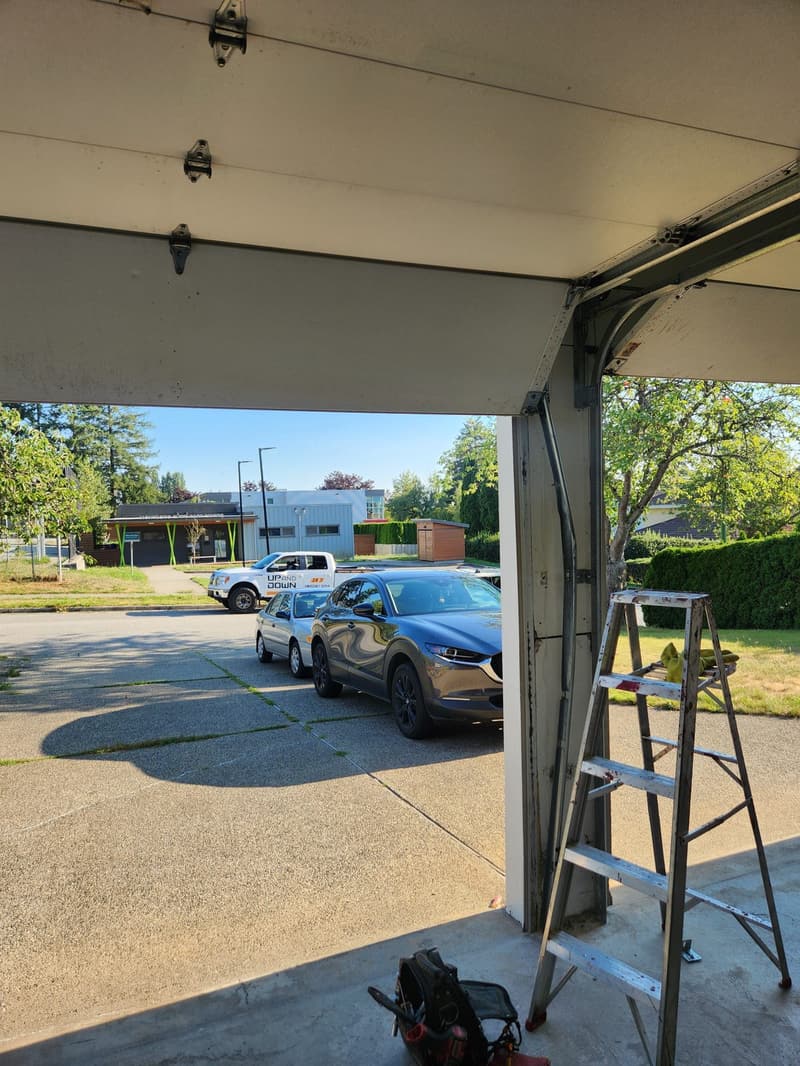
Abbotsford’s residential areas, from the older bungalows near Townline Road to newer builds in Eagle Mountain, feature a range of garage door types. Most common are sectional steel doors with torsion spring systems, though some heritage properties in Clayburn Village still use older extension spring setups. These differences matter when selecting an opener because the door’s weight, balance, and track alignment directly affect which motor size and drive type will function reliably. A door that binds or sags due to worn rollers or misaligned tracks will overload even a properly sized opener, leading to premature motor failure or safety reverse trips. Before installation, we assess the door’s operational integrity—checking spring tension, cable condition, and roller wear—to ensure the new opener isn’t compensating for existing mechanical faults.
Drive System Options for Fraser Valley Conditions
The three primary opener drive types—chain, belt, and screw—each suit different Abbotsford environments. Chain drives are durable and cost-effective, making them suitable for detached garages in rural areas like Sumas Prairie where noise is less of a concern. Belt drives use a reinforced rubber belt, offering quieter operation ideal for attached garages in neighbourhoods such as McMillan or Mill Lake where living spaces are above or adjacent to the garage. Screw drives, with fewer moving parts, perform well in Abbotsford’s variable climate but require periodic lubrication; they’re less common now due to sensitivity to temperature extremes affecting the threaded rod. We match the drive type to the door’s usage frequency and the homeowner’s sensitivity to noise, not just the door’s weight.
Motor Sizing and Electrical Considerations
Motor horsepower isn’t just about lifting capacity—it’s about duty cycle and longevity. For a standard single-car door (8×7 or 9×7 ft) common in Abbotsford infill developments, a 1/2 HP motor suffices for occasional use. Heavier insulated doors, double-car doors (16×7 ft), or doors used multiple times daily—typical in family homes near Eagle Mountain or Clayburn—require 3/4 HP or higher to avoid thermal overload. Electrical readiness is equally important. Many older Abbotsford homes, particularly in West Abbotsford or along South Fraser Way, have limited garage circuitry. We verify the presence of a dedicated 15-amp circuit and proper grounding before installation. If the existing wiring is undersized or shared with other outlets, we recommend an electrical upgrade to prevent voltage drop that can cause erratic opener behaviour or motor strain.
Installation Process: Beyond Mounting the Rail
Proper installation starts with securing the header bracket to a structurally sound point—often a laminated beam or doubled stud—rather than just the drywall or sheathing. In Abbotsford’s newer constructions, engineered wood headers are common and require specific fastening techniques to avoid pull-out. The rail must be level and aligned with the door’s centreline; even a 5-degree misalignment causes uneven wear on the trolley and increased motor load. We use a laser level and shim as needed, especially in older homes where settling has skewed the garage opening. The trolley arm connects to the door via a rigid bracket—never a flexible link—and must be positioned to allow full travel without binding. After mounting, we set the travel limits and force sensitivity according to the door’s actual weight and spring balance, not factory defaults.
Safety Systems and Code Compliance
Modern openers include mandatory entrapment protection: photoelectric sensors (mounted 6 inches off the floor) and force-sensing reverse mechanisms. In Abbotsford, where many garages serve as workshops or storage for lawn equipment, sensors must be positioned to avoid false triggers from dust, debris, or low-angle winter sun. We test the force reversal by placing a 2×4 on the floor—it should reverse on contact within two seconds. These aren’t just features; they’re requirements under the BC Safety Standards Act for residential garage door openers. We also ensure the emergency release cord is properly positioned and functional, allowing manual operation during power outages—a practical consideration during Abbotsford’s occasional winter storms.
Common Failure Modes We Prevent
Many opener failures stem from installation shortcuts. Using lag screws into weak header material instead of proper bolts leads to rail sag over time. Skipping the header bracket reinforcement causes the entire system to pull loose under load. Misaligned photoelectric sensors, often bumped during storage or affected by vibration from a nearby washing machine, cause intermittent reversing. Over-tightening the trolley chain or belt creates excessive bearing wear; under-tightening leads to slippage and jerky operation. We torque all fasteners to manufacturer specs and verify alignment under load. Additionally, we inspect the door’s existing components—especially torsion springs and cables—because installing a new opener on a door with failing springs risks sudden failure and potential injury.