Services
Locations
📞 (778) 873-7282
Home / Blog / How Heavy Rain Affects Garage Door Safety Sensors

How Heavy Rain Affects Garage Door Safety Sensors

Learn how heavy rain interferes with garage door safety sensors, what signs to look for, and when to call a professional for sensor or wiring issues.

Call (778) 873-7282
Licensed & insured
Open 24 hours
Based in Richmond
5-star rated

Heavy rain can disrupt the infrared beam between garage door safety sensors, causing the door to reverse or refuse to close even when nothing is blocking the path. This happens because water droplets on the sensor lenses scatter or absorb the infrared light, breaking the circuit the opener relies on to detect obstructions. The sensors, typically mounted 4-6 inches above the floor on either side of the door, require a clear, uninterrupted beam to function. When rain blows sideways or pools near the sensors, moisture buildup creates a false obstruction signal. You’ll notice the door starts to close, then immediately reverses, often with the opener lights flashing in a pattern indicating a sensor fault—commonly 10 flashes for Chamberlain/LiftMaster systems or a solid or blinking light on the sensor itself. The sensors may also emit a faint clicking sound as they struggle to maintain alignment.

How Rain Interferes with Infrared Sensors
Garage door safety sensors use an infrared beam sent from one unit to a receiver on the opposite side. The beam is invisible and operates at a specific wavelength. Raindrops act like tiny prisms, refracting or scattering this light. Even a light mist can reduce signal strength enough to trip the safety logic. In heavy rain, especially with wind driving moisture horizontally, water accumulates on the lens surfaces. This isn’t just about water blocking the beam—it’s about the optical properties of water disrupting the precise transmission needed. Condensation inside the sensor housing, if seals are degraded, can cause persistent failure even after the rain stops.
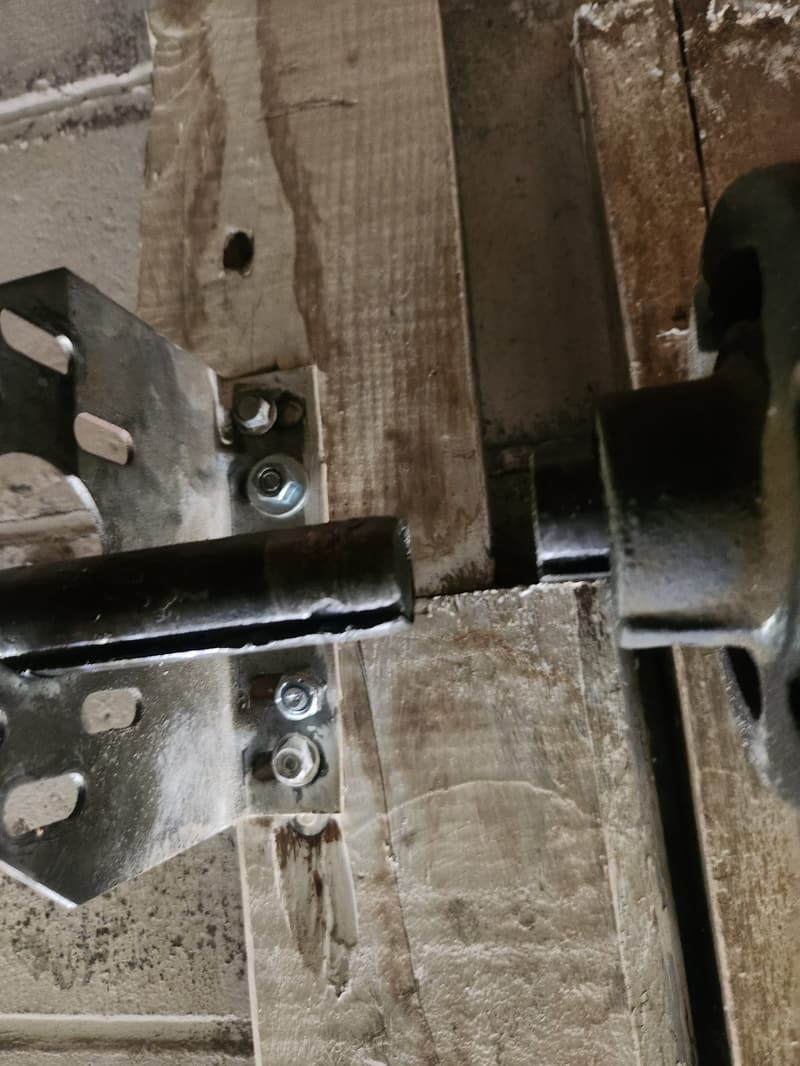
broken torsion spring showing the gap where it snapped
Broken torsion spring showing the gap where it snapped.

What the Failure Looks and Sounds Like
When sensors fail due to rain, the door will begin to close but stop and reverse before reaching the floor. The opener’s overhead lights will flash—typically 10 times for many models—or the sensor LEDs will blink or turn off. You might hear the motor strain briefly before reversing, or a rapid clicking from the sensor circuit as it cycles. Unlike a mechanical obstruction, there’s no physical object in the way, and the door reverses instantly upon attempting to close. If you wipe the lenses and the problem clears temporarily but returns in damp conditions, moisture is the likely culprit.

Checking for Moisture-Related Sensor Issues
Start by inspecting the sensor lenses. Use a dry, lint-free cloth to gently wipe both the sending and receiving units. Check for water spots, condensation, or dirt buildup. Look at the sensor housings—if they’re cracked or the seals are worn, moisture can enter. Follow the wires from each sensor back to the opener; check for exposed copper, cracked insulation, or signs of water tracking along the casing. If the sensors are mounted low and rain splash or pooling occurs nearby, consider the drainage grade—water should flow away from the garage interior. Test the door on a dry day; if it works normally then fails only during or after rain, the issue is environmentally triggered.

When Sensor Misalignment Compounds the Problem
Rain-induced lens fogging can make slight misalignment worse. Sensors must be perfectly aligned—within a few degrees—for the beam to connect. If vibration or impact has knocked one sensor out of plumb, the already weakened signal from moisture may drop below the threshold needed. Use a level to check the vertical alignment of each sensor bracket. They should be at the same height and facing each other squarely. Do not adjust the sensor mounting brackets if the wires are under tension or if you’re unsure of the opener’s torque settings—focus on lens clearance and housing integrity first.

What You Can Safely Do Yourself
Cleaning the lenses, checking for visible wire damage, and verifying the sensors are securely mounted are DIY tasks. If you find cracked housings, frayed wires, or water inside the sensor unit, those components need replacement. Replacing sensors is generally straightforward—match the model to your opener, disconnect power, swap the units, and realign. However, if the problem persists after new sensors and dry-weather testing, the issue may be in the opener’s sensor circuit board or wiring inside the wall—this requires professional diagnosis. Never attempt to modify the sensor circuit or bypass the safety feature; doing so removes a critical entrapment protection.

When to Call a Professional
If cleaning, realigning, and replacing the sensors don’t resolve the issue during wet weather, the problem may lie in the wiring harness, the opener’s logic board, or ground fault interference. A technician can test signal continuity, check for voltage drops, and isolate whether the fault is environmental or electrical. They’ll also verify that the sensor circuit isn’t being compromised by nearby electrical noise or improper grounding. Do not open the opener’s control panel or trace wires into the motor unit unless you’re trained—live voltage and stored energy in capacitors pose risks.

Frequently Asked Questions
### Can I temporarily disable the sensors to close the door in the rain?
No. Disabling or bypassing the safety sensors violates entrapment protection standards and creates a serious risk of injury or death, especially to children or pets. The sensors are a federally mandated safety feature—operating the door without them is unsafe and may void your home insurance.

Will a sensor cover or hood fix rain-related issues?
Only if it’s designed not to interfere with the beam. Aftermarket shields can help deflect rain but must not block the lens or alter the sensor’s field of view. A poorly designed cover can cause more harm than good by misaligning the unit or trapping moisture.

Should I worry about sensor failure if my garage is fully enclosed?
Even in enclosed garages, wind-driven rain can enter through gaps around the door or vents. If the sensors are mounted near the floor and water pools or splashes upward, moisture can still accumulate on lenses. Regular inspection and proper drainage grading help prevent this regardless of enclosure status.

Stuck door? Let's get it moving.

One call, a clear price, and the job done right — 24/7 across Metro Vancouver.

📞 Call (778) 873-7282