Insulated Garage Door Installation Surrey
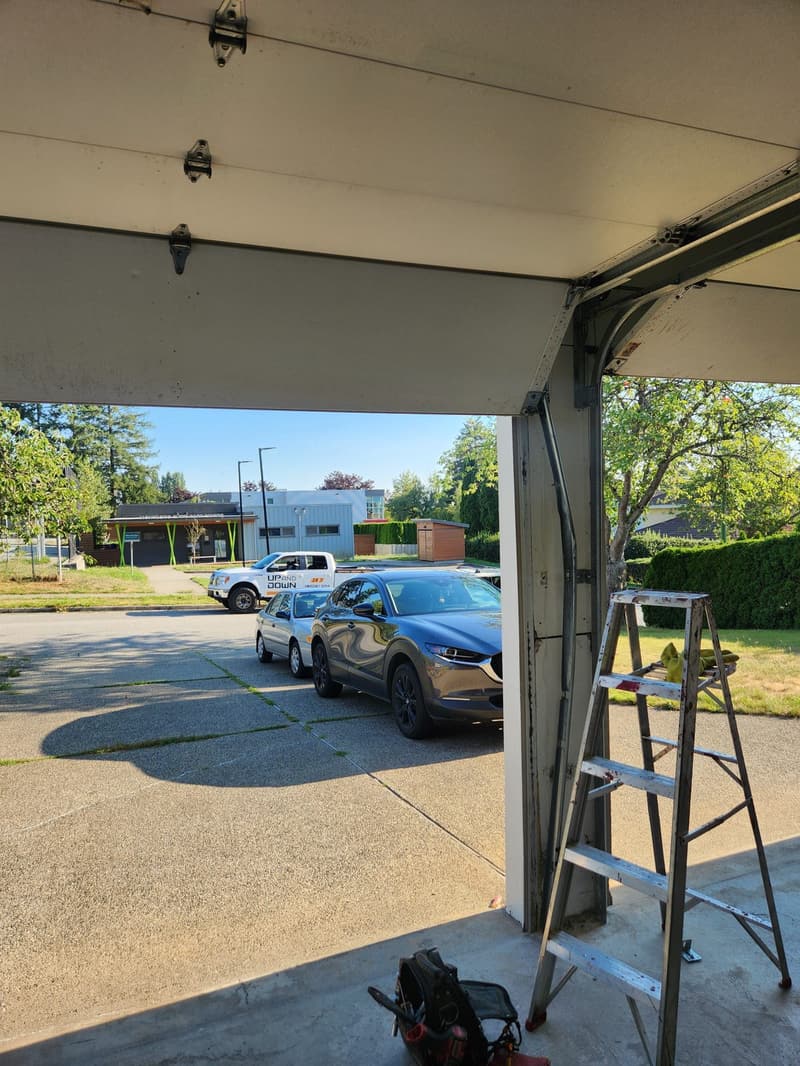
Surrey experiences significant temperature swings between winter lows and summer highs, particularly in neighbourhoods like Fleetwood, Guildford, and Newton where older homes dominate. Standard non-insulated doors transfer heat and cold directly into the garage space, forcing HVAC systems to work harder. Insulated doors with polyurethane or polystyrene cores create a thermal break that reduces conductive heat loss. This is especially important in attached garages where temperature fluctuations affect adjacent living spaces. The R-value of the insulation directly impacts performance, with higher numbers indicating better resistance to heat flow. In Surrey’s climate, upgrading from an uninsulated door to one with an R-12 or higher can noticeably stabilize garage temperatures year-round.
Door Types Compatible with Insulation Upgrades
Sectional doors are the most common residential choice in Surrey and readily accept insulated panels. These doors use hinged sections that roll along vertical tracks, allowing for thick insulation cores without compromising operation. Roll-up doors, often seen in laneway homes or secondary suites in areas like South Surrey or Cloverdale, can also be insulated but require thinner profiles to fit within the drum mechanism. Carriage-style doors, popular in heritage-inspired builds across neighbourhoods such as Sullivan or Whalley, may use faux-stamped steel over insulated backing to maintain aesthetics while improving thermal performance. The key is matching the insulation type to the door’s movement—sectional doors handle bulkier polyurethane foam well, while roll-up systems often use rigid polystyrene boards to maintain flexibility.
Failure Modes in Poorly Installed Insulated Doors
Improper installation is the leading cause of premature failure in insulated garage doors. If the tracks are not perfectly plumb and level, the door sections bind during operation, putting uneven stress on the hinges and rollers. This misalignment can compress or shift the insulation core over time, creating cold spots and reducing effective R-value. Another common issue is inadequate sealing at the perimeter—especially the bottom weather seal and side stops. In Surrey’s wet climate, gaps allow moisture ingress, which can degrade certain insulation types, particularly if water reaches the paper facing on fiberglass batts (though less common in modern doors). Over-tightening the spring system to compensate for drag from misaligned tracks accelerates wear on cables and pulleys, leading to sudden failure. The insulation itself rarely fails; it’s the mechanical stress from poor installation that causes operational issues.
Importance of Proper Hardware and Reinforcement
Insulated doors are significantly heavier than non-insulated equivalents, often adding 20-40 pounds per section depending on thickness and core material. This increased weight demands heavier-duty hardware: 14-gauge or thicker steel hinges, 10-ball nylon rollers rated for higher loads, and reinforced struts across the top section to prevent sagging. In Surrey’s newer developments like Campbell Heights or Panorama Ridge, where wider double-car garages are standard, the added width increases flex risk—making center stiles and reinforced struts critical. Using undersized hardware to save costs leads to premature roller failure, hinge pull-out from the jamb, or door sections detaching from the track. The torsion spring system must also be recalculated for the new door weight; reusing old springs on a heavier insulated door risks spring breakage or inadequate lift, causing the door to crash down or fail to open fully.
Weather Sealing and Long-Term Performance
Effective insulation only works when paired with comprehensive weather sealing. The bottom seal must compress evenly against the driveway slab—commonly concrete in Surrey homes—to block air infiltration and water pooling. Side and top seals need flexible vinyl or rubber that maintains pliability through freeze-thaw cycles. In areas near the Fraser River or with higher groundwater, such as parts of North Surrey, moisture resistance in seals becomes even more critical. Annual maintenance should include checking seal compression, lubricating rollers and hinges with silicone-based product (not WD-40), and verifying track alignment. A well-installed insulated door with proper seals can maintain its thermal performance for 15-20 years, though the seals themselves may need replacement every 5-7 years depending on UV exposure and wear.
Frequently Asked Questions
How does insulation affect garage door weight and opener requirements?
Insulated doors typically weigh 20-40 pounds more per section than non-insulated versions due to the denser core materials. This increased load requires verifying that the existing opener’s lifting capacity matches the door’s total weight—often necessitating a upgrade to a 1/2 HP or 3/4 HP unit with reinforced trolley and drive system. The torsion springs must also be re-sized to counterbalance the new weight safely.
Can I add insulation to my existing garage door instead of replacing it?
Retrofitting insulation into an existing non-insulated door is generally not recommended. The added weight and thickness can exceed the original design limits of the tracks, rollers, and springs, leading to binding, premature wear, or safety risks. Factory-insulated doors are engineered as a system where panel thickness, hardware, and spring rates are balanced for the specific insulated weight.
What R-value should I look for in an insulated garage door for Surrey’s climate?
For Surrey’s temperature range, an R-value between R-12 and R-18 offers effective thermal resistance for most attached garages. Higher R-values provide diminishing returns unless the garage is heated or used as a workspace. Focus on continuous insulation coverage and quality perimeter sealing, as gaps can negate much of the benefit of high-R panels.