Off Track Garage Door Repair Surrey
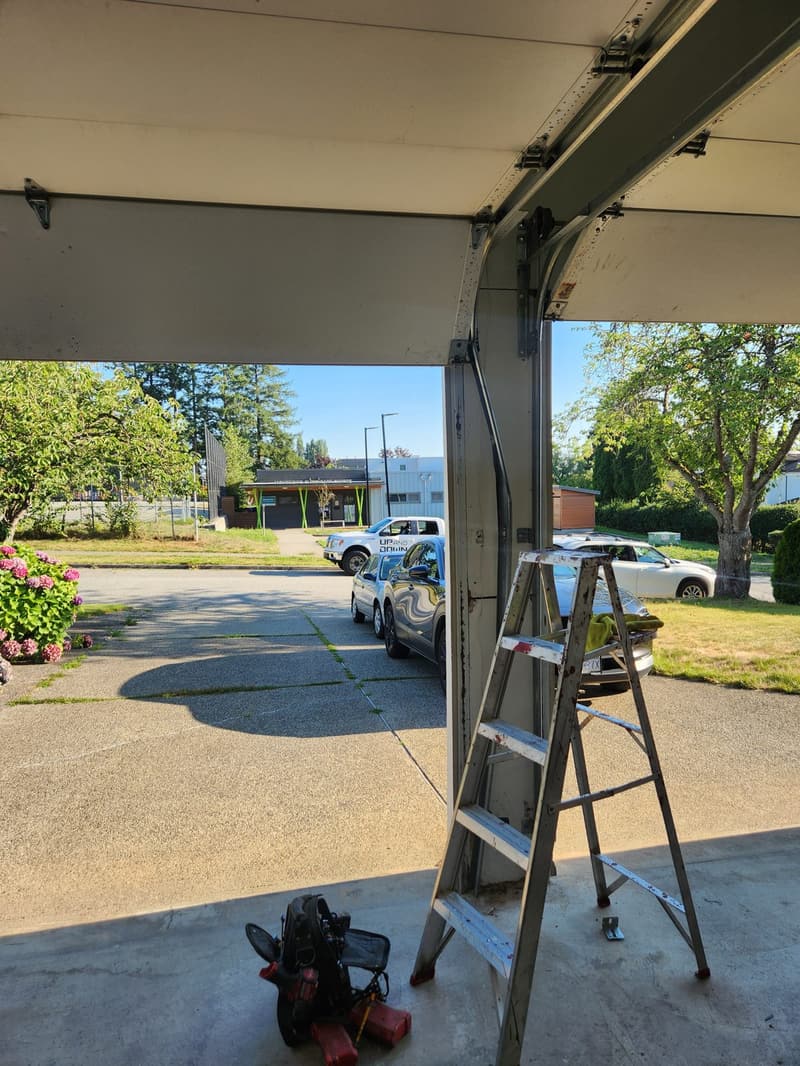
Garage doors come off their tracks due to specific mechanical failures, not random wear. In Surrey’s residential areas—from the older bungalows of Newton to the newer builds in South Surrey—impact damage is the most frequent cause. A vehicle bumping the lower panel, or a bicycle or lawn tool striking the door mid-cycle, can bend the vertical track or dislodge the rollers. Cold snaps, common in Fraser Valley winters, make steel tracks brittle; a sudden impact then causes cracking or deformation rather than flexing. Misaligned tracks from loose mounting brackets are another frequent issue, especially in garages where the framing has settled over time. Wood framing in older homes near Guildford Town Centre can shift with seasonal moisture changes, pulling lag bolts loose and allowing the track to drift. When the track moves even a few millimetres out of parallel, the rollers bind, jump the track, and the door hangs unevenly or jams mid-travel.
How Roller and Cable Failures Lead to Off-Track Conditions
Worn or broken rollers are a primary precursor to off-track doors. Nylon rollers degrade over 10–15 years, especially in Surrey’s damp coastal climate, where moisture accelerates UV breakdown and causes flat-spotting. Steel rollers with worn bearings seize, creating drag that pulls the door off alignment. When one roller fails, the door’s weight shifts unevenly, increasing stress on the opposite side and often causing that roller to climb out of the track. Similarly, frayed or broken lift cables compromise the door’s balance. If a cable snaps on one side, the door tilts severely as it moves, forcing the rollers on the heavier side to leap the track. In Surrey’s industrial-adjacent neighbourhoods like Port Kells, where doors see heavier use from home-based businesses, cable fatigue occurs faster due to increased cycle counts. A door with uneven cable tension will often rub against the track flange, bending it inward and creating a ledge that catches rollers.
The Role of Track Damage and Mounting Integrity
Vertical tracks are precision-formed steel channels, typically 2-inch diameter, mounted to the garage jamb with angle brackets and lag bolts. In Surrey, many homes built between the 1970s and 1990s use wood framing that can rot or split behind the bracket, especially where moisture penetrates from poor flashing or sprinkler overspray. When the mounting pulls loose, the track loses its fixed reference point. Even slight inward or outward movement allows rollers to escape. Horizontal tracks, which bear the door’s weight in the open position, can sag if the ceiling-mounted brackets are inadequately fastened to joists or if the garage ceiling has settled. In older Surrey neighbourhoods like Whalley, where ceiling joists may be undersized by modern standards, this sag creates a low point in the track where rollers accumulate and eventually jump. Impact damage to the lower vertical track—common from snowblower chutes or lawn edgers—creates a protruding lip that rollers hit and climb over.
Our Repair Process for Off-Track Doors in Surrey
We begin by securing the door in the open position using locking pliers on the track and a clamp on the shaft to prevent sudden movement. This is non-negotiable for safety—torsion springs remain under full tension even when the door is off-track. We then inspect the vertical and horizontal tracks for bends, twists, or mounting damage. Using a straightedge and level, we check alignment across both sides; any deviation beyond 1/8 inch requires correction. Bent tracks are carefully straightened with track-specific tools—never hammered directly, which risks further deformation. If the mounting surface is compromised, we reinforce the jamb with a steel backing plate or relocate the bracket to solid wood. Rollers are inspected for wear; seized or cracked nylon units are replaced with 10-ball bearing steel rollers rated for 10,000 cycles. Lift cables are checked for fraying, kinks, or uneven tension; both sides are replaced as a set if either shows damage. After realignment, we lubricate the track, rollers, and hinges with a silicone-based lubricant—never grease, which attracts dust and grit in Surrey’s climate.
Why DIY Fixes Often Fail and Create Hazards
Attempting to lift an off-track door without proper securing risks catastrophic failure. The door’s weight—often 150–250 pounds for a standard residential unit—can drop suddenly if the cables are compromised or if the torsion spring unwinds unexpectedly. We’ve seen Surrey homeowners attempt to force the door back onto the track using a car jack or crowbar, which typically bends the track further or damages the panel sections. Others try to adjust the track bolts while the door is under load, stripping threads or pulling bolts through rotted wood. Even if the door seems to sit back in the track, hidden damage—like a hairline crack in the vertical track or a nick in the cable—can lead to recurrence within days. In multi-car garages common in Surrey’s South Fraser Way area, an improperly repaired off-track door can interfere with the second door’s operation or create a pinch point hazard. Professional repair ensures all components are assessed, not just the obvious symptom.
Preventing Recurrence in Surrey’s Climate
Prevention starts with annual inspection. Check roller movement by manually lifting the door halfway—it should rise smoothly without grinding or hesitation. Look for gaps between the roller and track flange; more than 1/16 inch indicates wear or misalignment. Listen for unusual noises: a rhythmic clicking often signals a failing roller bearing, while a loud pop may indicate a cable strand breaking. Keep the track clean—Surrey’s mix of pollen, road salt, and damp debris accumulates quickly, especially in garages near major routes like the Trans-Canada Highway or King George Boulevard. Wipe the track interior with a dry cloth; avoid lubricants that drip and attract grime. Ensure the garage door opener’s force settings are correct—excessive force masks developing problems and increases impact damage. If you notice the door slowing unevenly or stalling at a specific point, stop use and call for inspection. Early intervention prevents the cascade of failures that lead to off-track conditions.