Garage Door Repair Woodwards
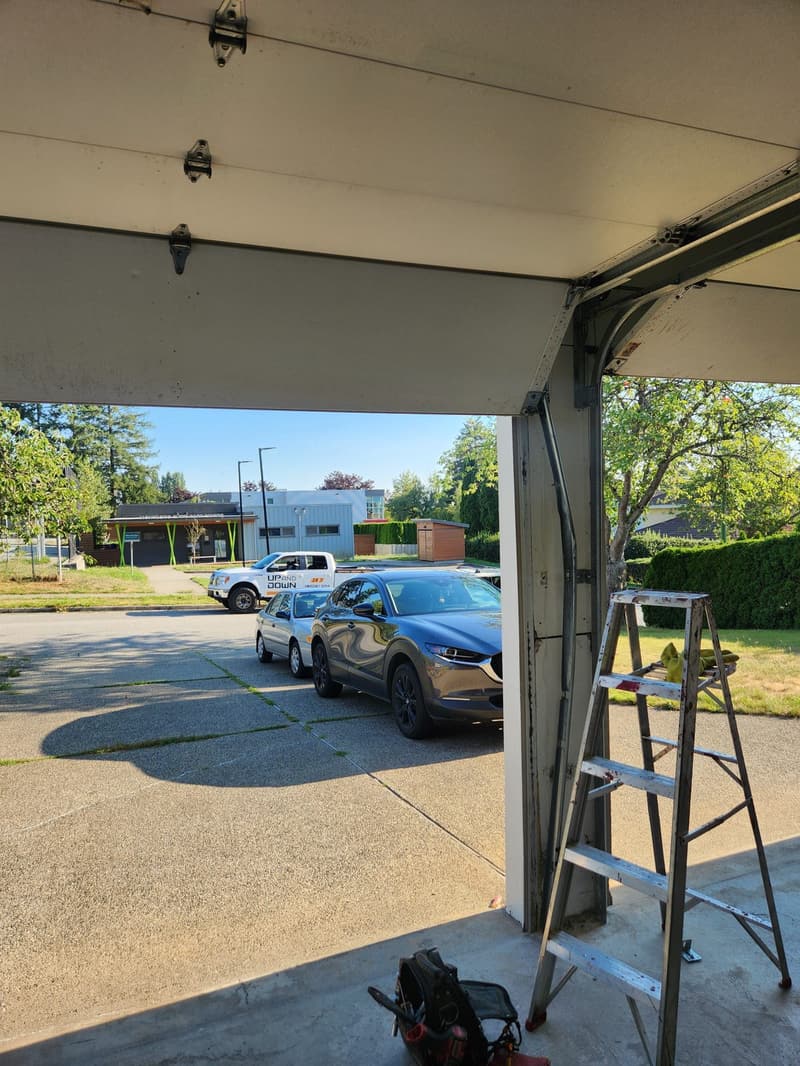
Most Woodwards houses were built in the 1960s‑80s, the same era you see in Burnaby’s Deer Lake neighbourhood. Those homes often still have the original torsion‑spring system and a single‑car door that was sized for smaller vehicles. After 15‑20 years of cycles the springs lose tension, the opener motor strains, and the door may start to “hunt” on the way up. Corrosion from Metro Vancouver’s wet winters also eats away at steel cables and rollers, especially if the grease has hardened from the cold snaps.
A mis‑aligned photo‑eye sensor is another frequent culprit. The sensor lenses are cheap plastic, and salt‑laden sea breezes can fog them enough that the door thinks something is in the way. The result is a door that refuses to close or opens only a few inches before reversing.
How can I tell the problem apart from something else?
| Symptom | Likely cause | What to look for | |———|————–|——————| | Door lifts but stops halfway, then reverses | Torsion spring losing torque | Door feels heavy, springs show gaps or rust | | Door makes a grinding noise on the track | Worn nylon rollers or dry bearings | Visible metal-on‑metal contact, rollers wobble | | Door won’t close at all, but opens fine | Photo‑eye blocked or mis‑aimed | Sensor lenses mis‑aligned, dirt on the lens | | Door opens but the opener clicks without moving the door | Broken lift cable or snapped spring | Cable frayed, spring broken, visible gap in cable sheath |
If you hear a loud “snap” or see a spring coil fully unwound, stop immediately. That’s a safety issue.
What can I safely check myself, and what tools do I need?
- Visual inspection of the springs – Use a flashlight and a pair of safety glasses. Look for rust, gaps, or a coil that isn’t tight. No tools required beyond the glasses.
- Test the photo‑eye alignment – Place a cardboard box on the floor where the sensors sit. Close the door (using the wall button) and see if the box blocks the beam; the door should reverse. If it doesn’t, the sensors are mis‑aligned.
- Listen to the motor – Open the door and listen for a humming sound that doesn’t translate into movement. That usually means the motor is trying to turn a dead spring. No tools needed, just your ears.
- Check the lift cables – Pull each cable gently with your hand. It should feel taut, not slack. If you see fraying or a broken sheath, note the location. You’ll need a wrench to loosen the opener brackets later, but don’t touch the spring itself.
A basic socket set and a ½‑inch wrench are enough for these checks. If any of the items above look damaged, it’s time to call a pro.
When does the job become “not a DIY” and why?
Torsion springs store the energy that lifts a 300‑lb door. Even a partially wound spring can snap with enough force to send metal flying. The same goes for lift cables that run under high tension. The only safe way to replace or adjust them is with a proper winding bar and a stand‑by helper to hold the door in place. Attempting it with a pipe wrench or a hammer is a recipe for injury.
Openers that are older than ten years often have brushed motors that overheat. Rewinding the motor windings or replacing the capacitor is a job that requires a multimeter and a soldering iron – tools most homeowners don’t have calibrated for garage‑door service.
In short, if you have to touch a spring, a cable under load, or the internal motor windings, hand the job over to a technician.
What a technician actually does when they arrive
- Safety lockout – The technician disconnects power at the breaker and clamps the door with a manual release rope.
- Full system diagnosis – They run a voltage check on the opener, measure spring torque with a calibrated spring gauge, and inspect the tracks for debris or dents.
- Component replacement – If a spring is out of spec, they unwind the old one with a winding bar, install a new spring of the correct length and wire gauge, then retension it to the manufacturer’s torque rating. Cables are replaced with a new ¾‑inch steel cable, and rollers are swapped for nylon‑filled units that perform better in cold weather.
- Calibration – The opener’s force and travel limits are reset so the door closes snugly against the floor without “bouncing.” Photo‑eye sensors are re‑aimed and tested with a handheld remote.
- Final test – They run the door through at least five complete cycles, listening for any abnormal noises and watching for smooth operation.
All of this usually takes between 90 minutes and two hours, depending on how many parts need swapping.
What drives the cost of a repair in Woodwards?
Because the houses in Woodwards share the same era of hardware as Burnaby’s Deer Lake, the most common expense is the torsion‑spring set. The price is influenced by:
- Spring size and weight rating – Larger doors need heavier springs, which cost more steel.
- Labor time – Re‑winding or replacing a spring is labor‑intensive and requires safety equipment.
- Additional parts – If the rollers, tracks, or cables are worn, they are replaced as a package.
- Opener age – An older opener may need a new motor or a complete replacement, adding to parts cost.
The technician will give you a line‑item estimate before any work begins, so you know exactly what you’re paying for.
How can I stop the same problem from happening again?
- Lubricate moving parts twice a year – Use a silicone‑based spray on rollers, hinges, and springs. Avoid petroleum‑based products; they attract dust.
- Inspect the photo‑eye lenses each spring – Wipe them with a dry cloth after a salty winter.
- Upgrade to a high‑cycle spring – If you have a high‑use garage (frequent deliveries, car hobbyist), ask for a spring rated for 20,000 cycles instead of the standard 10,000.
- Keep the tracks clear – Sweep leaves and debris away from the bottom of the tracks before the first snowfall.
- Schedule a service call every 12‑18 months – A technician can catch wear before it turns into a failure.
Regular maintenance is the cheapest way to keep your door reliable.
What’s the next step?
Give Up & Down Garage Doors a call at 778‑873‑7282. We’ll come to Woodwards, diagnose the issue, and give you a clear estimate before any work starts.
—