Why Do Garage Door Springs Break — What Actually Causes a Spring to Snap
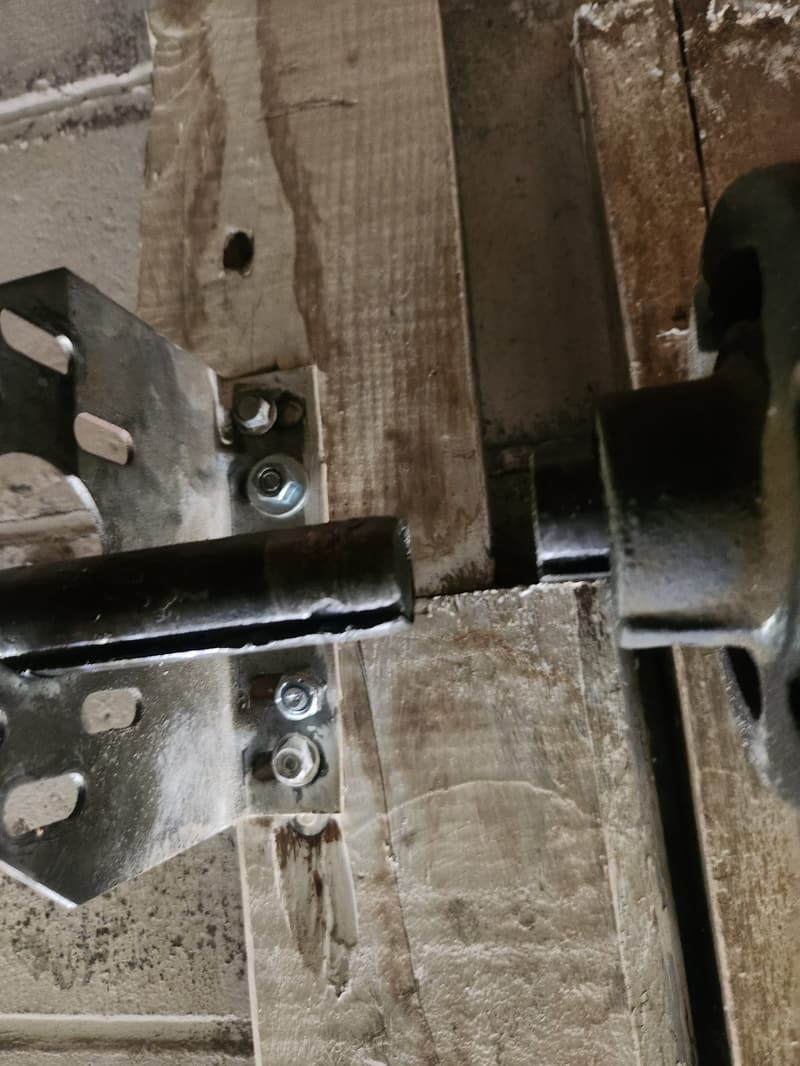
A garage door spring does not break because it is old. It breaks because it has used up its rated cycles. One cycle is one full open and one full close. Standard residential torsion springs are rated for 10,000 cycles. At four cycles a day — two cars leaving and returning — that is roughly seven years. A household with teenagers or a home-based business might hit 10,000 cycles in four years. The steel does not care about the calendar. It cares about how many times it has been wound and unwound.
Extension springs on the sides of the track follow the same rule. They stretch and contract every cycle. The metal fatigues at the loop ends where the clip attaches. When the loop yields, the spring whips loose. That is the bang you hear from the driveway.
Corrosion accelerates the cycle count. Rust pits the surface of the wire. Each pit is a stress concentrator. The spring fails at the deepest pit, not at the rated cycle number. In Metro Vancouver’s wet winters, uncoated springs develop surface rust inside of two seasons if they are not lubricated. Galvanized wire delays it. Powder-coated delays it longer. Oil-tempered wire with a proper lubrication schedule lasts longest.
Wrong spring sizing is the third cause, and it is a human error, not a material one. A spring that is too light for the door weight stretches farther each cycle. It lives at a higher percentage of its tensile limit. It might last 3,000 cycles instead of 10,000. A spring that is too heavy makes the door fly up and crash down, hammering the opener and the track. Both sizing errors are common on doors where a previous installer guessed the weight or used a “universal” spring kit.
Torsion Versus Extension — Different Failure Modes
Torsion springs sit on a shaft above the door. They store energy by twisting. When one breaks on a dual-spring setup, the other spring is still wound. The door will not open. The opener will strain and stall. You will see a clean gap in the broken coil — usually two to three inches wide — and the cable on that side goes slack. The shaft may have rotated enough to throw the cable off the drum.
Extension springs run parallel to the horizontal tracks. Each side has its own spring. When one breaks, the door crooks. One side lifts, the other drags. The cables on the broken side go slack and often jump the pulley. The door binds in the track. If you try to run the opener with one extension spring broken, the top section can twist enough to crack the panel.
Both systems use safety cables. On extension springs, the safety cable runs through the center of the spring and anchors to the track hanger. It catches the spring when the loop fails. Without it, the spring becomes a projectile. Torsion springs do not use safety cables because the shaft contains the broken pieces — but the cable drums can still spin violently when the spring lets go.
How to Tell a Broken Spring From Other Problems
A broken spring feels heavy. The door will not stay up when you disconnect the opener and lift manually. It wants to fall. That is the defining symptom.
A broken cable feels similar — the door crooks or jams — but you will see frayed strands at the bottom bracket or the drum. The spring itself will be intact, no gap in the coils.
A seized bearing on the torsion shaft or a worn roller makes noise and drag, but the door still balances if you lift it halfway and let go. A spring problem fails the balance test every time.
An opener with a stripped gear or a bad logic board makes the motor run but the door does not move. The door itself moves freely by hand. That is not a spring.
Photo-eye misalignment reverses the door after a few inches. The opener clicks, the lights flash. The door moves. Springs do not do that.
What You Can Check Safely — And Where to Stop
Stand inside the garage with the door closed. Pull the red emergency release rope. Lift the door manually to waist height and let go. A balanced door stays put. A door with a failing spring drops. A door with a broken spring crashes down. Do this test once. Do not repeat it. If the door is heavy, stop.
Look at the torsion spring from the side. A solid coil with no gap is intact. A visible gap — daylight between coils — means it has snapped. Do not touch the spring. Do not try to wind it with a screwdriver or a pipe. The stored torque in a wound torsion spring is measured in hundreds of foot-pounds. It will take fingers off. It will break wrists. The winding bars are the only tool that engages the winding cone safely, and using them correctly requires knowing the door weight, the spring wire size, the inside diameter, and the number of turns. That is not a guessing game.
On extension springs, look at the loop ends where the clip hooks on. Stretched loops, cracked paint, or rust at the bend mean the spring is near the end. If the safety cable is missing or frayed, that is a separate hazard. You can spray the springs with a silicone-based lubricant. That is the extent of DIY maintenance on springs.
What a spring replacement service call includes
We arrive, verify the door is secured closed, and measure the existing springs — wire size with a micrometer, inside diameter with a caliper, length of the active coils. We weigh the door with a calibrated scale if the spring markings are gone or the door has been modified (added insulation, windows, reinforcement struts). We calculate the correct spring for the actual door weight, not the label on the old spring.
On torsion jobs, we unwind the remaining spring with winding bars, remove the broken spring, slide the new spring onto the shaft, reinstall the cable drums, reattach the cables, wind the spring to the calculated turns, set the set-screws, and test balance. Then we lubricate bearings, rollers, hinges, and the spring coils themselves. We check the opener force limits and travel limits. We cycle the door five times minimum.
On extension jobs, we secure the door open with vice-grips on the track, remove the broken spring and its pulley, install the matched pair — always both sides, never just one — reroute the safety cables, adjust the pulley alignment, and test.
We do not reuse old hardware. Cable drums, bearings, end bearings, center brackets, pulleys, and safety cables are replaced if they show wear. The labour is the same. The parts cost is small. Reusing a worn drum risks a callback in three months.
What a broken garage door spring repair costs
Spring cost is driven by wire size, inside diameter, length, and cycle rating. A standard 10,000-cycle torsion spring for a 16×7 door is a commodity part. A 25,000-cycle or 50,000-cycle spring uses thicker wire and more of it — the material cost doubles or triples. High-cycle springs make sense if you plan to stay in the house and use the door heavily. They do not make sense on a rental flip.
Extension springs are cheaper per pair but the labour is similar. The pulley and safety cable hardware adds up.
Door weight is the variable. A single-car 8×7 door with standard hardware takes one spring. A 16-foot double door with insulation and reinforcement struts takes two heavier springs. A custom wood door in a Queens Park heritage home in New Westminster can weigh 450 pounds and require a spring combination that is not on any truck — it gets ordered, cut, and wound to spec. That is a different price tier.
Labour is the same whether the spring costs $40 or $180. The time is in the measurement, the calculation, the safe unwind, the install, and the test. Anyone quoting a flat price without seeing the door is guessing.
How to Make the Next Set Last
Lubricate the springs every six months. Use a non-tacky silicone spray or a light machine oil. Wipe the excess. Do not use WD-40 — it displaces water but dries to a film that attracts grit. Do not use heavy grease — it flings off the coils and coats the rollers and track.
Lubricate the bearings, hinges, and rollers at the same interval. A door that rolls freely puts less load on the spring. A door that drags on a seized roller or a bent hinge adds cycles to the spring every time it fights the friction.
Check the balance twice a year. Pull the release, lift to waist height, let go. If it drifts down or flies up, the spring is relaxing or the door weight has changed. Call before it snaps.
Replace both springs on a dual-spring torsion system. The second spring has the same cycles. It will break within months. The labour to return and swap it is the same as doing both now.
If you are in a coastal neighbourhood — Steveston, Tsawwassen, Point Grey — salt air attacks the wire. Ask for powder-coated or galvanized springs. The upcharge is small. The life difference is real.
When to Call
The door will not stay up when you disconnect the opener. You see a gap in the torsion coils. The door crooks to one side. You heard a bang like a gunshot from the garage. The opener strains and stops. The cables are slack or off the drums.
Any of those means the spring is done. Do not run the opener. Do not try to lift the door manually more than once to confirm. Secure the door closed if you can. Call 778-873-7282. We carry standard and high-cycle torsion springs, extension spring pairs, cables, drums, bearings, and pulleys on the truck. Most residential spring jobs are done in under two hours.