A garage door that hangs unevenly or stops with one side higher than the other often points to a limit switch issue rather than spring or cable failure. The limit switch tells the opener when to stop moving the door up or down. If one side’s switch is out of alignment or the trolley isn’t triggering it evenly, the motor keeps running on that side after the other has stopped, pulling the door crooked. You’ll notice the door closing with a gap at one side, or reversing immediately after hitting the floor because the safety system detects uneven resistance. It may also make a straining noise as the motor fights against the imbalance.
How Limit Switches Work on Sectional Doors
Most residential openers use two adjustable limit switches—one for open, one for close—mounted on the opener rail or inside the motor unit. These are typically screw-adjusted cams that press against a lever attached to the trolley. As the door moves, the trolley pushes the lever, rotating the cam until it hits a switch that cuts power to the motor. If the close-limit cam is set too far, the door keeps trying to close after the bottom panel hits the floor, causing the motor to strain and the door to bind or lift on one side. If set too short, the door stops before sealing, leaving a gap.
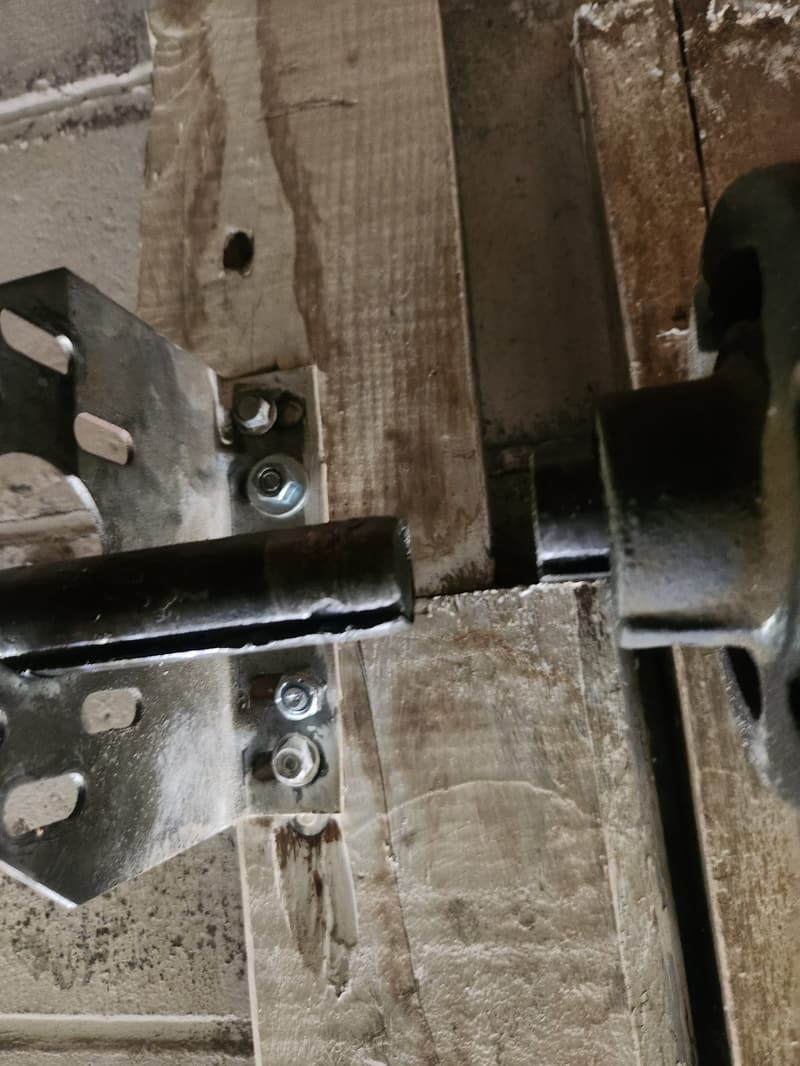
Visual and Audible Signs of a Limit Switch Problem
Look for the door stopping with the bottom edge not parallel to the garage floor—one corner higher than the other. When opening, the door may lurch or jerk as one side moves freely while the other drags. Listen for the motor humming or straining after the door appears to have stopped moving, especially during close. You might also see the opener rail vibrate or the trolley pull at an angle. These symptoms differ from a broken spring, where the door won’t lift at all, or a snapped cable, which causes sudden drooping on one side.
What You Can Safely Check Yourself
First, disconnect the opener by pulling the emergency release cord. Manually lift the door to the midpoint and let go—if it stays put, the springs are balanced. Then reconnect the opener and run a cycle while watching the trolley. If it stops evenly against the stop bolt on both sides, the limit switches are likely close to correct. You can inspect the limit adjustment screws—usually two flat-head or Phillips screws labeled ‘up’ and ‘down’—but do not turn them yet. Note their position; small changes (quarter turns) have a big effect. If the door hits the floor hard before stopping, the close limit is likely too far out.
When Adjustment Requires Caution
Adjusting limit switches itself is low-risk—it’s just turning a screw—but doing so while the door is under load can mask other issues. If the door binds during manual operation, or if you see frayed cables, rusted rollers, or bent tracks, stop. Those problems cause uneven movement that mimics limit switch failure. Never adjust limits to compensate for mechanical drag; fix the root cause first. Also, if the opener struggles to lift the door even when disconnected, the spring tension is likely wrong—a torsion spring adjustment is not a DIY task due to the risk of sudden release.
Why Torsion Springs Are Off-Limits for Adjustment
Torsion springs store enough energy to lift a 200-pound door. Winding or unwinding them without proper tools and training can cause the winding bar to slip, resulting in serious injury or death. Even extension springs, though less energetic, can launch components if they fail. A crooked door from a spring issue usually shows uneven lift speed or gaps when the door is halfway up—not just at the floor. If manual operation feels heavy or uneven, or if you notice a gap in the spring coil, do not touch the springs. Call a technician.
Frequently Asked Questions
### Can a limit switch cause the door to reverse immediately after closing?
Yes. If the close limit is set too far, the door hits the floor and keeps trying to descend, triggering the opener’s force-safety mechanism, which interprets the resistance as an obstruction and reverses the door.
How do I know if the problem is the limit switch and not the sensors?
Misaligned or blocked photo-eye sensors cause the door to reverse before closing or refuse to close at all, but they don’t cause uneven stopping. A limit switch issue lets the door close fully but unevenly, often with straining.
Should I lubricate the opener rail to fix a crooked door?
Lubrication helps with noisy or stiff operation but won’t correct a limit switch misalignment. If the trolley moves freely by hand and the door balances, lubrication is maintenance, not a fix for uneven stopping.
For persistent crooked door issues or if you’re unsure about spring or cable condition, contact Up & Down Garage Doors at (778) 873-7282 for a diagnostic visit.