Garage Door Opener Repair Richmond
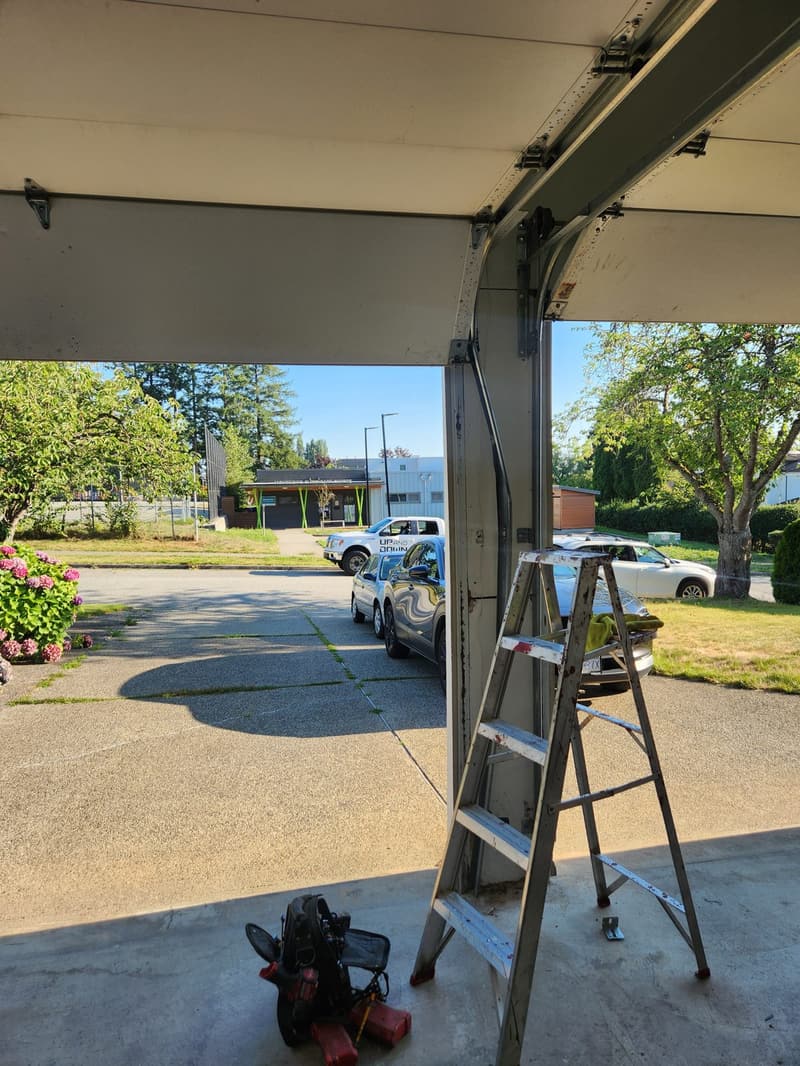
Garage door openers in Richmond face unique stresses from coastal moisture and temperature swings. Chain drives stretch and corrode faster near the Fraser River, while belt drives degrade from UV exposure in sun-exposed garages. Motor capacitors fail frequently in older units, especially in homes built before 2000 where voltage fluctuations are common. Safety sensors misalign when concrete floors settle, a frequent issue in Richmond’s silty soil areas like Steveston and South Arm. Logic boards suffer from power surges during winter storms, particularly in neighbourhoods with older electrical infrastructure.
Diagnosing No-Start and Intermittent Operation
When an opener hums but doesn’t move the door, the issue is often a stripped drive gear or failed motor coupling. Intermittent operation—where the door works sporadically—typically points to loose wiring at the motor unit or wall console, exacerbated by vibration over time. In Richmond’s damp climate, moisture infiltrates the opener’s housing, causing corrosion on circuit boards and relay contacts. Technicians check for voltage at the motor terminals using a multimeter; if power reaches the motor but it doesn’t turn, the motor windings are likely open or seized. Wall console failure is diagnosed by bypassing it with a jumper wire to test if the opener responds to the remote alone.
Chain, Belt and Screw Drive Specific Repairs
Chain drives require tension adjustment and lubrication every 18–24 months; neglect leads to slack, jumping teeth on the sprocket, and eventual chain breakage. Belt drives made of rubber-reinforced fiberglass crack when exposed to temperature cycling, especially in garages without insulation. Screw drives, less common but still present in older Richmond homes, seize when the steel rod corrodes or the plastic nut wears down from lack of lubrication. Repair involves disassembling the rail, cleaning debris, and replacing worn components—never just adding lubricant to a damaged mechanism. Technicians inspect the trolley carriage for wear, as excessive play indicates misalignment that will destroy a new drive component quickly.
Safety System and Sensor Troubleshooting
Photo-eye sensors fail when misaligned by even 2–3 millimeters, a common outcome after accidental bumps or foundation settling. Richmond’s clay-heavy soil causes differential settling, particularly near No. 5 Road and Garden City Lands, shifting the sensor brackets over time. Technicians use a laser level to realign the sensors and check for wire damage from rodents or moisture ingress. The opener’s force settings must be recalibrated after any sensor repair; too much force risks injury, too little prevents closure. Emergency release cords fray from UV exposure and should be inspected annually—if the cord breaks, manual operation becomes impossible during power loss.
Logic Board and Remote Communication Issues
Modern openers use rolling-code technology; signal failure between remote and receiver often stems from antenna damage or interference. In Richmond, nearby BC Hydro substations and the Canada Line SkyTrain generate electromagnetic noise that can disrupt 315 MHz or 390 MHz frequencies. Technicians test signal strength with a frequency counter and may recommend relocating the antenna or adding a ferrite choke to the wiring. Logic boards fail when capacitors bulge or leak—visible during visual inspection—or when voltage regulators overheat due to poor ventilation. Replacing the board requires matching the exact model and firmware version; incompatible boards cause erratic behavior or complete non-operation.
Preventive Maintenance for Richmond’s Climate
Lubricate the rail, hinges, and rollers with silicone-based spray every six months—avoid WD-40, which attracts dust and degrades rubber components. Check the door’s balance by disconnecting the opener and lifting the door manually; it should stay put halfway up. If it falls or rises, the springs need adjustment—a task for professionals due to high tension. Inspect the weather seal at the bottom of the door; cracked seals allow moisture into the garage, accelerating opener corrosion. Keep the opener’s vents clear of debris to prevent overheating, especially in enclosed garages common in Richmond’s townhouse developments.