New Garage Door Installation Richmond — Richmond-Specific Installation Challenges
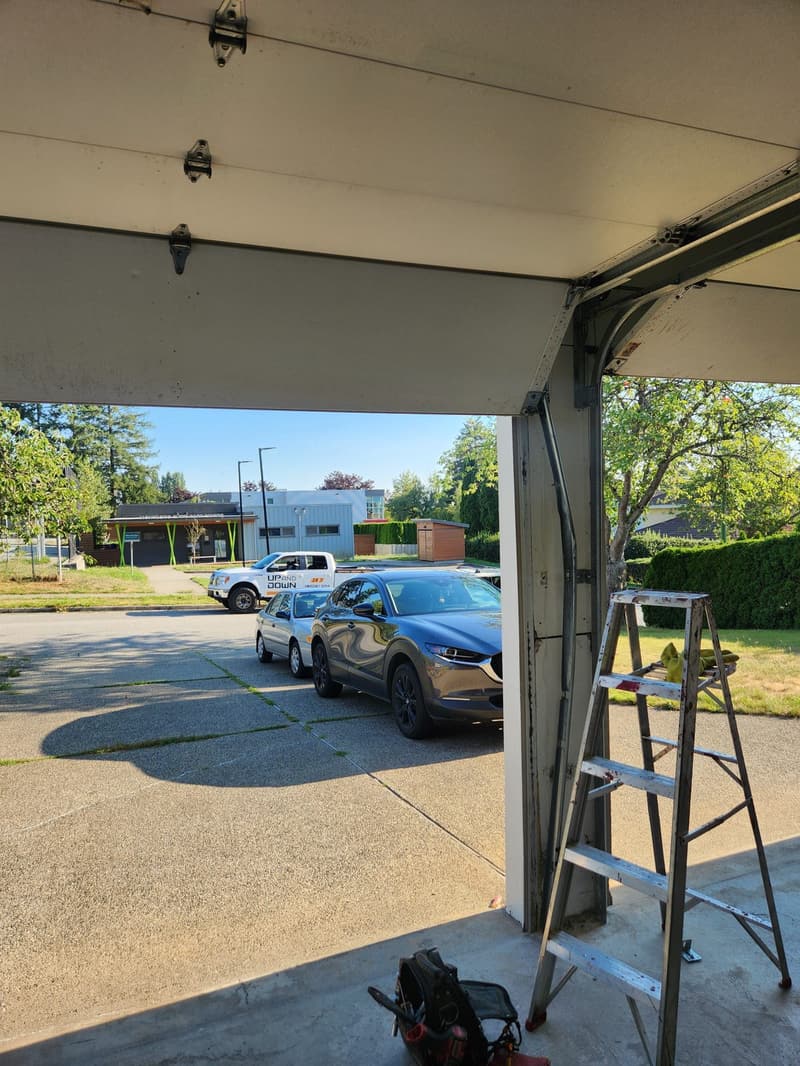
Installing a new garage door in Richmond requires understanding the local building stock and environmental conditions. Many homes in neighbourhoods like Steveston and Broadmoor feature older wood-frame construction with settling foundations, which affects door alignment. Coastal humidity and salt air near the Fraser River accelerate corrosion on steel components, so material selection must account for these factors. We assess each opening for racking, uneven floors, and header integrity before proceeding—issues common in 1970s and 80s builds where garage slabs may have shifted over time.
Door Type Selection for Local Conditions
Choosing the right door type involves more than aesthetics. Richmond’s mix of single-family homes, townhouses, and laneway houses means varying clearance requirements. In tighter infill developments near No. 3 Road or along the Canada Line corridor, low-headroom tracks or vertical lift systems may be necessary. For properties exposed to persistent westerly winds off the river, we recommend doors with reinforced stiles and heavy-duty hinges to prevent panel bowing. Insulation levels are also critical—homes in the Thompson neighbourhood benefit from higher R-values to combat winter dampness, while south-facing units in City Centre may prioritize solar reflectance.
Frame and Opening Preparation
Proper installation begins with correcting the opening itself. We frequently encounter warped jambs in older Richmond homes, particularly those built on fill soil near the river delta, where differential settling twists the frame. Steel or aluminum jamb reinforcement is often needed to create a true plane for the door to travel. Header sag is another frequent issue—especially in double-car garages where the original header was undersized for the span. We install laminated veneer lumber or steel flitch plates to restore load-bearing capacity before anchoring the vertical tracks, ensuring the door operates without binding or premature roller wear.
Track System and Hardware Integration
The track system must be precisely aligned to handle the door’s weight and dynamic loads. In Richmond’s seismic zone, we use reinforced angle brackets with through-bolts into structural studs, not just sheathing, to resist lateral movement during torsion. Roller selection depends on door weight and usage—nylon rollers suit lighter insulated doors in quieter neighbourhoods like West Cambie, while steel rollers with sealed bearings are mandatory for heavier carriage-style doors common in larger properties along Gilbert Road. We also verify that the torsion spring assembly matches the door’s exact weight and height; mismatched springs cause rapid cable fatigue or incomplete lift, a failure mode we see frequently in DIY installations.
Weather Sealing and Long-Term Performance
Effective weather sealing is non-negotiable in Richmond’s climate. Bottom seals must accommodate concrete slab movement—we use bulb-type EPDM seals that compress unevenly without tearing, critical where frost heave affects slabs near Garden City Road. Side and top seals are applied with flexible vinyl that maintains adhesion through wet-dry cycles, preventing water ingress that leads to frame rot in cedar-framed garages common in Steveston. We also install corrosion-resistant bottom brackets and adjust lift cables to maintain proper tension as the door ages, reducing the risk of sudden cable failure—a hazard that can cause the door to drop unexpectedly if left unchecked.