Services
Locations
📞 (778) 873-7282
Home / Blog / Garage Door Reverses Before Closing With Remote Problem

Garage Door Reverses Before Closing With Remote Problem

Diagnose why your garage door reverses before closing when using the remote. Learn common causes, safety checks, and when to call a technician.

Call (778) 873-7282
Licensed & insured
Open 24 hours
Based in Richmond
5-star rated

A garage door that reverses before closing when operated by remote is usually triggered by the safety reversal system detecting an obstruction or fault. This system, required by law since 1993, uses infrared sensors near the floor and the motor’s force settings to prevent entrapment. If the door starts to close but immediately reverses, the opener believes something is in the way or that excessive force is needed, even if nothing is visible. The first step is to check for obvious obstructions like debris, tools, or ice buildup in the door’s path.

Safety Sensor Alignment and Obstruction
The most common cause of premature reversal is misaligned or blocked safety sensors. These are the small photo-eye units mounted on each side of the door, about 4-6 inches above the floor. They emit an invisible infrared beam; if the beam is broken, the door will not close and will reverse if already moving. Dirt, spider webs, or condensation on the lenses can interrupt the beam. Check that both sensor lights are solidly lit — not flickering or off. Clean the lenses with a soft cloth and adjust the brackets until both lights remain steady. Even slight misalignment from bumping the sensors can cause failure.
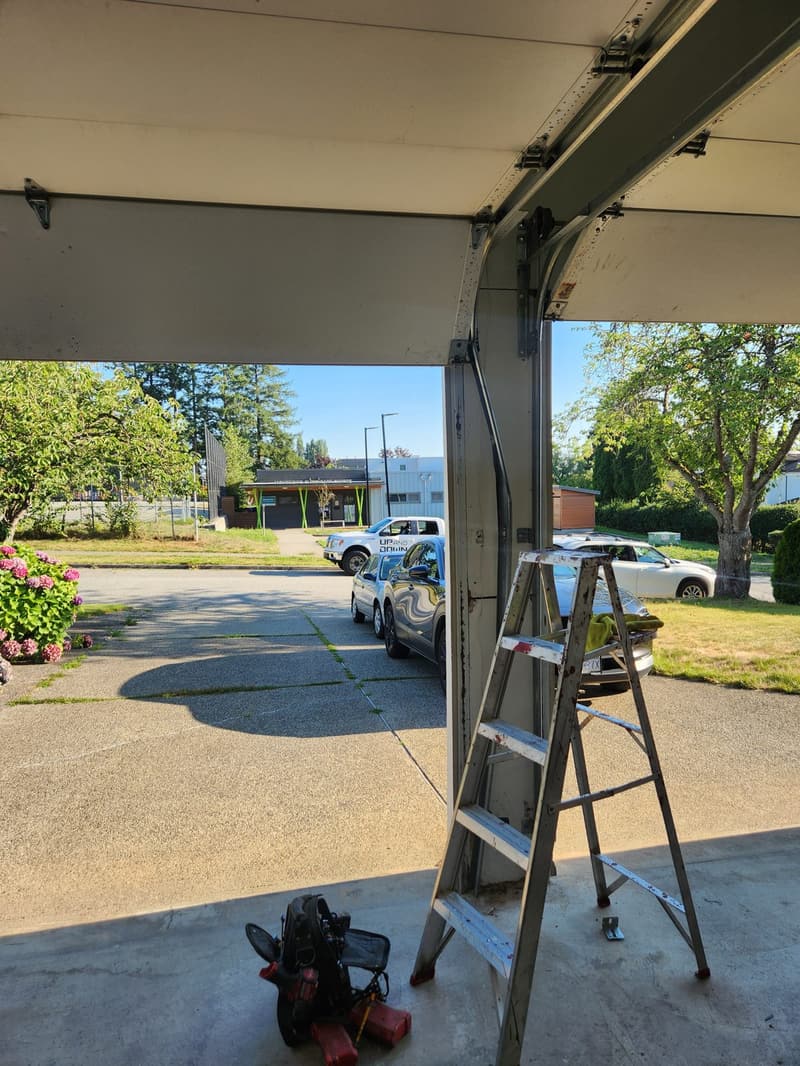
garage door technician on a ladder servicing a home door
Garage door technician on a ladder servicing a home door.

Door Track and Roller Condition
Obstructions aren’t always in the beam path — physical resistance in the track can trick the opener into thinking it’s hitting something. Inspect the vertical and horizontal tracks for dents, bends, or debris like gravel or ice. Rollers should spin freely; seized or worn rollers increase friction, causing the motor to strain and trigger the force-reversal mechanism. Listen for grinding or squeaking as the door moves. Lubricate rollers, hinges, and bearings with silicone-based lubricant — never use WD-40 on moving parts. If the track is damaged or rollers are frozen, the door may bind only during closing, causing reversal.

Close Force and Limit Settings
Garage door openers have adjustable close force and travel limit settings. If the close force is set too low, the motor will reverse at the slightest resistance, even normal operation. If the limit switch is set to stop the door too high, the opener may think it’s hit the floor when it hasn’t, triggering reversal. These settings are adjusted via screws on the opener unit — usually marked “close force” and “down limit.” Turning the close force screw clockwise increases force; turning the down limit screw counterclockwise makes the door travel farther. Adjust in small increments and test after each change. Incorrect settings can compromise safety — if the door doesn’t reverse when it should, it poses an entrapment risk.

Torsion Spring Tension and Door Balance
A door that is out of balance will feel heavier on one side or sag when manually lifted halfway. If the torsion springs are broken, losing tension, or improperly wound, the opener must work harder to close the door. This increased load can trigger the force-reversal system. To test balance, disconnect the opener by pulling the emergency release cord and manually lift the door to waist height. It should stay put; if it falls or rises, the springs are unbalanced. Do not attempt to adjust or replace torsion springs — they store lethal amounts of energy and can cause fatal injury. Only a trained technician should handle spring systems.

Remote Signal Interference and Wiring Faults
Less commonly, the issue may originate from the remote or opener electronics. Weak batteries in the remote can send inconsistent signals, though this more often causes no response rather than reversal. Check for sources of radio frequency interference like LED lights, chargers, or new electronics near the opener. Inspect the wiring from the wall control to the opener for loose connections or damage — a failing wall button can send erratic signals. If the door reverses only with the remote but closes normally with the wall button, the problem is likely in the remote signal path or receiver board.

Frequently Asked Questions
### Can sunlight interfere with the safety sensors?
Yes, direct sunlight can overwhelm the infrared receivers in the safety sensors, especially during low-angle morning or evening light. This can cause intermittent reversal issues that seem random. Try shading the sensors with a small piece of cardboard or installing sun shields — do not alter the sensor alignment while doing so.

Why does the door close fine with the wall button but reverse with the remote?
This often indicates the safety sensors are functioning and the obstruction is not physical, but the remote signal is weak or being misinterpreted. Low remote batteries, signal interference, or a failing receiver logic board in the opener can cause the system to act as if a fault exists only when triggered by the remote.

Is it safe to disconnect the opener and close the door manually?
Yes, pulling the emergency release cord disconnects the opener, allowing manual operation. This is useful for testing balance or closing the door during troubleshooting. However, if the door feels heavy, binds, or won’t stay put when lifted halfway, do not force it — this indicates a spring or cable issue that requires professional service.

Professional Diagnosis and Repair
When basic checks don’t resolve the reversal issue, the problem may lie in the opener’s logic board, motor wear, or internal sensor failure. These components require diagnostic tools and expertise to test safely. Attempting to bypass safety systems or force adjustments can create hazardous conditions. Up & Down Garage Doors serves Metro Vancouver with technical diagnosis and repair of garage door reversal faults. For service, call (778) 873-7282.

Stuck door? Let's get it moving.

One call, a clear price, and the job done right — 24/7 across Metro Vancouver.

📞 Call (778) 873-7282