Coastal salt air accelerates corrosion and metal fatigue in garage door torsion springs, leading to premature failure if not monitored. The chloride particles in marine environments settle on exposed steel surfaces, breaking down protective coatings and initiating rust that weakens the spring’s wire diameter over time. This degradation reduces the spring’s ability to store and release energy efficiently, increasing strain on other components and raising the risk of sudden breakage.
How Coastal Salt Air Affects Garage Door Torsion Spring
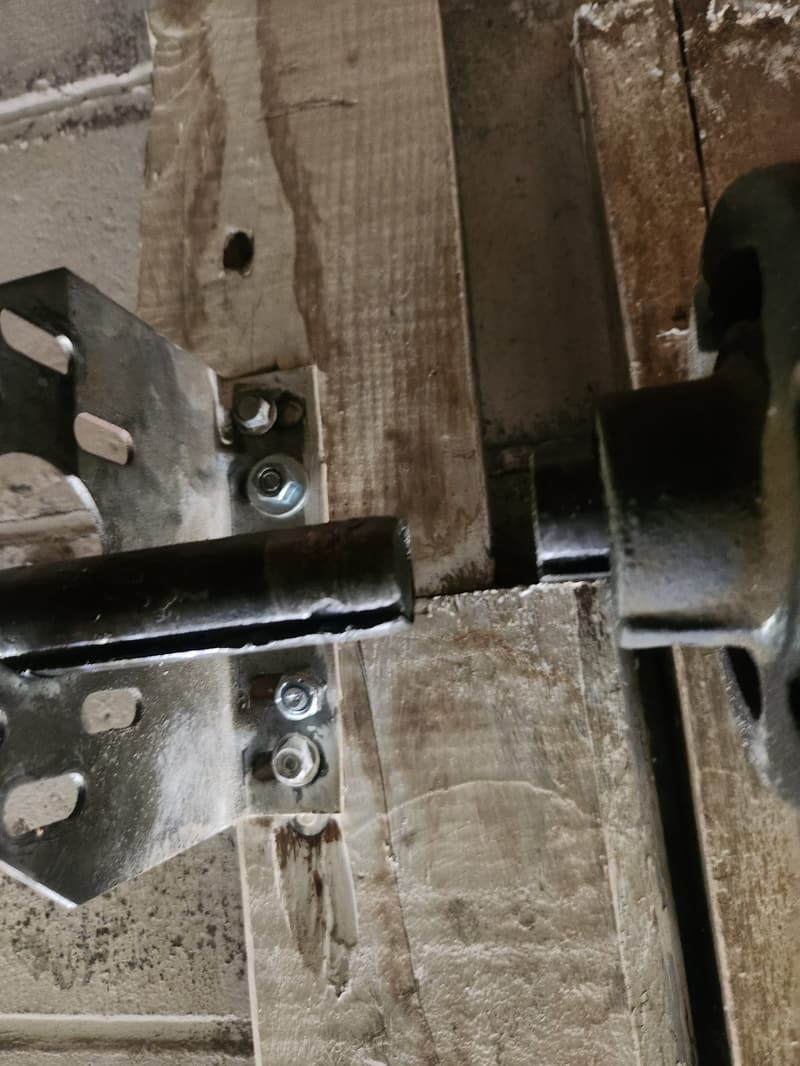
Why Coastal Exposure Accelerates Failure
Inland garage doors might see spring lifespans of 10,000 to 15,000 cycles. In Metro Vancouver’s coastal zones, that drops to 4,000–7,000 cycles due to combined corrosion and cyclic loading. Each time the door opens and closes, the stressed, corroded wire flexes, and cracks initiate at pits. Over weeks or months, these cracks propagate until the spring can no longer hold its load, resulting in a sudden release of energy.
What Failure Looks and Sounds Like
A failing torsion spring often shows visible signs before breaking: orange-brown rust flakes, uneven gaps between coils, or a noticeable sag in the spring’s tension. You might hear creaking or groaning during operation as the spring struggles to lift the door evenly. In advanced stages, one side of the door may lag or jerk when moving. A complete break produces a loud bang—like a firecracker—followed by the door dropping unevenly or becoming impossible to lift manually.
What Homeowners Can Safely Check
You can inspect the spring visually from a safe distance using a flashlight. Look for rust buildup, gaps between coils, or misalignment. Test the door’s balance by disconnecting the opener and lifting it manually to waist height—it should stay put without drifting up or down. If it falls or rises, the spring tension is compromised. Never touch or attempt to adjust the spring; even seemingly loose springs store lethal energy.
Why DIY Adjustment or Replacement Is Extremely Dangerous
Torsion springs are wound to store enough energy to lift a 150–250 lb door. Releasing or adjusting them without proper tools and training can cause the winding bars to slip or the spring to unwind violently, resulting in severe injury or death. The risk is not theoretical—professional technicians undergo specific training to handle these components safely. If you suspect spring issues, stop using the door and call a qualified technician.
When to Call a Professional
Contact a garage door specialist if you notice visible corrosion, uneven door movement, difficulty lifting the door manually, or unusual noises during operation. Annual inspections are recommended for coastal properties, ideally before winter when moisture and temperature swings increase stress on weakened components. A technician can measure spring tension, assess corrosion depth, and replace springs with coated or galvanized alternatives suited to marine environments.
Frequently Asked Questions
### Can I use WD-40 or oil to protect my torsion spring from salt?
No. Lubricants attract dust and debris, which can trap moisture against the steel and accelerate corrosion. They also do not prevent chloride penetration. Instead, keep the spring clean and dry, and rely on professional assessment for corrosion-resistant coatings or replacements.
How often should torsion springs be replaced in coastal BC?
There is no fixed interval—lifespan depends on exposure, usage, and spring quality. In high-salt areas like Vancouver Island or the Fraser Delta, springs may need inspection every 12–18 months and replacement every 3–5 years, compared to 5–7 years inland. Monitor for warning signs rather than relying on time alone.
Are galvanized or powder-coated springs better for salt air?
Yes. Galvanized springs have a zinc coating that sacrificially protects the steel, while powder-coated springs provide a physical barrier against moisture and chlorides. Both options outperform standard oil-tempered springs in coastal environments and are commonly used by technicians servicing Metro Vancouver properties.
For expert assessment of your garage door torsion spring in coastal BC, contact Up & Down Garage Doors at (778) 873-7282.