Up and Down Garage Doors breaks down how torsion spring cycle ratings — 10,000, 25,000, and high-cycle conversions — translate to real wire diameters, coil counts, and service life on the wet-coast doors we see daily across Richmond, Vancouver, Burnaby, and the North Shore.
Torsion Spring Cycle Life Explained
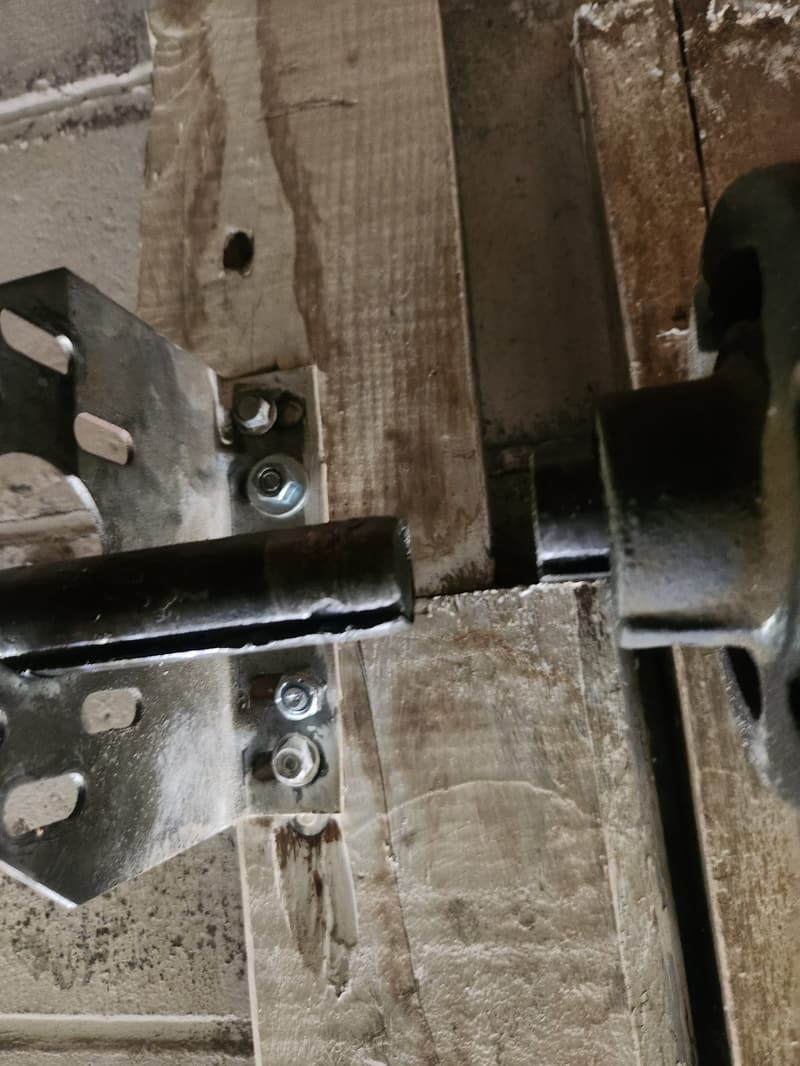
One cycle = one full open + one full close. A typical Metro Vancouver family with two cars hits 4–6 cycles per day. At that rate, a 10,000-cycle spring lasts roughly 4–7 years; a 25,000-cycle unit stretches to 11–17 years. High-cycle conversions (40,000–100,000 cycles) can push replacement intervals past 20 years — if the rest of the hardware keeps pace.
10,000-Cycle Standard Springs: The Builder-Grade Baseline
Typical specs you’ll find on 7′ and 8′ doors in Richmond and Surrey
Wire diameter: .207″ – .225″ (common gauges 4–5). Inside diameter: 1.75″ or 2.0″. Length (unwound): 20″–32″ depending on door weight. Right-hand wound (red cone) / left-hand wound (black cone) pairs. These springs store enough torque for 120–180 lb doors but run at higher stress (≈ 180–200 ksi), so fatigue cracks initiate at the coil ends first — especially after years of salt-laden Fraser Valley air attacking the shot-peened surface.
25,000-Cycle “Extended Life” Springs: What Changes Physically
Wire, coil count, and stress reduction
Wire diameter increases to .243″ – .262″ (gauges 2–3). More coils (typically 10–15 extra active coils) spread the load, dropping working stress to ≈ 140–155 ksi. The larger wire also resists corrosion pitting longer — critical in North Vancouver and West Vancouver where marine spray settles on the shaft. Cones stay the same 1.75″/2.0″ ID, so the spring fits existing anchor brackets and center bearing plates without re-drilling.
High-Cycle Conversions: 40,000 to 100,000+ Cycles
When we swap to a larger ID or dual-spring setup
True high-cycle life demands lower stress (≤ 120 ksi). That means either: (a) 2.25″ or 2.5″ ID springs on a solid 1″ shaft — requiring new center bearing plate, end bearing plates, and sometimes a wider shaft keyway; or (b) dual-spring assemblies (two smaller springs sharing the load) inside the existing 1.75″ ID space. Option (b) fits most retrofit jobs in Kitsilano, Shaughnessy, and older East Van bungalows where header clearance won’t accept a fatter spring. Wire diameters run .273″–.306″ (gauges 1–0) with 60–90 active coils per spring.
How Metro Vancouver Weather Accelerates Fatigue
Moisture, temperature swings, and salt
Cycle ratings assume lab-dry conditions. In Delta, Ladner, and Tsawwassen, road salt aerosol lands on springs every winter. Corrosion pits act as stress risers, cutting real-world life by 30–50% versus the stamped rating. We see .207″ wire springs snap at 6,000 cycles when the protective oil film washes off. Stainless-steel wire (302/316) eliminates rust but costs 3× more and isn’t stocked in every gauge — so we usually specify galvanized oil-tempered wire with a post-installation corrosion inhibitor spray.
Matching Springs to Door Weight: The IPPT Calculation
Inch-pounds per turn determines wire and coil count
Every door model (Clopay, Amarr, Wayne Dalton, Garaga, Haas) publishes an IPPT chart. A 16×7 insulated steel door ≈ 180 lb → 28–30 IPPT. A 16×8 wood overlay ≈ 280 lb → 42–45 IPPT. We measure actual door weight with a calibrated scale, then select wire diameter and coil count to hit the target IPPT at the desired cycle rating. Guessing by “looks like a standard spring” is how you get a 10k spring on a heavy door that fails in two winters.
FAQ
How do I know which cycle rating my current springs have?
Look for paint marks or stamped tags on the cones: one stripe = 10k, two stripes = 25k, three stripes = high-cycle. No markings? Measure wire diameter with a micrometer and count active coils; we can reverse-engineer the rating from those numbers.
Can I just put 25,000-cycle springs on my existing 10,000-cycle setup?
Usually yes — same 1.75″ or 2.0″ ID fits your current cones and center bracket. The thicker wire adds ≈ 1/2″ to overall length per spring, so we verify shaft clearance before ordering.
Do high-cycle springs require a different opener or track?
No. The opener only sees the balanced door weight, which stays the same. Tracks, rollers, and hinges are unchanged. Only the spring assembly (and sometimes shaft/bearing hardware) differs.
What happens if one spring breaks on a dual-spring high-cycle system?
The remaining spring carries the full load — door becomes too heavy for the opener and unsafe to lift manually. We always replace both springs as a matched set, even if only one snapped.
Is there a visual difference between galvanized and oil-tempered wire?
Galvanized has a dull gray zinc coating; oil-tempered is dark blue-black. Both meet ASTM A229. Oil-tempered holds shot-peen texture better, which resists crack initiation — our default unless the customer requests stainless.
How often should I have springs inspected in a coastal BC home?
Annually. We check coil gap uniformity, cone seating, cable drum alignment, and wipe on fresh corrosion inhibitor. Catching a 0.010″ wire loss early prevents a 6:00 AM emergency call.
Need a cycle-life assessment for your door?
Call 778-873-7282
Up and Down Garage Doors — Richmond, BC
Home | Spring Repair Details | High-Cycle Spring Options | Get a Quote | Contact Us