

Your garage door has springs. But which type? And does it matter?
Yes, it matters significantly. The type of spring affects safety, lifespan, repair cost, and reliability.
Most modern homes in Metro Vancouver have torsion springs. Some older homes have extension springs. Here's the complete comparison.
What Are Torsion Springs?
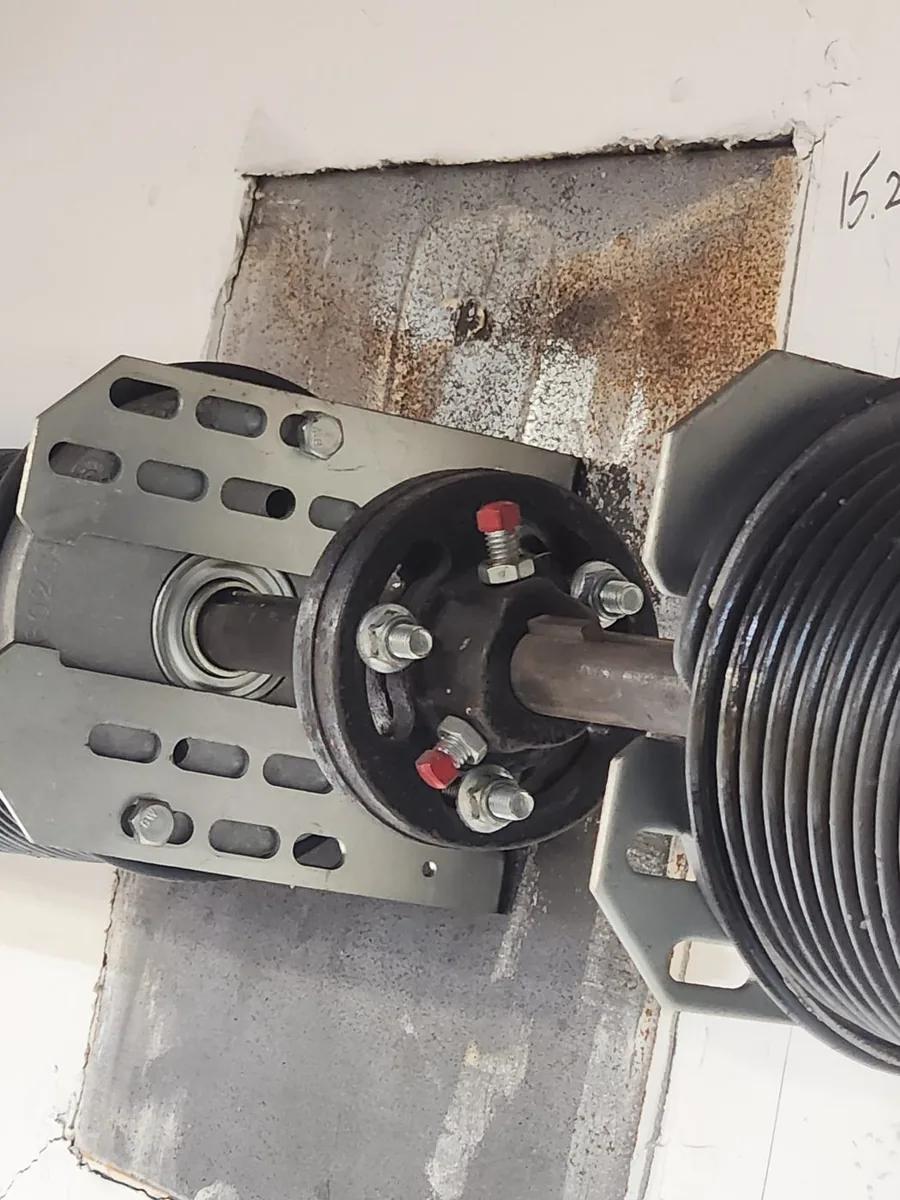
Torsion springs are mounted horizontally above your garage door. They work by twisting (hence "torsion").
Inside the spring is a tightly wound coil. When you open the door, the coil winds tighter, storing energy. When you close it, the coil unwinds, releasing energy to help lower the door.
Two torsion springs work together. Each spring handles 50% of the door weight.
Advantages of torsion springs:
- Smoother operation (twisting motion is balanced)
- Safer (spring is contained above the door)
- Longer lifespan (7-12 years typical)
- Better for heavier doors
- More reliable overall
- Cleaner appearance
Disadvantages of torsion springs:
- More expensive to replace
- Require specialized tools to install
- Professional installation essential (not DIY-able)
What Are Extension Springs?
Extension springs are mounted vertically along the tracks on either side of the door. They work by extending and contracting.
When the door closes, the springs extend (stretch). When you open, they contract (relax), helping pull the door up.
Two extension springs work together, one on each side.
Advantages of extension springs:
- Lower replacement cost
- Simpler design (easier to understand)
- Fit on older door frames better
Disadvantages of extension springs:
- Shorter lifespan (5-8 years typical)
- More dangerous when they fail (can snap violently)
- Higher injury risk during installation
- Require safety cables for protection
- Less reliable overall
- Less balanced operation (door may tilt)
Safety Comparison: The Critical Difference
This is where the choice matters most.
Torsion springs: Mounted above the door in an enclosed area. If a spring breaks, it fails in a contained location. Safer for people nearby.
Extension springs: Mounted along the tracks. If one snaps, the broken spring can fly across the garage with tremendous force. This is a serious injury risk, we've seen people lose fingers, eyes, and worse.
Extension springs should have safety cables attached to contain them if they break. Many older doors don't have these cables.
Verdict: Torsion springs are significantly safer.
Cost Comparison
Torsion spring replacement usually costs more than extension spring replacement. We quote both before any work starts.
But over the lifespan of your door:
- Torsion: Replace every 7-12 years.
- Extension: Replace every 5-8 years.
Over 30 years of ownership:
- Torsion: 3-4 replacements.
- Extension: 4-6 replacements.
Fewer replacements narrow the cost gap. And torsion has other benefits.
Lifespan Comparison
Torsion springs: 7-12 years with normal use (residential doors).
Extension springs: 5-8 years with normal use.
Torsion lasts longer because the twisting motion distributes stress more evenly across the coil. Extension springs work by stretching, which fatigues the metal faster.
Reliability and Performance
Torsion springs: Balanced operation. Door moves smoothly and evenly. Opener works at consistent effort levels.
Extension springs: Unbalanced operation possible. If springs are different tensions, door may tilt. Opener may work unevenly.
Verdict: Torsion provides better, more consistent performance.
Ease of Installation
Torsion springs: Require specialized spring winder tools. Professional installation essential. We wouldn't even recommend a handy homeowner attempting this.
Extension springs: Simpler design. Still dangerous due to tension, but mechanically simpler.
Both require professional installation. DIY spring replacement is not safe.
Space Requirements
Torsion springs: Need space above the door (inside the garage). Not suitable for garages with low headroom.
Extension springs: Run along the side tracks. Work in tight spaces where torsion won't fit.
If you have very low headroom, extension springs might be your only option. Ask during repair quotes.
How to Tell Which Type You Have
Look above your garage door inside the garage.
Torsion springs: You'll see a horizontal rod above the door with one or two coiled springs wound around it. Mounted between two brackets.
Extension springs: You'll see springs running along the tracks on either side of the door, typically with cables attached.
Can't tell? Take a photo and send it to us. We'll identify your spring type.
Upgrading from Extension to Torsion
If your door has extension springs, you can retrofit torsion springs.
Benefits of retrofitting:
- Safer operation
- Longer lifespan
- Better performance
- Quieter operation
Cost of retrofit: covers new springs, brackets and installation; we quote it before any work starts.
Worth it? If your door is 10+ years old and still has extension springs, retrofit is a smart upgrade. You get safer operation and longer lifespan.
If your door is only 5 years old, delaying retrofit until the next spring failure makes financial sense.
Spring Failure Patterns
Torsion spring failure: Usually sudden. One day it works, next day you hear a snap. Both springs typically fail within months of each other.
Extension spring failure: More gradual deterioration visible. You might notice reduced performance before failure.
Either way, when one spring fails, replace both.
Maintenance Differences
Torsion springs: Lubricate the coil and shaft annually. Light oil application only.
Extension springs: Lubricate the springs and ensure safety cables are intact. Check cable attachment points.
Both need annual inspection and lubrication.
Insurance and Safety Concerns
Some insurance policies specify safety requirements for garage doors. Modern torsion springs with proper safety sensors may be required.
If you have extension springs, check your homeowner's policy. You might need to upgrade for full coverage.
Which Should You Choose?
Choose torsion if:
- You want safer operation
- Your door is newer or medium-to-heavy
- You want longer lifespan
- Safety is your priority
- You have normal garage headroom
Choose extension if:
- You have extreme budget constraints
- Your garage has very low headroom
- Your door is light-weight
- You plan to replace the entire door soon anyway
Our recommendation: Torsion springs for nearly all homes. The safety and reliability benefits outweigh the modest cost difference.
Getting Your Springs Evaluated
Not sure which type you have? Wondering if retrofit makes sense?
Call Up and Down Garage Doors to have your springs evaluated.
Phone: (778) 873-7282
We identify your spring type, assess condition, and recommend the best path forward.
Licensed & insured.
,
Related: Once you know your spring type, our garage door spring repair Vancouver guide covers what repair actually involves.
Field Note: Spring Choice on the Coast
Salt air works into extension springs fast. The constant stretch and relax cycle pulls moisture between the coils, and without safety cables the snap risk jumps. Torsion springs sit on a shaft above the door, so the coils rub less and stay drier. I still see extension setups on pre-nineties houses, and the failure pattern is consistent: one side breaks, the door skews, and the track bends before anyone can stop it.
If the header has a foot of clearance, switching to torsion removes the side hazard cleanly. When headroom is tight, a low-headroom torsion kit fits where extension springs used to live. Either way, the springs must match the actual door weight, not the faded tag, or the opener fights the door every cycle.