Services
Locations
📞 (778) 873-7282
Home / Blog / How Heavy Rain Affects a Garage Door Chain Drive

How Heavy Rain Affects a Garage Door Chain Drive

Heavy rain can cause rust, lubricant washout, and misalignment in garage door chain drives. Call (778) 873-7282.

Call (778) 873-7282
Licensed & insured
Open 24 hours
Based in Richmond
5-star rated

Heavy rain affects a garage door chain drive by washing away lubricant, promoting rust on metal components, and causing electrical or alignment issues that prevent smooth operation. Water intrusion into the chain, sprocket, or motor housing increases friction and corrosion, leading to noisy operation, sluggish movement, or complete failure to open or close. The first signs are often a grinding or squeaking noise during operation, followed by the door hesitating mid-cycle or reversing unexpectedly. If the chain appears visibly rusted, stiff, or covered in white or green corrosion, or if the opener motor strains audibly when trying to move the door, rain-related degradation is likely the cause.

How Heavy Rain Affects Garage Door Chain Drive
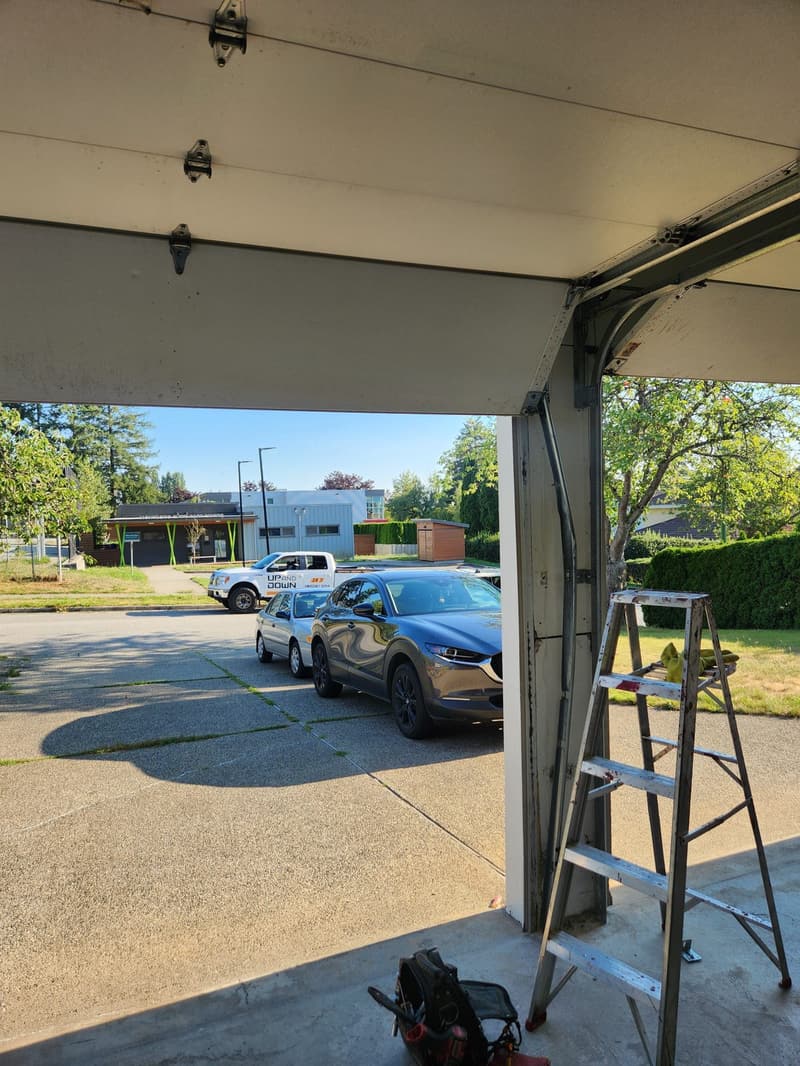
double residential garage door tune-up
How Heavy Rain Affects Garage Door Chain Drive — real job photo, Up & Down Garage Doors.

Why Lubricant Washout Leads to Noise and Binding
Lubricant isn’t just for smoothness—it prevents corrosion and absorbs minor shocks. When rain washes it away, the chain begins to bind intermittently as it moves over the sprocket. This binding causes the opener motor to work harder, producing a loud groaning or straining sound, especially at the start or end of travel. In some cases, the chain may skip teeth on the sprocket, resulting in a sudden jerk or clunk. If the door moves unevenly—fast in one section, slow in another—it’s a sign the chain is not engaging consistently. Do not attempt to lubricate the chain while the opener is powered; always disconnect the unit first and use only a silicone-based garage door lubricant, never WD-40 or grease, which attract dirt and degrade rubber seals.

Electrical Risks from Moisture Intrusion
Modern chain-drive openers contain circuit boards, sensors, and wiring in the motor housing. Heavy rain can drive moisture into these areas through compromised conduit, damaged wire insulation, or poor sealing around the mounting bracket. This may cause intermittent faults: the opener responds inconsistently to the remote, the safety lights flicker, or the door reverses as if obstructed when nothing is in the path. Corrosion on circuit board terminals increases resistance, leading to voltage drops that prevent the motor from receiving full power. If you notice the opener works fine on dry days but fails during or after rain, moisture-related electrical interference is likely. Never open the motor housing yourself—exposed capacitors can hold a charge even when unplugged.

How Rain Affects Door Alignment and Track Conditions
While not part of the chain drive itself, heavy rain can indirectly impact chain performance by affecting the door’s movement through the tracks. Water pooling at the garage floor can seep under the bottom weather seal, causing the door to sit unevenly or swell slightly if made of wood. This misalignment forces the chain to pull at an angle, increasing lateral stress on the sprocket and chain links. Over time, this can lead to premature sprocket wear or chain twisting. Check the door’s balance by disconnecting the opener and manually lifting it to the midpoint—if it doesn’t stay put or feels heavy on one side, the issue may be track or spring-related, not the chain. Never adjust torsion springs—they are under extreme tension and can cause severe injury or death if mishandled.

What Homeowners Can Safely Inspect
After a heavy rainstorm, you can perform a few visual and manual checks without risk. With the door closed and opener unplugged, inspect the chain for rust, stiffness, or missing links. Look at the sprocket for worn or hooked teeth. Check the opener housing for water stains, condensation inside the lens, or damp smells. Run your hand along the ceiling near the opener—if it’s wet, there may be a roof leak affecting the unit. Test the door’s manual operation: disconnect the opener via the release cord and lift the door smoothly by hand. If it binds or feels uneven, the problem may be in the tracks, rollers, or springs—not the chain. If the chain is noisy but moves freely when detached from the door, the issue is likely isolated to the opener mechanism.

When to Call a Professional
If the chain shows significant rust, the sprocket is damaged, the door won’t operate manually, or you suspect electrical faults due to moisture, stop using the door and contact a technician. Continuing to operate a compromised chain drive risks sudden failure—such as the chain snapping or jumping the sprocket—which could cause the door to drop violently. Professionals can safely disassemble the opener, clean and inspect internal components, replace worn parts, and re-lubricate with appropriate products. They can also assess whether the opener housing needs resealing or relocation to avoid future water exposure. In Metro Vancouver’s wet climate, annual pre-winter inspections of garage door openers are a practical preventative measure.

Frequently Asked Questions
### Can I use regular oil or grease on my garage door chain to protect it from rain?
No. Use only a silicone-based lubricant designed for garage doors. Oils and greases attract dust and debris, form abrasive paste, and can degrade rubber seals on the opener and door. They also drip onto the garage floor and create slip hazards.

Why does my garage door reverse after heavy rain even when nothing is blocking it?
Moisture can cause false signals in the safety sensor circuits or corrosion on the motor control board, making the opener mistakenly detect an obstruction. This is a common rain-related electrical issue that requires diagnostic testing.

Should I cover my garage door opener to protect it from rain?
Only if the opener is exposed to direct water ingress, such as from a roof leak or open garage door during storms. Never seal it in plastic or restrict airflow—this traps condensation. Instead, fix the source of the leak and ensure proper ventilation around the unit.

Stuck door? Let's get it moving.

One call, a clear price, and the job done right — 24/7 across Metro Vancouver.

📞 Call (778) 873-7282