Common Mechanical Failures in Strata Garage Door Systems
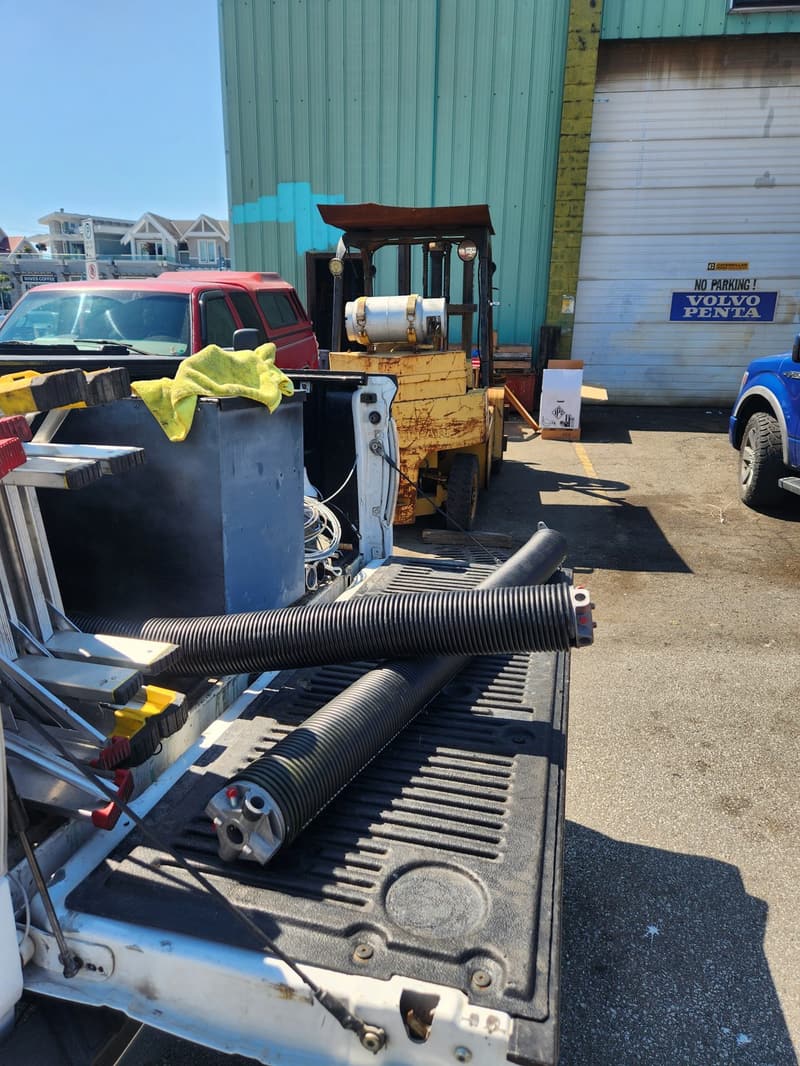
Strata properties in North Vancouver often feature sectional overhead doors with torsion spring assemblies, chain or belt drives, and safety photo-eyes. In coastal climates like the North Shore, corrosion on spring coils and cable fraying are frequent due to salt-laden air and moisture exposure. Worn rollers seize in steel tracks, especially in older buildings along Lonsdale Avenue or near the Shipyards district where humidity lingers. Misaligned tracks from settling foundations or impact damage cause doors to bind mid-cycle, triggering safety reversals. Opener motors overheat when trying to lift unbalanced doors, a common issue in strata units where individual owners neglect spring tension checks. Regular lubrication of hinges and bearings prevents premature wear, but many strata councils overlook this until a door fails completely during morning rush hour.
Why Strata Doors Require Specialized Service
Unlike single-family homes, strata garage doors serve multiple units with shared walls and common access points. A malfunction in one bay can block emergency egress or delay deliveries for several residents. Doors in strata complexes often operate more frequently—sometimes 10+ cycles per day per unit—increasing wear on components. Many North Vancouver strata buildings, particularly those built in the 1980s and 1990s along Mountain Highway or in the Lower Lonsdale area, still use original opener models lacking modern safety features like battery backups or rolling-code technology. Service technicians must coordinate with strata councils, property managers, and individual owners to schedule work without disrupting access. Documentation of repairs is essential for strata meeting minutes and insurance claims, especially after windstorms that affect exposed garages near the waterfront in Deep Cove or Seymour.
Inspection Protocols for Strata Properties
A thorough strata garage door inspection begins with visual checks of all hardware: hinges, rollers, brackets, and lift cables for signs of rust, deformation, or broken strands. Torsion springs are measured for elongation and inspected for gaps between coils—indicators of impending failure. Track alignment is verified using a laser level; even 3mm of misalignment can cause roller jump-out. Safety systems are tested: photo-eyes must interrupt the beam within 2 inches of the ground, and auto-reverse should trigger with 10 pounds of resistance. Opener force settings are checked against manufacturer specs to prevent injury risks. In older strata buildings near Edgemont Village or Upper Lonsdale, wooden jambs may have rotted, compromising anchor strength for tracks. All findings are compiled into a report with photos, prioritizing safety hazards and recommending phased repairs to align with strata budget cycles.
Preventive Maintenance Schedules for Strata Corporations
Strata councils in North Vancouver benefit from semi-annual service schedules—spring and fall—to coincide with seasonal changes. Fall service prepares doors for winter moisture and freezing temperatures that can thicken lubricants and cause cables to stiffen. Spring service addresses corrosion from winter road salts tracked into garages. Maintenance includes lubricating all moving parts with silicone-based spray (never WD-40 on springs), tightening loose bolts on hinges and opener brackets, and checking weather seals for cracking or compression set. Batteries in backup systems are tested and replaced if voltage drops below 12V. For strata properties along the Mosquito Creek industrial corridor or near the Ironworkers Memorial Second Narrows Crossing, where airborne particulates are higher, more frequent track cleaning is advised. Councils should maintain a log of service dates and parts replaced to demonstrate due diligence.
Emergency Response and Access Coordination
When a strata garage door fails unexpectedly—such as a broken spring trapping a vehicle inside—technicians prioritize access restoration without causing further damage. In North Vancouver, response considers local traffic patterns; delays are common during peak hours on the Lions Gate Bridge approach or along Marine Drive. Technicians coordinate with strata managers to notify affected residents and arrange temporary access if needed. Safety is paramount: springs are never adjusted without proper winding tools and tension released in a controlled manner. If a door is off-track, it is secured before any repair attempts to prevent sudden collapse. After-hours calls are common in strata buildings where owners work shifts at nearby hospitals like Lions Gate or commercial hubs such as Park Royal. Clear communication minimizes disruption and ensures repairs meet strata bylaws and safety regulations.