Services
Locations
📞 (778) 873-7282
Home / Insulated Garage Door Installation for Burnaby Homes

Insulated Garage Door Installation for Burnaby Homes

Professional insulated garage door installation in Burnaby. Serving Edmonds, Lougheed & Highway 1 corridors. Call (778) 873-7282 for assessment.

Call (778) 873-7282
Licensed & insured
Open 24 hours
Based in Richmond
5-star rated

Insulated Garage Door Installation Burnaby
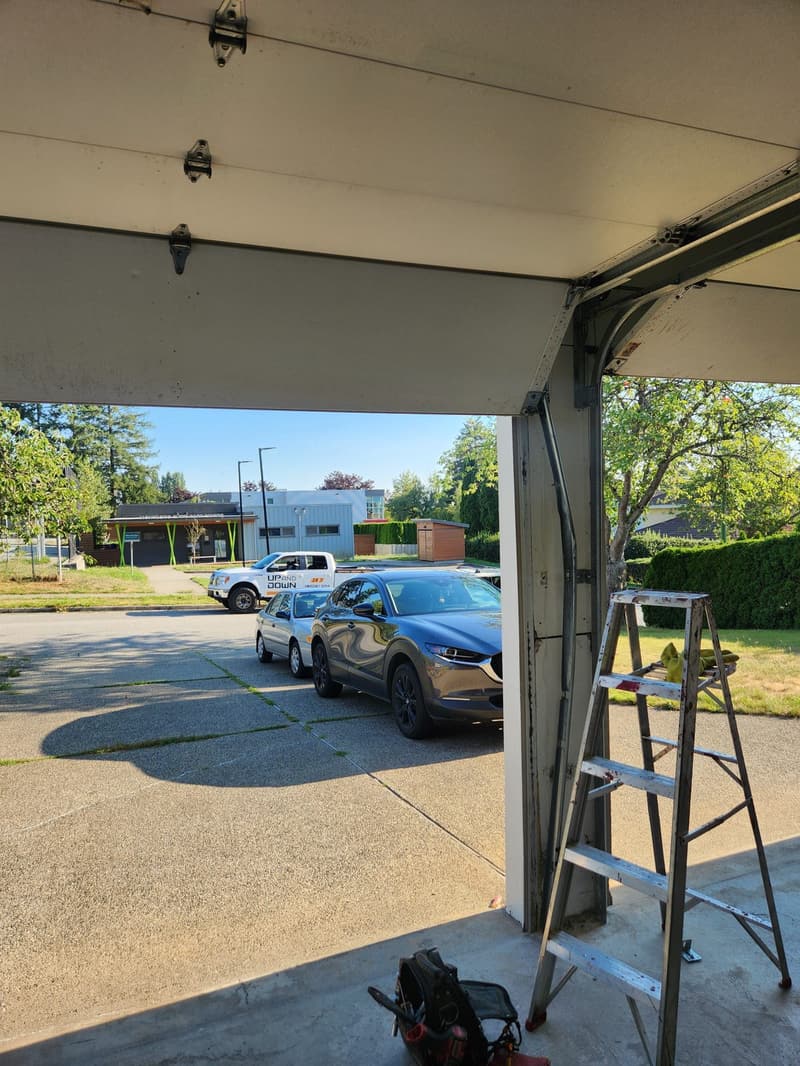
Insulated Garage Door Installation Burnaby — new double garage door installation
Insulated Garage Door Installation Burnaby — real job photo, Up & Down Garage Doors.

Panel Construction and Thermal Performance
Insulated garage doors typically use either polystyrene or polyurethane foam cores sandwiched between steel or aluminum skins. Polystyrene boards offer R-values between R-6 and R-9, suitable for detached garages in milder zones like South Burnaby near the Fraser River. Polyurethane-injected panels achieve R-12 to R-18, better for attached garages in areas like North Burnaby where heat loss impacts home heating costs. The foam’s density also adds rigidity, reducing panel flutter in high-wind events common along the Burrard Inlet corridor. We assess each site’s orientation and garage usage—whether it’s a workshop in Lochdale or a storage space in Cascade—to match the insulation type to the thermal load.

Frame and Hardware Compatibility
Installing an insulated door isn’t just about swapping panels; the existing frame and hardware must accommodate the increased weight. A standard non-insulated 16×7 steel door might weigh 120 pounds, while its insulated counterpart can exceed 200 pounds. This affects torsion spring sizing, cable diameter, and roller bearing load. In older Burnaby homes—particularly those built before 2000 in areas like Forest Grove or Sullivan Heights—the original framing may lack the reinforcement needed for heavier doors. We inspect jamb integrity, header sag, and track alignment before proceeding. If the vertical tracks show twisting or the header has settled, we reinforce or replace those components to prevent premature spring fatigue or door imbalance.

Weather Sealing and Thermal Bridging
Even a high-R-value door underperforms if air leaks around the edges. We install flexible vinyl bottom seals rated for -40°C to resist cracking in Burnaby’s winter freezes. Side and top weatherstripping uses compressible bulb seals that maintain contact despite panel movement. Thermal bridging occurs where metal fasteners penetrate the insulation layer; we minimize this by using nylon or plastic isolators between brackets and the door skin. In garages converted to living spaces—common in Oakridge or Metrotown-adjacent zones—we pay extra attention to the interface between the door and the interior drywall to prevent condensation buildup on cold steel surfaces during winter mornings.

Spring System Calibration
The torsion spring system must be precisely balanced to the door’s weight. After hanging the insulated door, we wind the springs to deliver the exact torque needed for smooth manual lift—typically 3-5 turns on a standard residential shaft. An over-wound spring makes the door hard to close; under-wound causes it to crash down. We test balance by lifting the door to waist height and releasing it; it should stay put without drifting. In Burnaby’s humid climate, we lubricate springs with silicone-based spray to prevent rust-induced binding, especially in coastal-influenced zones like Burnaby Lake or Still Creek where salt-laden air accelerates corrosion.

Long-Term Performance and Maintenance
Insulated doors require the same hardware maintenance as non-insulated ones, but with added attention to seal integrity. We recommend checking the bottom seal twice a year—before winter rains and after summer dry spells—for cracks or compression set. Lubricate hinges, rollers, and bearings annually with a non-silicone garage door lubricant; avoid WD-40, which attracts dust. Inspect the interior skin for dents that could compress the foam core and create cold spots. In Burnaby’s tree-lined areas like Central Park or Deer Lake, falling branches can cause impact damage; we advise trimming vegetation near the door’s swing path to prevent panel punctures that compromise insulation.

Frequently Asked Questions
### How does an insulated door affect my garage’s temperature in winter?
An insulated door reduces heat transfer through the panel itself, but the garage’s overall temperature still depends on insulation in the walls and ceiling, plus any heat sources. In a typical Burnaby detached garage, you might see a 5-10°F difference compared to a non-insulated door on a cold night, which helps prevent freezing of pipes or stored liquids.

Can I install an insulated door on my existing opener?
Yes, if the opener is rated for the door’s weight. Most modern chain or belt drives handle insulated doors up to 250 pounds. We check the opener’s motor horsepower and reinforce the trolley arm if needed—common in older Genie or LiftMaster units in Burnaby’s Brentwood or Gilmore neighborhoods.

What happens if the insulation gets wet?
Polyurethane foam is closed-cell and resists water absorption. Polystyrene can absorb moisture if the exterior skin is breached, which reduces R-value and may lead to mold between layers. We ensure all panel joints are sealed and the exterior finish is intact during installation to prevent moisture ingress.

What we do

Every part of the door, every kind of building.

From a snapped spring on a single home garage to scheduled service across a strata complex — one team, the full job.

Where we work

Based in Richmond, on the road in Burnaby.

Up & Down Garage Doors — 12180 Horseshoe Way, Unit 3, Richmond, BC V7A 4V5 · (778) 873-7282

What customers say

Straight talk from real customers.

Stuck door? Let's get it moving.

One call, a clear price, and the job done right — 24/7 across Metro Vancouver.

📞 Call (778) 873-7282