New Garage Door Installation Abbotsford
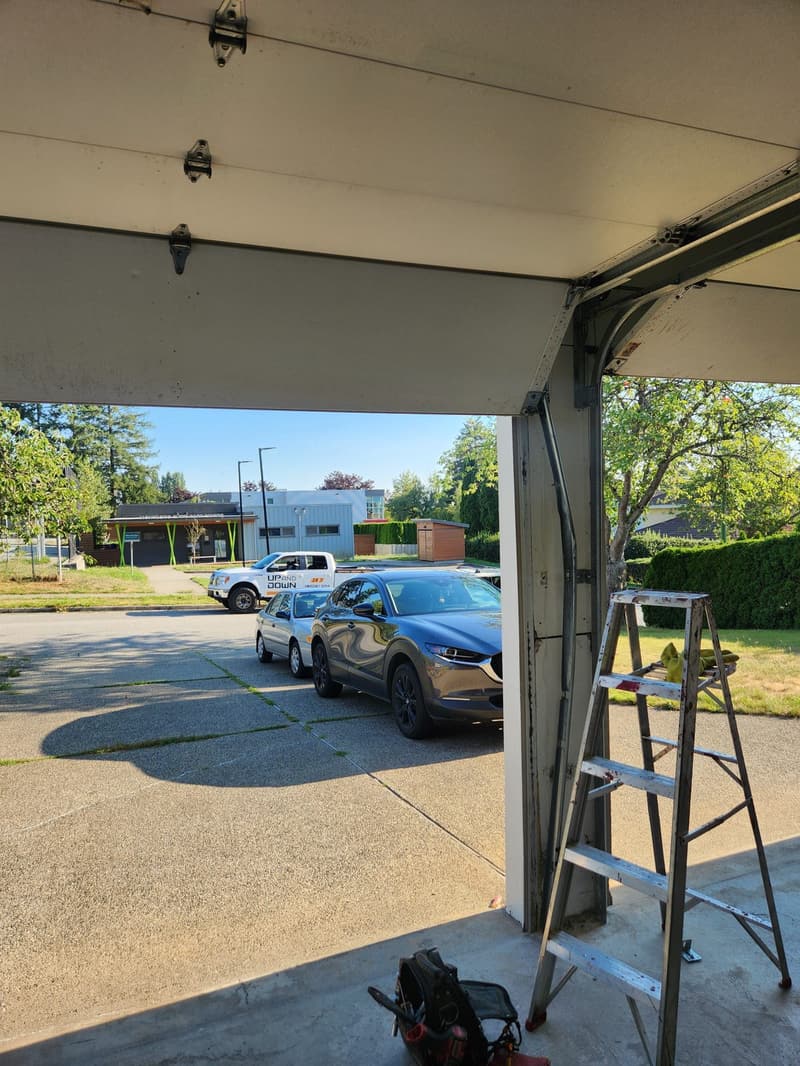
Before any new garage door installation begins in Abbotsford, we evaluate the existing opening and surrounding structure. Many homes in neighbourhoods like Sumas Mountain, Clayburn, and Clearbrook were built between the 1970s and 1990s with standard 16-foot wide, 7-foot high openings. Older homes in the Town Centre or near McCallum Road may have non-standard dimensions due to retrofits or unique architectural styles. We measure headroom, sideroom, and backroom clearance to determine what type of door and track system will fit safely. Insufficient headroom—common in older bungalows with low ceiling garages—may require a low-headroom track kit. Limited sideroom, often seen in narrow lots along South Fraser Way or near the Abbotsford Airport, restricts the use of standard torsion spring systems and may necessitate extension springs or a side-mounted opener. We also check the condition of the jambs and header; rotted wood from moisture ingress, typical in Abbotsford’s wet climate, must be repaired or replaced before installing new hardware to prevent sagging or misalignment.
Selecting the Right Door Material for Fraser Valley Conditions
Abbotsford’s climate—characterized by heavy rainfall, occasional freezing temperatures, and high humidity—directly influences garage door material selection. Steel doors with polyurethane insulation are common in residential installations due to their durability and resistance to warping, unlike wood which can swell or rot when exposed to persistent moisture, especially in areas near the Vedder River or Sumas Prairie where groundwater levels are higher. We recommend 24-gauge galvanized steel with a baked-on primer and topcoat finish for corrosion resistance. For homes in higher elevations like those on Sumas Mountain, where snow load and ice buildup are more frequent, we advise doors with reinforced struts and weather seals rated for low-temperature flexibility. Aluminum doors are less common for residential use in Abbotsford due to denting risks from hail or debris, though they appear in some modern builds near Eagle Mountain. Composite doors offer a wood-like appearance without maintenance but require verification of impact resistance ratings suitable for wind loads in the Fraser Valley.
Understanding Track and Spring System Compatibility
The track system must align precisely with the door’s weight and lift mechanism. In Abbotsford installations, we standardize on 2-inch roller tracks for residential doors, which reduce friction and noise compared to older 1-inch systems. The radius of the track curve—typically 12 or 15 inches—must match the door’s height and the available headroom. For example, a 7-foot door in a garage with only 10 inches of headroom requires a low-headroom track with a tighter radius to allow proper clearance during operation. Torsion spring systems, mounted above the door, are preferred for their balance and longevity. We calculate spring size based on door weight, which includes the door panel, insulation, glass inserts (if any), and hardware. A typical non-insulated steel door weighs 120–150 pounds; an insulated version with windows can exceed 200 pounds. Using undersized springs leads to premature wear, door imbalance, and increased strain on the opener. Oversized springs make the door difficult to control manually and can cause safety hazards. We never reuse old springs during a new installation—they are single-use components rated for a specific number of cycles.
Installing Weather Seals and Threshold Protection
Effective weather sealing is critical in Abbotsford’s climate to prevent water ingress, wind-driven rain, and heat loss. We install a vinyl bulb seal on the bottom edge of the door, which compresses against the floor to form a barrier. The floor must be level and clean; uneven concrete slabs, common in older garages near Clayburn Village or along Old Yale Road, may require a vinyl or aluminum threshold seal to compensate for gaps. These thresholds are adhered with polyurethane adhesive and screwed into the concrete for permanence. Side and top seals are made of flexible vinyl or rubber with a rigid retaining strip that slides into a groove on the jamb. Over time, UV exposure and temperature cycling cause these seals to harden and crack, losing elasticity. We specify seals with a durometer rating suitable for repeated flexing in cold conditions—typically Shore A 60–70—to ensure they remain pliable through winter. Improper compression, either too loose (allowing water entry) or too tight (causing drag and motor strain), is a frequent failure mode we correct during installation by adjusting the door’s travel limits and latch side play.
Integrating Openers and Safety Systems
Modern garage door openers in Abbotsford installations must comply with CAN/CSA-C22.2 No. 205 standards for residential garage door operators. We install belt-drive or chain-drive units with a minimum 1/2 horsepower motor for single doors and 3/4 HP for double doors common in rural properties near the Sumas Prairie or Huntingdon. Belt drives are preferred in attached garages—common in newer subdivisions like those on Mountain View Drive or near Abbotsford Senior Secondary—to minimize noise transmission into living spaces. Safety features include photoelectric sensors mounted 6 inches above the floor on each jamb, which must be perfectly aligned; misalignment, often caused by vibration or accidental bumping, prevents the door from closing and is a frequent service call. We also install a manual release cord with a handle positioned no higher than 6 feet from the floor for emergency access. The opener’s force settings are calibrated so the door reverses upon encountering approximately 10 pounds of resistance—enough to stop before injuring a person or pet but not so sensitive that it triggers falsely from wind or light debris. We test this using a 2×4 laid flat on the floor under the door’s path.
Frequently Asked Questions
How do I know if my garage opening needs repair before a new door installation?
We inspect the wood jambs and header for rot, splitting, or insect damage—common in Abbotsford’s damp climate—especially at the bottom where moisture pools. If the framing is compromised, we replace it with pressure-treated or cedar lumber before installing new hardware. A sagging header or uneven jambs will cause the door to bind or operate unevenly, leading to premature roller wear and track misalignment.
Can I reuse my existing tracks and springs with a new door panel?
We do not recommend reusing tracks or springs during a new door installation. Tracks may have hidden wear, bends, or corrosion that aren’t visible but affect roller alignment and door balance. Springs are fatigue-rated components; reusing them risks sudden failure due to metal fatigue, even if they appear intact. New doors require springs sized to their exact weight, which often differs from the old door.
What maintenance is required after a new garage door installation in Abbotsford?
Lubricate rollers, hinges, and spring bearings every six months with a silicone-based spray—avoid grease, which attracts dirt and hardens in cold weather. Check and tighten all roller brackets and hinge bolts annually, as vibration loosens them over time. Clean weather seals with mild soap and water to prevent cracking, and ensure the door remains balanced by disconnecting the opener and lifting it manually—it should stay open halfway without drifting.