Garage Door Opener Repair Abbotsford
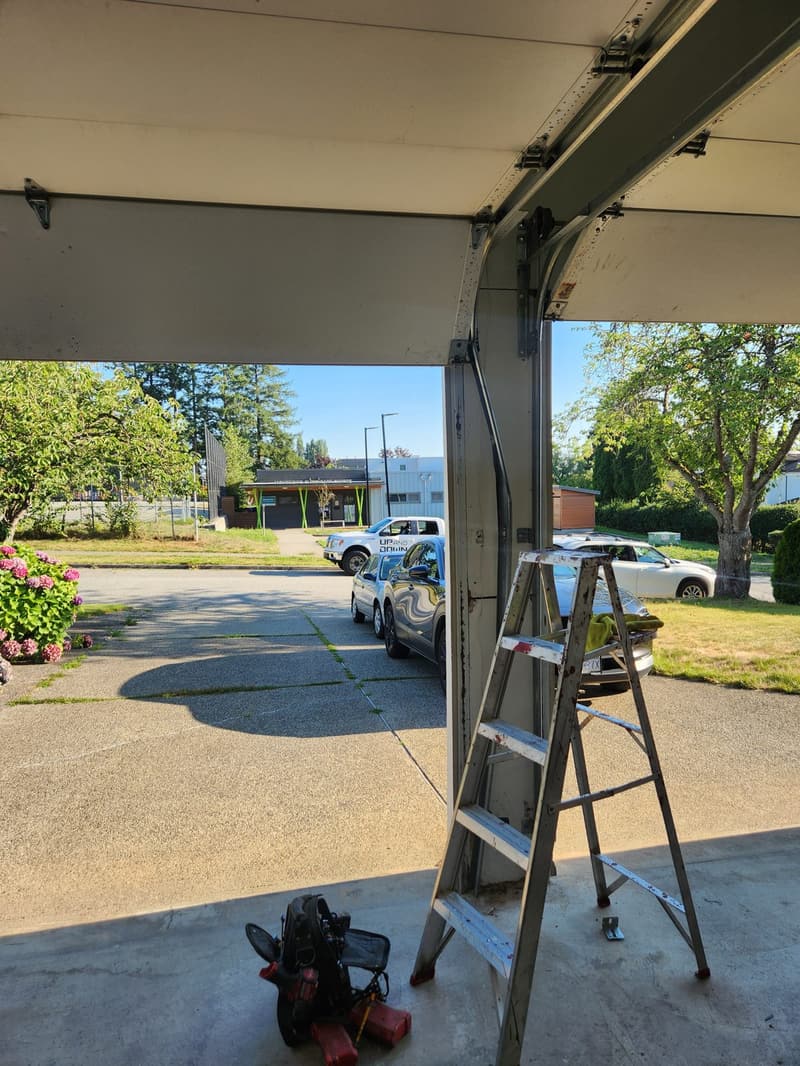
Garage door openers in Abbotsford residential settings fail due to predictable mechanical and electrical wear. Chain drives stretch or jump teeth on the sprocket, especially in older homes on streets like South Fraser Way or Townline Road where humidity accelerates corrosion. Belt drives fray or snap when misaligned, often after years of vibration from heavy-use doors on double-car garages common in Mount Lehman or Clayburn subdivisions. Screw drives seize when the threaded rod loses lubrication, a frequent issue in garages exposed to Abbotsford’s seasonal temperature swings from freezing winters to hot, dry summers. Capacitors in the motor circuit degrade over time, causing humming without movement or intermittent operation. Safety sensors misalign after foundation settling or get knocked loose by storage items, preventing the door from closing. Gear assemblies inside the motor housing strip under load, particularly when the door springs are weak and the opener compensates by overworking.
Diagnosing Electrical and Sensor Issues
Electrical faults require systematic testing. A multimeter checks voltage at the motor terminals; low readings indicate wiring faults, corroded terminals at the ceiling bracket, or a failing circuit board. Wall console wiring often frays where it staples to studs near the garage entry, a common issue in finished garages on streets like Eagle Mountain Drive or McCallum Road. Remote signal failure points to antenna damage, receiver board failure, or interference from LED lighting or solar inverters increasingly common in Abbotsford homes. Safety sensors show steady or blinking lights; misalignment causes the door to reverse immediately after hitting the floor. Dirty lenses from dust or spider webs—prevalent in garages backing onto rural lots near the Sumas River—block the infrared beam. Wires running along the door track get pinched during operation, especially if the track is bent from impact. GFCI outlets tripping repeatedly suggest a short in the motor windings or start capacitor, requiring isolation testing.
Mechanical Wear in Drive Systems
Chain drives show wear as elongated links or stiff joints, causing jerking motion and loud clattering. The sprocket on the motor shaft develops hooked teeth, skipping under load. Belt drives exhibit fraying edges or cracks in the rubber reinforcement; a snapped belt leaves the carriage free-wheeling on the rail. Screw drives develop pitting or galling on the threaded rod, increasing friction and motor strain. The trolley assembly wears where it contacts the rail, developing flat spots that cause binding. Rail misalignment—often from improper initial installation or structural settling—creates binding points that mimic motor failure. Couplers between motor and drive mechanism crack or shear, disconnecting power transmission. Limit switches drift out of adjustment, causing the door to stop short or travel too far, pressing hard against the stop bolt. These issues are frequently found in original builder-grade openers still operating in Abbotsford homes built during the 1990s and early 2000s boom in areas like West Abbotsford or Clearbrook.
Door-Related Problems Affecting Opener Performance
Opener strain often originates from the door itself. Broken torsion springs double the effective weight, forcing the motor to stall or trip thermal protection. Worn rollers increase friction, especially nylon rollers that flatten or steel rollers with seized bearings. Bent tracks create binding points; common in garages where vehicles have struck the vertical track near the floor. Loose hardware—lag screws pulling out of jamb brackets or track bolts vibrating free—allows rail movement during operation. Door panels warping from moisture exposure, typical in uninsulated garages on the floodplain near Matsqui Prairie, change the door’s geometry and bind in the tracks. Cable drums slipping on the shaft or frayed cables increase load unpredictably. These mechanical issues must be resolved before opener repair; otherwise, the new or repaired opener will quickly fail under abnormal load. Technicians check door balance by disconnecting the opener and lifting the door manually—it should stay put around waist height and move smoothly.
Repair Versus Replacement Considerations
Repair makes sense when the motor unit is sound and failure is isolated to a replaceable component: a capacitor, gear kit, sensor pair, or drive belt/chain. Replacement is warranted for motor burnout, stripped internal gears in older units with no available parts, or obsolete technology incompatible with modern safety standards (like missing rolling-code encryption). Abbotsford’s climate favors operators with corrosion-resistant housings and sealed gearboxes. Belt drives suit detached garages where noise is a concern; chain drives withstand heavier doors common on rural properties. Screw drives require regular lubrication and are less ideal in dusty environments. New installations include battery backup for power outages during storms, a useful feature given Abbotsford’s occasional winter ice storms. Compatibility with existing door weight and track configuration is critical—matching the opener’s lift capacity to the door’s specifications prevents premature failure. Older rail systems may need adapters for modern trolley designs.