Strata Garage Door Service Richmond
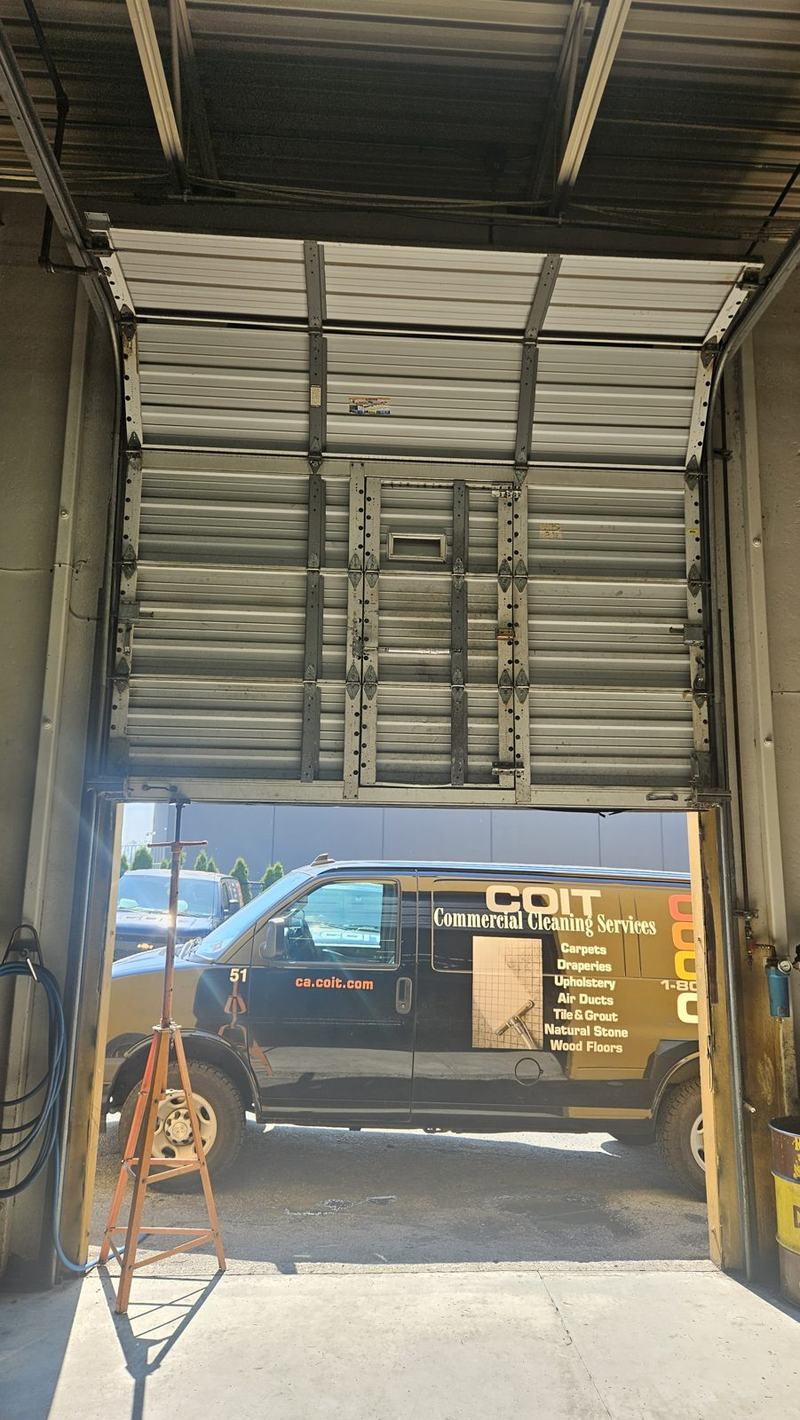
Strata properties in Richmond often feature older garage door systems installed during the 1980s and 1990s building boom, particularly in neighbourhoods like Steveston, West Cambie, and along No. 3 Road. These systems frequently use chain-drive openers with steel torsion springs rated for 10,000 cycles—far below the usage demands of multi-unit buildings where doors may operate 15–20 times daily. Spring fatigue is the most common failure mode, leading to sudden door drop or inability to lift. Worn rollers, especially nylon ones that degrade under UV exposure and temperature swings, cause binding in the tracks. Misaligned safety sensors, often knocked out of place by moving carts or storage units, prevent door closure and trigger false obstruction errors. In coastal Richmond, salt-laden air accelerates corrosion on hinge bolts and cable drums, particularly in buildings near the Fraser River or along Gilbert Road.
Why Strata Doors Require Specialized Maintenance
Unlike single-family homes, strata garage doors serve multiple units with shared access points, meaning a single malfunction can disrupt entry for several households. Doors in townhouse complexes along Alderbridge Way or garden-style buildings near Lansdowne Centre often operate as part of a coordinated system where timing and synchronization matter. If one door lags due to a weak spring or dirty opener gear, it can cause uneven loading on the shared header or trigger error codes in networked opener systems. Strata councils are responsible under the Strata Property Act for maintaining common property, which includes garage doors serving multiple units. Preventive maintenance isn’t just about convenience—it reduces liability risks from sudden failures that could injure residents or damage vehicles. Lubrication of pivot points, inspection of cable fraying, and testing of auto-reverse mechanisms must occur quarterly, not annually, to meet safety expectations in high-use environments.
Inspection Protocols for Multi-Unit Buildings
When servicing a strata garage door system in Richmond, we begin with a visual audit of all accessible components: checking for rust on spring coils near the salt-affected zones of Bridgeport Industrial Area, verifying track alignment using laser levels to detect even 2mm of drift, and measuring spring tension with a calibrated scale to ensure it matches the door’s actual weight—often underestimated when original insulation is replaced with heavier wood-look panels. We test the emergency release cord accessibility from inside the garage, a requirement often overlooked in units where storage blocks the pull rope. Safety beam alignment is validated using a reflective target to confirm both sender and receiver are within 5 degrees of parallel. We also document the opener’s manufacture date and model—many Chamberlain or LiftMaster units from the early 2000s still in use lack modern rolling-code encryption, creating security vulnerabilities in buildings with shared underground parking accessed via Richmond’s Garden City Road corridor.
Spring Replacement and Cable Safety in Strata Settings
Torsion spring replacement in strata buildings requires strict adherence to load calculations. A double-car door weighing 250 lbs needs springs rated for at least 125 lbs per side, but aftermarket substitutions often use undersized springs to cut costs, leading to premature failure and dangerous recoil. We never reuse old cables—galvanized aircraft cable corrodes internally where it wraps around the drum, and visual inspection misses internal fraying. In buildings near the riverfront or along Westminster Highway, where humidity and salt accelerate degradation, we recommend stainless steel cables despite higher cost, as they resist pitting that leads to sudden snapping. During replacement, we wind springs to exact torque using a calibrated winding bar set, then perform three full lift cycles to verify balance before considering the job complete. We also check the center bearing plate for wear—elongated holes indicate excessive movement and require plate replacement to prevent future misalignment.
Opener Logic Board and Sensor Troubleshooting
Modern strata buildings often use smart-enabled openers integrated with access control systems, particularly in newer developments along Alexandra Road or near the Oval. When a door fails to close, the issue is rarely the remote—it’s usually a logic board error triggered by voltage fluctuations common in older buildings with shared electrical panels. We test input voltage at the opener terminals; readings below 18V AC indicate a failing transformer or overloaded circuit. Safety sensors are frequent failure points—not just misalignment, but lens condensation from temperature swings between heated garages and cool Richmond mornings. We clean lenses with isopropyl alcohol and apply a silicone-based anti-fog compound used in marine environments. If the opener flashes a specific error code—like five blinks indicating motor overheating—we check the drive gear for stripping, a common issue in nylon gears subjected to frequent cycling in high-turnover townhouse complexes.
Preventive Maintenance Schedules for Strata Councils
A reactive approach to garage door service leads to emergency calls, higher costs, and resident complaints. We recommend strata councils in Richmond adopt a biannual service schedule: one inspection in early spring after winter salt exposure, and another in fall before the rainy season. Each visit includes lubrication of hinges, rollers, and pulleys with silicone-based spray (never WD-40, which attracts dust), torque verification of all mounting bolts, and a full cycle test of the auto-reverse feature using a 2×4 obstruction. We provide a written report detailing component wear, recommended replacements, and priority items—useful for strata meeting minutes and insurance documentation. Buildings near high-traffic zones like Bridgeport Road or the Canada Line corridor experience more vibration-induced loosening, so we pay extra attention to lag screw integrity in the header bracket. This proactive approach extends system life and reduces the likelihood of catastrophic failure during peak usage times.
Frequently Asked Questions
How often should strata garage doors be inspected in Richmond’s climate?
In Richmond’s coastal environment, with exposure to salt air from the Fraser River and frequent temperature swings, strata garage doors should be inspected at least twice a year—once in spring to address winter corrosion and once in fall to prepare for increased moisture. High-use buildings may require quarterly checks, especially those near industrial zones or major transit corridors where vibration and usage accelerate wear.
Can we replace just one broken spring on a double-door strata system?
No—replacing only one spring on a double-door system creates uneven load distribution, which causes the door to bind in the tracks, wear out rollers prematurely, and strain the opener motor. Both springs must be replaced simultaneously with matched pairs to ensure balanced operation and prevent sudden failure of the older spring shortly after service.
What causes a strata garage door to reverse immediately after hitting the floor?
This is typically caused by excessive down-force sensitivity or a misaligned safety sensor. The opener’s down-force setting may be too high, triggering the auto-reverse mechanism upon floor contact, or the safety beams may be slightly misaligned, making the system falsely detect an obstruction. Both issues require recalibration using the opener’s adjustment screws and a laser alignment tool.