Common Causes of Off-Track Garage Doors in Langley Homes
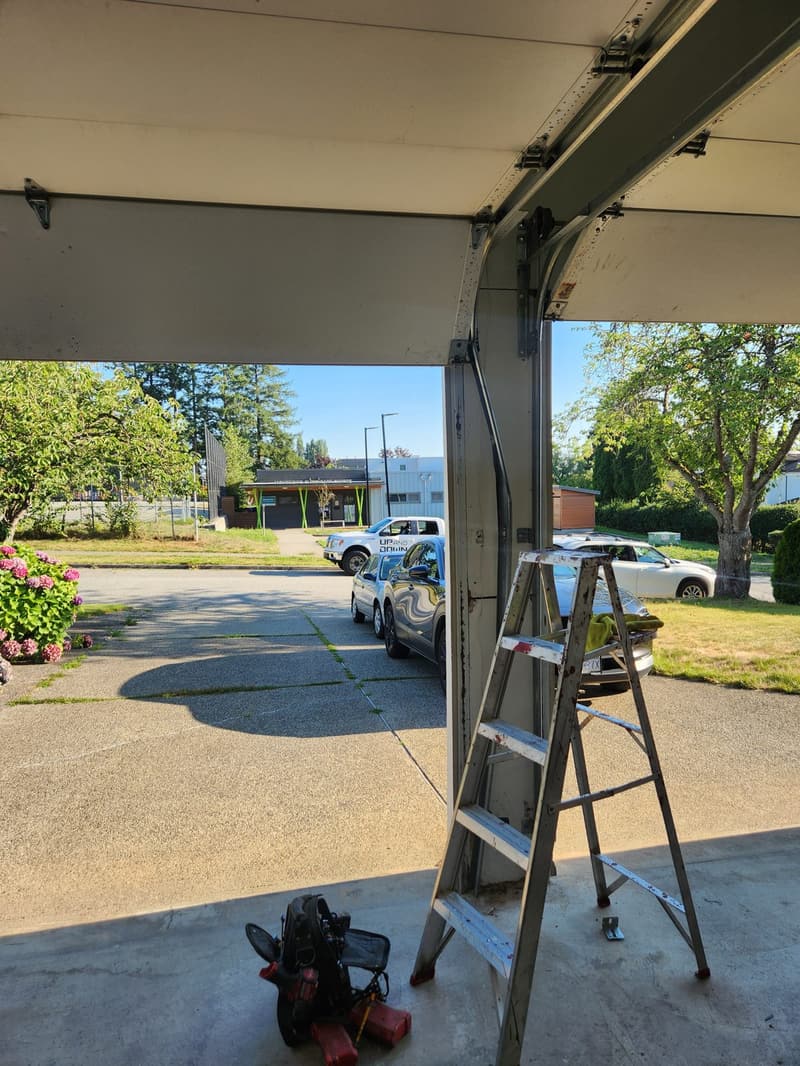
Garage doors in Langley residential areas like Walnut Grove and Willowbrook frequently come off track due to impact damage or worn components. A vehicle bumper striking the lower panel while reversing is a common trigger, especially in older homes with narrow driveways. The force bends the vertical track or dislodges rollers from their pathway. In Murrayville’s newer subdivisions, cold weather exacerbates the issue—contracted metal tracks become brittle, and lubricant thickens, increasing friction that pulls rollers sideways during operation. Wooden doors, still prevalent in heritage zones near 200th Street, absorb moisture, swell, and bind against tracks, forcing rollers out of alignment. Steel doors with thin gauge panels can dent upon impact, creating uneven surfaces that catch rollers and jump them off the rail. These failures are not random; they stem from specific mechanical stresses that compromise the door’s guidance system.
How Vertical and Horizontal Tracks Function Together
The track system consists of two vertical sections mounted to the jambs and a horizontal section that curves from the vertical track to the ceiling. Rollers attached to the door panels ride inside these tracks, guided by the track’s inner flange. When the door opens, rollers transition from vertical to horizontal motion via the curved radius. Proper alignment requires the vertical tracks to be perfectly plumb and parallel, with the horizontal track level and at the correct height. In Langley’s older homes, settling foundations can shift the jambs, causing tracks to twist or pull apart at the seam. The horizontal track’s attachment to the ceiling angle iron may loosen over time, allowing it to sag. If the track spread—the distance between the inner faces of the vertical tracks—is too wide, rollers lose contact; too narrow, and they bind. Both conditions precede derailment. Technicians measure track spread with a caliper and check plumb with a level before any repair.
Roller and Cable Failure as Precursors to Off-Track Events
Rollers and lift cables often fail before the door visibly leaves the track. Nylon rollers develop flat spots from prolonged side pressure, while steel rollers suffer bearing seizure, both increasing drag. In Langley’s coastal humidity, unsealed bearings corrode, causing rollers to lock and drag sideways. Lift cables, typically 1/8-inch aircraft-grade steel, fray at the bottom bracket where they bend over the drum. A broken cable on one side creates uneven lift, tilting the door and forcing the opposite roller out of the track. This is common in double-car garages along 208th Street where doors cycle frequently. Technicians inspect cables for broken strands near the ferrule and rollers for side wear or missing chunks. Replacing only the roller without addressing cable tension or track alignment invites repeat failure. The system must be evaluated as interconnected components, not isolated parts.
The Repair Process: Realignment and Component Replacement
Correcting an off-track door begins with securing the door in the open position using locking pliers on the track above the roller to prevent collapse. Technicians then examine the vertical track for bends—using a straightedge to detect deviations—and gently reshape it with a track bending tool if the damage is minor. Severe creases or kinks require track section replacement. The horizontal track is checked for sag; loose lag bolts are tightened, and the angle iron is reinforced if necessary. Rollers are replaced with nylon-sealed units suitable for Langley’s temperature swings, and lift cables are inspected and replaced in pairs to maintain balance. The door is lowered slowly to verify roller seating, then tested through multiple cycles. Track spread is reset to the manufacturer’s specification—typically 3.25 inches for residential doors—using a spacer bar. Lubrication with silicone-based spray completes the process, avoiding petroleum-based products that attract dust in Langley’s agricultural outskirts.
Why DIY Fixes Often Fail and Risk Further Damage
Attempting to force an off-track door back onto the rail without addressing root causes usually worsens the problem. Hammering rollers into place can crack panels or bend tracks beyond repair. Ignoring cable tension leads to immediate re-occurrence, as the door remains unbalanced. In Langley’s rural properties along Glover Road, where doors may be oversized or non-standard, improper track spacing binds the door, straining the opener motor. Using incorrect roller types—such as standard steel in high-humidity zones—accelerates wear. Moreover, working under tension without proper tools risks sudden cable release, which can cause injury. Professional repair includes verifying the door’s weight balance after reassembly; an imbalanced door will creep closed or slam shut, indicating unresolved spring tension issues. These nuances are why a systematic approach, grounded in mechanical understanding, is essential for lasting repair.
Frequently Asked Questions
How do I know if my garage door is off-track or just needs lubrication?
If the door binds at a specific point during travel, makes grinding noises, or appears crooked in the opening, it is likely off-track. Lubrication resolves squeaks but not mechanical misalignment or roller disengagement from the track.
Can a single bent track section be repaired, or must the whole track be replaced?
Minor bends in the vertical track can often be straightened with specialized tools, but creases, kinks, or metal fatigue require section replacement to ensure consistent roller guidance.
Will repairing the track fix a noisy garage door, or are other issues likely?
Track repair addresses binding and derailment but not noise from worn rollers, loose hinges, or opener chain slack—those require separate inspection during service.