Understanding Strata Garage Door Systems in Maple Ridge
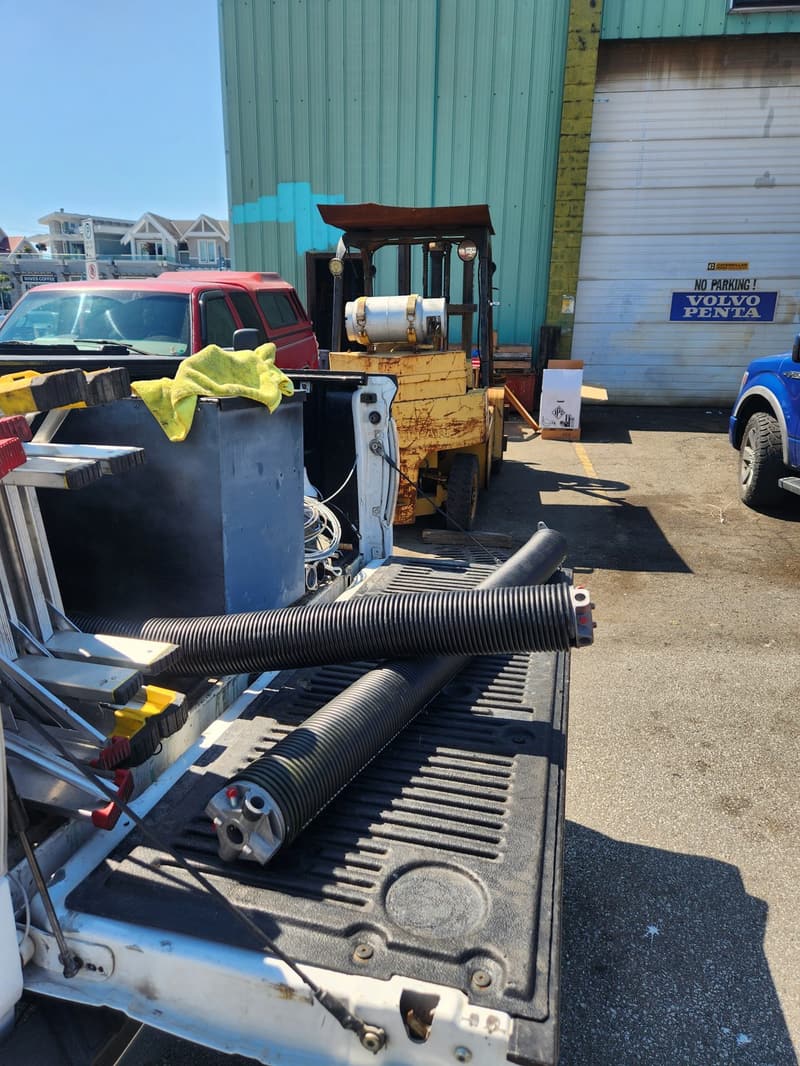
Strata properties in Maple Ridge present unique challenges for garage door systems that differ significantly from single-family homes. Townhouse complexes along 224th Street, developments near Lougheed Highway, and low-rise buildings in the Albion area often feature interconnected garage structures with shared walls, common driveways, and uniform door specifications mandated by strata councils. These systems typically use heavier-duty torsion springs, commercial-grade rollers, and reinforced track assemblies designed for higher cycle counts due to multiple units accessing the same garage bays. The constant use accelerates wear on components that might last decades in a private home but require attention every 3-5 years in a strata setting. Understanding this shared infrastructure is critical when diagnosing issues, as a problem in one unit’s door can affect adjacent units through shared wall vibrations or misaligned tracks that bind across property lines.
Common Failure Modes in Shared Garage Door Systems
Strata garage doors fail in predictable ways due to their design and usage patterns. Torsion springs, rated for 10,000-20,000 cycles, experience accelerated fatigue when serving multiple units—what might last 15 years in a single home could degrade in 5-7 years in a busy strata complex. We frequently see spring fatigue manifest as uneven lifting, where one side of the door rises faster than the other, causing the panel to bind in the tracks. Roller deterioration is another prevalent issue; nylon or steel rollers in shared systems flatten or develop flat spots from constant use, leading to loud grinding noises and jerky motion. Cable fraying occurs at the drum attachment points due to increased lateral loads when doors are slightly misaligned—a common occurrence when settling foundations in Maple Ridge’s glacial soil shift the concrete pads over time. Additionally, photo-eye sensors on strata doors often suffer from misalignment caused by minor impacts from bicycles, strollers, or gardening equipment stored in shared garages, triggering false obstruction signals that prevent door closure.
The Importance of Preventative Maintenance Schedules
Unlike residential doors where maintenance is reactive, strata systems benefit from structured preventative programs. A proper maintenance cycle includes lubricating all moving parts with silicone-based grease (never WD-40, which attracts dust and degrades rubber), checking track alignment with a laser level to ensure vertical and horizontal precision within 1/8 inch, and testing spring tension by manually lifting the door to waist height—it should stay put without drifting. We inspect cable drums for wear patterns, verify that emergency release cords are accessible and functional, and check that all struts on double-wide doors are securely fastened to prevent panel sagging. For strata complexes along 128th Avenue or in the Silver Valley area, we recommend bi-annual inspections: once before the wet season to check for corrosion on springs and cables, and once in early fall to prepare for winter contraction of metal components. Documentation of these services is often required by strata councils for insurance compliance and reserve fund planning.
Addressing Noise Complaints and Vibration Transfer
Noise transmission between units is a frequent concern in strata garage door service, particularly in older townhouses where shared walls lack adequate decoupling. Excessive noise usually stems from three sources: worn rollers causing metal-on-metal contact in the tracks, loose chain drives on overhead operators creating slapping sounds, or unbalanced doors forcing the motor to strain during operation. We address this by installing nylon-coated rollers with sealed bearings, which reduce operational noise by 6-8 decibels compared to standard steel rollers. For chain drives, we check and adjust tension to manufacturer specifications—typically 1/4 inch of deflection midway between sprocket and shaft—and replace stretched chains that cause timing issues. When vibration transfers through shared walls, we isolate the operator mounting brackets using rubber vibration dampers and ensure the door’s horizontal tracks are securely fastened to structural studs, not just drywall anchors, to prevent sympathetic vibration that amplifies noise in adjacent units.
Safety System Verification for Shared Spaces
Safety systems in strata garages require rigorous testing due to higher pedestrian traffic and varied user familiarity. Photo-eye sensors must be aligned within 2 degrees of parallel and tested monthly by placing a 2-inch object in the beam path— the door should reverse immediately upon contact. We verify that the force adjustment settings on operators comply with UL 325 standards, ensuring the door reverses with no more than 15 pounds of resistance encountered during closing. Emergency release mechanisms are checked for accessibility; the release cord must be no higher than 6 feet from the floor and clearly marked. In complexes with tandem parking or visitor stalls, we ensure that exterior keypads or card readers are properly interfaced with the door operator’s logic board to prevent ghost openings. For strata councils managing buildings near the Fraser River floodplain, we also assess whether operators have adequate corrosion resistance for coastal-influenced humidity cycles, recommending marine-grade coatings on springs and hardware where appropriate.
Frequently Asked Questions
How often should strata garage doors be serviced compared to single-family homes?
Strata garage doors typically require service twice as frequently as single-family residential doors due to higher cycle counts from multiple units sharing the same access points. While a private home might need annual maintenance, strata systems in Maple Ridge benefit from bi-annual inspections—once in spring to address winter wear and once in fall to prepare for increased moisture and temperature fluctuations that affect metal components and lubricants.
Can strata garage door repairs be done without disrupting all units in a complex?
Yes, repairs can be conducted on individual units without affecting adjacent garages, as each door operates on its own independent system despite sharing walls or driveways. Technicians work within the confines of the specific garage bay, using drop cloths to contain debris and scheduling access during low-traffic hours to minimize inconvenience to residents while ensuring repairs comply with strata bylaws and safety standards.
What causes strata garage doors to bind or stick during operation, and how is it fixed?
Binding or sticking usually results from misaligned tracks, worn rollers creating flat spots, or foundation settling that shifts the door frame out of square—common in Maple Ridge areas with variable soil composition. Correction involves loosening track brackets, realigning the vertical and horizontal tracks to precise measurements using a level and string line, replacing damaged rollers, and verifying smooth operation through multiple full cycles before final tightening of all hardware.