Home/Blog/Can You Replace a Garage Door Track Yourself? A BC Homeowner’s Guide
Can You Replace a Garage Door Track Yourself? A BC Homeowner’s Guide
Replacing a garage door track involves more than unbolting rails. Learn what\u2019s involved, where DIY ends, and when to call a pro for safety and alignment.
Replacing a garage door track yourself is possible only if the damage is limited to a bent or corroded section of vertical or horizontal track, and the door remains balanced and operable. If the track is twisted, pulled from the jamb, or the door binds during operation, the issue often stems from misaligned brackets, worn rollers, or underlying frame rot—not just the track itself. Attempting a full track replacement without addressing these root causes can worsen misalignment or create new binding points. Start by inspecting the track for visible damage: look for dents, rust-through sections, or gaps between the track and the door roller. Listen for scraping or grinding noises as the door moves, which indicate metal-on-metal contact from a deformed track. Check that the vertical track is plumb using a level; even a 5-degree tilt can cause rollers to jump the track. The horizontal track must slope slightly backward (about 1/4 inch per 10 feet) to allow the door to sit snug against the stop molding when closed. If the track is simply bent but still securely fastened to the jamb, you may straighten it with a track bending tool or carefully hammer it back into alignment using a block of wood to avoid marring the metal. However, if the track is torn from the wall, the lag screws are stripped, or the jamb is rotted, replacing the track requires removing the door, which means dealing with spring tension. Torsion springs mounted above the door store dangerous amounts of energy—releasing them without proper winding bars and training can cause severe injury or death. Extension springs along the sides also pose risks if mishandled, as they can snap with significant force. Even if you manage to remove the door safely, rehanging it requires precise alignment of the track brackets to ensure the door travels smoothly without binding or rubbing. The rollers must sit centered in the track with no side-to-side play, and the top roller should sit just below the horizontal curve when the door is open. If the track is new but the door still binds, the issue is likely misaligned brackets, not the track itself. Shimming behind brackets or loosening and repositioning them is often the real fix—not track replacement. In Metro Vancouver’s damp climate, corrosion frequently weakens the lag screws holding track brackets to the jamb, especially in older homes with untreated wood framing. Before assuming the track is bad, probe the wood around the screws with an awl; if it’s soft or crumbles, the jamb needs repair or replacement first. Simply screwing into rotted wood will not hold, and the track will pull loose again under load. For most homeowners, the safest DIY approach is limited to inspecting, cleaning, and lubricating the track and rollers, or straightening minor bends. Full removal, replacement, and realignment of garage door tracks—especially when door weight and spring tension are involved—should be left to technicians who use proper tools and follow safety procedures. If you’re unsure about the condition of your track, springs, or jamb, contact Up & Down Garage Doors at (778) 873-7282 for an assessment.
Can You Replace Garage Door Track Yourself
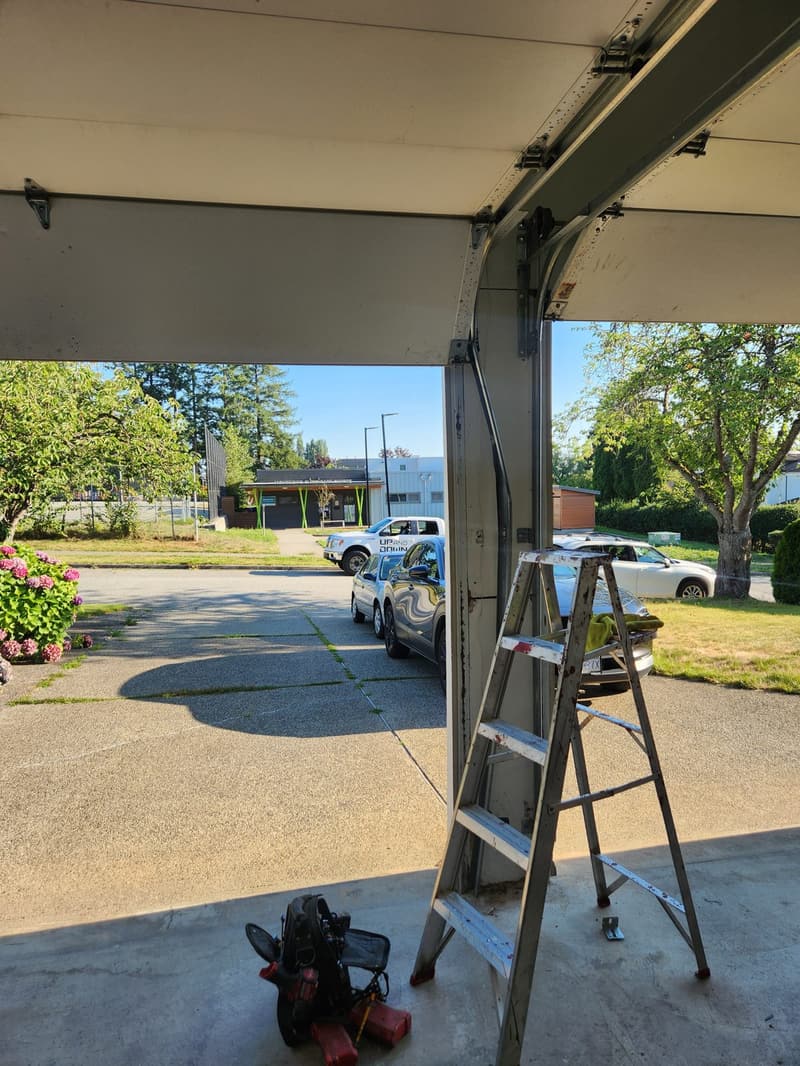
Can You Replace Garage Door Track Yourself — real job photo, Up & Down Garage Doors.
Signs Your Track Needs Attention
A damaged track often announces itself through sound and movement. You might hear a loud scraping or rubbing noise as the door moves, particularly at a specific point in the travel—this indicates a dent or bend where the roller is hitting the track edge. The door may hesitate, jerk, or stall at that spot, or you might see the roller visibly lifting out of the track flange. Visual inspection can reveal rust that has eaten through the metal, especially at the bottom of the vertical track where moisture pools. In some cases, the track may appear straight but is loose from the wall due to stripped lag screws or rotted jamb—push gently on the track; if it moves independently of the framing, it’s not securely fastened. Another sign is a door that rubs against the stop molding when closed, which can indicate the horizontal track is too low or not sloped back slightly.
When DIY Track Repair Makes Sense
If the track is intact but has a minor bend—say, from a bumper impact—and the door still moves smoothly otherwise, you may be able to straighten it. Use a track bending tool or a pair of locking pliers wrapped in tape to avoid marring the metal, applying slow, even pressure to restore the flange’s original shape. After straightening, check that the roller moves freely through the section with no catching. Lubricate the track with a silicone-based spray (never grease, which attracts dirt) and operate the door several times to distribute it. If the track is corroded but structurally sound, you can clean it with a wire brush and apply a rust-inhibiting primer followed by paint designed for metal. However, if the corrosion has created holes or weakened the metal to the point where it flexes under pressure, replacement is necessary. Always verify that the jamb behind the track is solid wood—if it’s soft or crumbling, no track repair will last.
Why Full Track Replacement Is Rarely a DIY Job
Replacing a garage door track typically requires removing the door to access the bolts and brackets securing the track to the jamb and ceiling. Once the door is detached, the springs—whether torsion or extension—are holding the door’s weight in place. Torsion springs, wound tightly around a shaft above the door, can release with explosive force if the winding cones are loosened improperly. Extension springs, stretched along the horizontal tracks, store energy that can launch components like dangerous projectiles if a cable fails. Even if you manage to release the tension safely, rehanging the door demands precision: the tracks must be parallel within 1/8 inch, plumb to within 1/2 inch over their height, and the horizontal track must slope backward correctly. Misalignment by even a few degrees causes binding, roller wear, or premature opener failure. The lag screws holding the track brackets must penetrate solid framing—often 2×4 or 2×6 studs—and be tightened to spec without splitting the wood. In older BC homes, especially those with original framing, the jamb may be deteriorated, requiring sistering or replacement before new track can be securely mounted.
The Role of Rollers, Brackets, and Alignment
Track issues are frequently mistaken for roller or bracket problems. Worn rollers with flat spots or seized bearings can mimic track damage by causing noise and vibration. Similarly, loose or corroded brackets can allow the track to shift under load, creating the appearance of a bent track when the real issue is movement at the mounting point. During inspection, wiggle each track bracket—if it moves, the lag screws may be stripped or the jamb compromised. Check the rollers for side-to-side play; they should rotate freely but not tilt within the track. The top roller should sit just inside the horizontal curve when the door is fully open—if it’s riding on the edge or jumping out, the track radius or bracket height is off. Adjusting bracket position or adding shims behind them is often the correct fix—not replacing the track itself.
When to Call a Professional
Call a technician if the track is torn from the wall, the jamb is rotted, the door is uneven or sagging, or you suspect spring involvement. Professionals use door jacks to support the weight safely while disconnecting springs, and they have the tools to measure and align tracks to manufacturer tolerances. They can also assess whether the issue stems from the track, the frame, the rollers, or the opener’s force settings. In Metro Vancouver, where humidity and temperature swings accelerate corrosion and wood rot, a thorough inspection often reveals interconnected issues that a track-only fix won’t resolve. Attempting a repair beyond your skill level risks not only ineffective results but also personal injury or property damage from a falling door or sudden spring release.
Frequently Asked Questions
### Can I replace just the vertical track without touching the horizontal section?
Yes, if the damage is confined to the vertical track and the horizontal section remains straight and securely fastened, you can replace only the vertical portion. However, you must still support the door and deal with spring tension to detach the old track and install the new one, as the vertical track connects to the bottom bracket and the door’s lower rollers.
What tools do I need to straighten a bent garage door track?
A track bending tool is ideal, but you can use locking pliers wrapped in tape or a pipe wrench with wood blocks to avoid marring the metal. A level is essential to check plumb after straightening, and a rubber mallet can help tap minor bends back into place without causing new deformations.
How do I know if the wall behind my track is strong enough to hold new brackets?
Probe the wood around the existing lag screws with an awl or screwdriver—if it sinks in easily or feels spongy, the wood is rotted and needs repair. Solid wood should resist penetration and feel firm. If the jamb is compromised, you may need to sister a new 2×4 or 2×6 alongside it or replace the section before mounting new track.