If your garage door won’t open and you suspect the track is the issue, start by checking for visible damage or obstructions along the metal rails that guide the rollers. A track problem prevents the door from moving smoothly because the rollers can’t travel freely, often due to bending, misalignment, or debris buildup. You might hear grinding, scraping, or notice the door jerks or sticks at a certain point. This guide explains how tracks function, what goes wrong, and what you can safely inspect yourself.
Garage Door Wont Open Track Problem
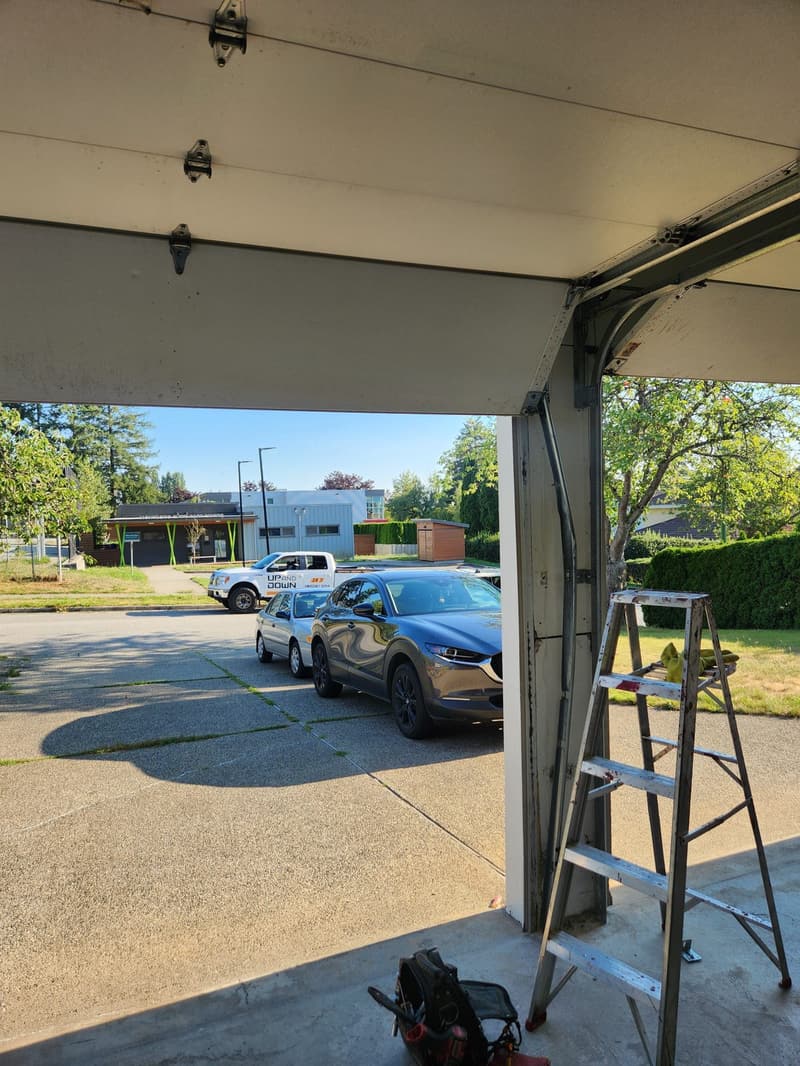
Common Track Issues That Prevent Opening
Bent tracks are frequent, often from accidental impact with a vehicle, ladder, or stored items. A vertical track bent inward or outward misaligns the rollers, causing them to bind or pop out. Horizontal tracks can sag if their ceiling mounts loosen, creating a low spot where rollers catch. Rust or corrosion, especially in coastal BC climates, weakens the metal and creates rough surfaces that impede roller movement. Loose lag bolts securing the track brackets to the jamb allow shifting over time, altering the track angle and inducing binding.
Symptoms of a Track Problem
Listen for rhythmic scraping or grinding as the door moves—this indicates rollers contacting a deformed track section. Visually, look for gaps between the roller and track, or rollers riding outside the track flange. If the door opens a few inches then stops abruptly, check the point of resistance; it often corresponds to a dent or bend. You might see roller deformation or flat spots from prolonged binding. Unlike spring or opener issues, track problems usually produce consistent resistance at the same location during each cycle.
What You Can Safely Check Yourself
With the door closed and disconnected from the opener (pull the emergency release cord), manually lift the door to feel for smooth operation. Inspect the tracks for obvious bends, dents, or obstructions like stones or debris. Check that all mounting bolts are tight—use a socket wrench to verify lag bolts into the jamb and ceiling brackets aren’t loose. Spin the rollers by hand; they should turn freely without wobble or roughness. Lubricate the rollers and track interior with silicone-based spray (not grease) to test if friction decreases. Never adjust or loosen the bolts securing the bottom bracket—they’re under spring tension.
When Track Repair Requires a Professional
If the track is bent, kinked, or twisted, attempting to straighten it yourself risks worsening the damage or creating weak points that fail under load. Horizontal track sagging due to torn metal or stripped mounting holes needs reinforcement or replacement. Rust that has pitted or perforated the track compromises structural integrity. Most critically, if the track issue is accompanied by cable fraying, spring damage, or the door is stuck open, do not proceed—high-tension components are involved. Misdiagnosing a track problem when the root cause is a broken spring or snapped cable can lead to hazardous situations.
The Risks of Ignoring Track Issues
Continuing to operate a door with a damaged track accelerates roller wear, increases strain on the opener motor, and can bend the door panels themselves. A roller that jumps the track may cause the door to bind severely or collapse unexpectedly. Misaligned tracks transfer uneven load to the hinges and struts, potentially warping the door section over time. In strata settings, a malfunctioning door poses a safety hazard and may violate strata bylaws requiring operable common property elements.
Frequently Asked Questions
### Can I use a hammer to straighten a bent track myself?
No. Striking the track with a hammer risks creating stress fractures, weakening the metal, or worsening the bend. Proper track straightening requires specialized tools to gradually restore alignment without compromising the metal’s integrity. A professional assesses whether repair or replacement is safer based on the damage extent.
Why do tracks bend more in winter in Metro Vancouver?
Temperature fluctuations cause metal to expand and contract, and existing minor bends can worsen as the material flexes. Ice buildup in the track from snow or freezing rain adds physical obstruction and increases the force needed to move the door, exacerbating stress on weakened sections. Lubrication thickens in cold, increasing friction at damaged points.
### How often should I inspect my garage door tracks?
Visually check the tracks and rollers every three months for debris, loose bolts, or early signs of rust or bending. Lubricate rollers and track interiors twice a year with silicone spray. After any impact near the door—like bumping it with a car or ladder—inspect immediately for new bends or misalignment before operating the door.
If you’ve checked for obstructions, loose bolts, and roller condition but the door still won’t open smoothly due to a suspected track problem, contact Up & Down Garage Doors at (778) 873-7282 for an assessment. Track repairs involving bending, structural damage, or alignment require expertise to ensure safe, reliable operation.