Garage door tracks typically last 15 to 25 years with regular use and proper maintenance, though this varies based on material quality, environmental exposure, and how often the door cycles. Tracks are not wear items like rollers or cables, but they can degrade from corrosion, impact damage, or misalignment over time. In coastal areas of Metro Vancouver, salt air accelerates rust on steel tracks, while interior garage humidity can promote oxidation if ventilation is poor. Tracks made from 14-gauge or thicker galvanized steel resist wear better than thinner alternatives, and those with a baked-on polymer coating last longer in moist climates.
How Long Does Garage Door Track Last
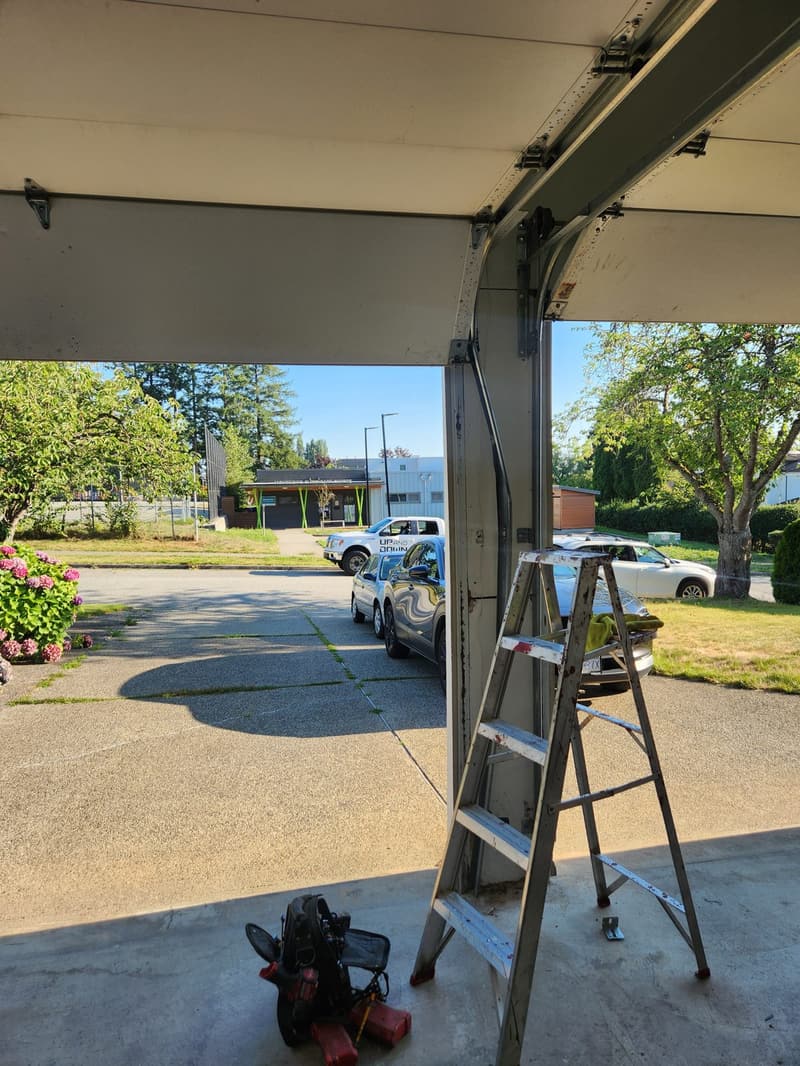
What Track Failure Looks and Sounds Like
Early signs include scraping or grinding noises when the door moves, particularly near the bottom of the vertical track where dirt builds up. You might notice the door hesitates or stutters at a specific point in its travel, or that one side appears to lag behind the other. Visually, check for rust flaking off the track surface, especially inside the curve where the vertical track transitions to horizontal. Look for gaps between the track and the roller—if you can see daylight through the space, the track has likely bent inward or outward. Severe damage shows as a visible kink or crease in the metal, often near the bottom bracket where impact from a bumper or shovel is most likely. If the track is pulled away from the wall, the lag bolts may be stripped or the jamb wood rotted behind them.
What Homeowners Can Safely Check
Start by disconnecting the opener and manually operating the door. It should move smoothly with minimal resistance—if it sticks or binds at a certain point, inspect the track at that location. Use a flashlight to examine the inside face of the vertical track for rust buildup or debris; a stiff brush can clear loose material, but don’t use harsh chemicals that might damage the galvanizing. Check that all track mounting bolts are snug (but don’t overtighten, which can strip the wood jamb). Look for level: a 4-foot level placed against the vertical track should show it’s plumb within 1/4 inch over its height. If the track appears bent, do not attempt to straighten it yourself—applying force to weaken metal can cause sudden failure.
When Track Issues Require a Professional
Any sign of structural damage—bends, twists, or separation from the wall—means the track needs replacement, not repair. Tracks are engineered to specific dimensions; hammering a bent section back into shape compromises its strength and can create stress points that fail under load. Replacing a track section requires precise alignment with the opposite track and proper shimming to maintain plumb and level. More critically, the track supports the door’s weight through the rollers, and if it fails while the door is under tension, the door can fall unexpectedly. While replacing track brackets or tightening bolts is within a capable DIYer’s scope, full track replacement involves working with the door’s weight and should be handled by technicians who know how to safely support the door during the process.
How Maintenance Extends Track Life
Lubricate the track’s inner surface lightly with a silicone-based lubricant every six months—avoid grease, which attracts dirt and forms a grinding paste. Focus on the curve and the bottom 12 inches of the vertical track where moisture accumulates. Keep the garage floor clean to reduce debris kicked up into the track, and ensure downspouts direct water away from the garage door area. Inspect the weather seal at the bottom of the door; if it’s cracked or missing, water and debris enter freely, accelerating track corrosion. In Metro Vancouver’s wet climate, consider upgrading to tracks with a heavier galvanized coating or a vinyl-encapsulated design if replacement becomes necessary.
Frequently Asked Questions
### Can I paint my garage door track to prevent rust?
Painting the track is not recommended because paint can chip and trap moisture against the metal, accelerating corrosion underneath. The track’s surface needs to remain smooth for roller movement, and paint buildup increases friction. If corrosion is a concern, clean the track thoroughly and apply a light silicone lubricant instead.
Why does my track seem louder in winter?
Cold temperatures cause metal to contract, which can increase friction if the track is slightly misaligned or if lubricant has thickened. Lubricants also become more viscous in the cold, reducing their effectiveness. Wipe old lubricant off and apply a fresh silicone-based product formulated for low temperatures.
Is it normal for the track to have some play side-to-side?
No—the track should be firmly secured to the jamb with no lateral movement. If you can wiggle the track back and forth at the bracket, the bolts are loose, the jamb is rotted, or the bracket itself is damaged. Tighten bolts to spec; if the wood is soft, the jamb may need repair before re-securing the track.
Up & Down Garage Doors (778) 873-7282