Common Cable Failure Modes in Coquitlam Homes
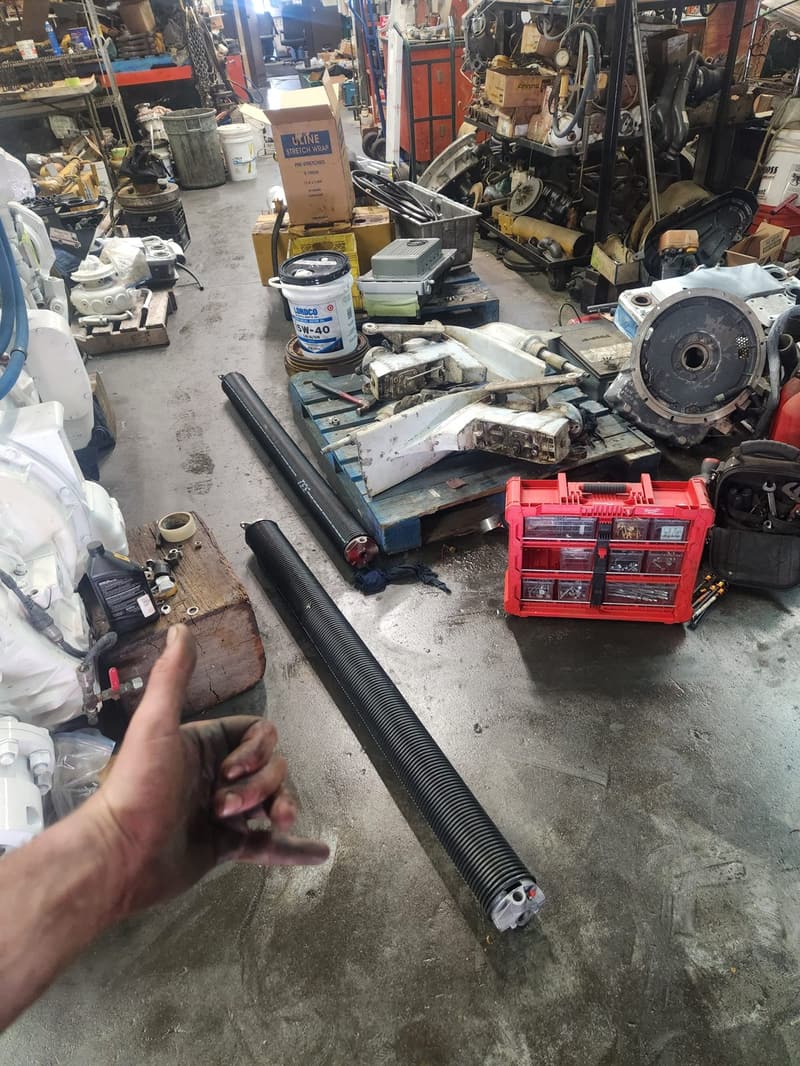
Garage door cables fail due to fatigue, corrosion, or sudden overload. In Coquitlam’s climate, moisture from the Fraser Valley air and seasonal temperature swings accelerate rust on galvanized steel cables, particularly in older homes in Maillardville and Westwood Plateau where garage doors see daily use. Cables fray at the drum or bottom bracket where they bend under tension. A broken cable allows the door to drop unevenly, stressing the opposite side and potentially bending tracks. We see this often in double-car garages on wider doors where cable load exceeds 300 lbs per side.
Why Cable Tension Matters More Than You Think
Cables work with torsion springs to balance the door. If one cable loses tension, the spring’s force becomes uneven, causing the door to bind in the tracks or lift crookedly. In Coquitlam’s newer developments like Burke Mountain and Eagle Ridge, many homes use 7-foot high-lift doors with longer cable runs. These systems are more sensitive to cable stretch—even 1/4 inch of elongation can misalign the door. We measure tension with a cable gauge before adjustment; guessing leads to over-tensioning, which accelerates wear on drums and bearings.
Inspection Process for Cable Systems
We start by disconnecting the opener and manually lifting the door to isolate cable behavior. Visual checks focus on the cable ends: fraying at the bottom bracket, kinks near the drum, or corrosion where cables pass through pulleys. We spin the drums by hand to feel for roughness indicating bearing failure, which can shred cables over time. In Coquitlam’s townhouse complexes along Lougheed Highway, shared walls mean vibrations transfer—loose cable fasteners in one unit can affect adjacent doors. We check all mounting hardware for torque specs, not just tightness.
Repair vs. Replacement: When to Act
A cable with isolated fraying near the bottom bracket might be spliced if the core strands are intact—but this is rare. Most failures require full replacement because cables fatigue uniformly along their length. We use 1/8-inch aircraft-grade galvanized cable rated for 7,000 lbs minimum tensile strength, matching the door’s weight and spring torque. In Coquitlam’s older neighborhoods like Riverview and Canyon Springs, where original 1970s–80s doors remain, we verify drum compatibility—some older drums use non-standard cable diameters that require custom parts.
Installation Best Practices for Longevity
After installing new cables, we wind them onto the drums with precise tension—typically two full wraps plus the active length—to prevent slippage. We use cable locks or vice grips on the shaft during winding to maintain control. Bottom brackets get new S-hooks or reinforced brackets if the original shows elongation. We lubricate pulleys and check track alignment before reconnecting the opener. In Coquitlam’s humid microclimates near Como Lake or Mundy Park, we recommend annual cable inspections to catch early corrosion before it compromises safety.