Common Causes of Panel Damage in Richmond Homes
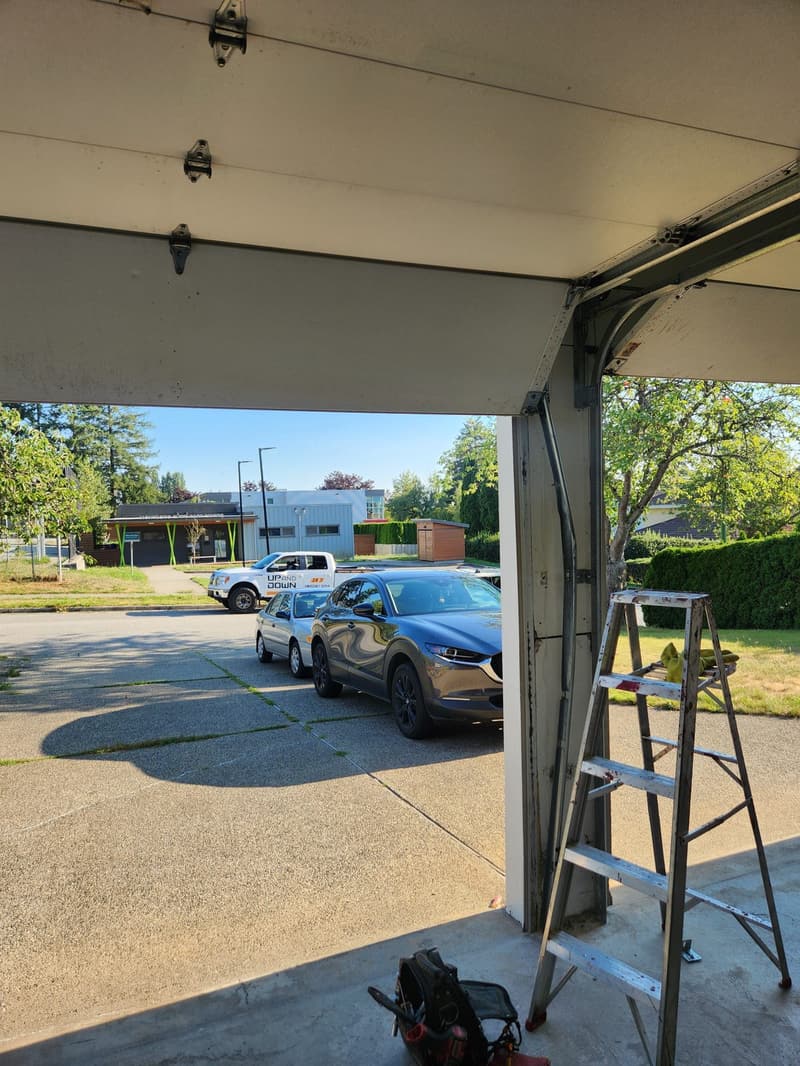
Garage door panels in Richmond fail for specific, observable reasons. Coastal moisture from the Fraser River delta accelerates rust on steel panels, particularly along the bottom edges where water pools after rain. UV exposure degrades the polymer coating on pre-painted steel, leading to chalking and peeling that exposes the substrate to corrosion. Impact damage is frequent in narrower Richmond lots—backing out of driveways on streets like No. 3 Road or Westminster Highway often results in corner strikes from vehicles or lawn equipment. Thermal cycling causes stress fractures in older insulated panels, especially where the foam core bonds to the metal skin, leading to delamination and bulging. These aren’t cosmetic issues; a compromised panel disrupts the door’s balance, strains the torsion springs, and can cause misalignment in the track system.
How Panel Failure Affects Door Operation
When a panel is damaged, the door’s structural integrity is compromised. A dented or cracked panel creates an uneven surface that prevents the rollers from seating properly in the track, leading to binding or jumping. If the damage is near the hinge attachment points, the fasteners may pull through under load, causing the panel to detach during operation. In insulated panels, water intrusion from a breached exterior skin saturates the foam core, adding significant weight—sometimes doubling the panel’s mass—which overloads the opener motor and twists the shaft. We’ve seen cases where a single damaged panel on a 16-foot door caused the entire section to sag, pulling the top rollers out of the upper track and jamming the door halfway open. This isn’t just about appearance; it’s a safety hazard that can lead to sudden failure under tension.
Inspection Process for Panel Replacement
Our assessment begins with a visual and tactile inspection of each panel section. We check for surface rust using a magnet to distinguish between surface staining and active corrosion that has penetrated the metal. We probe for soft spots in insulated panels with a screwdriver handle—any give indicates waterlogged foam. We measure the depth of dents or cracks with a feeler gauge to determine if the damage affects the panel’s structural ribs or just the skin. We examine the hinge and roller bracket attachments for elongation or tearing, which signals repeated stress. We also verify the door’s balance by disconnecting the opener and manually lifting the door to mid-height; if it doesn’t stay put, the damaged panel is likely altering the weight distribution. Only after confirming the panel cannot be repaired do we proceed with replacement.
Matching Replacement Panels to Existing Doors
Replacing a single panel requires exact matching to maintain door function and appearance. We identify the manufacturer, model, and year using labels inside the door—common brands in Richmond include Wayne Dalton, Clopay, and Amarr, often found on the interior stile or end cap. Panel dimensions are measured to the nearest millimeter: width, height, thickness, and rib profile. For insulated panels, we confirm the R-value and foam type (polyurethane vs. polystyrene) to match thermal performance. The exterior finish—whether smooth, textured, or wood-grain embossed—must replicate the original to avoid visual mismatch. We source panels through authorized distributors to ensure factory-spec tolerances; aftermarket panels often vary in gauge or coating, leading to premature failure or binding. Color matching is critical; we use the manufacturer’s paint code, not a generic match, to prevent fading discrepancies under Richmond’s UV exposure.
Installation and System Verification
Panel removal starts with relieving tension on the torsion springs using winding bars—never attempting this without proper tools and training. We support the door section with jack stands to prevent collapse while removing the damaged panel’s hinges and rollers. The new panel is inserted, hinges are reattached with factory-grade bolts and lock washers, and rollers are seated in the track. We then reapply spring tension in quarter-turn increments, checking balance after each adjustment. Once the door operates smoothly manually, we reconnect the opener and test the force settings—both opening and closing—to ensure the motor isn’t straining against residual misalignment. We lubricate the hinges, rollers, and bearings with silicone-based spray, then cycle the door 10–15 times to seat all components. Final verification includes checking the gap between panels for uniformity and confirming the weather seal at the bottom makes full contact with the floor.
Frequently Asked Questions
How do I know if I need to replace a panel or just repair it?
Repair is only viable for superficial surface damage that doesn’t affect the panel’s structural ribs, hinge attachments, or insulation integrity. If the dent is shallow, the metal isn’t cracked, and there’s no water intrusion in insulated panels, we may fill and refinish. However, any crack, tear, delamination, or water-saturated core requires replacement—repairing these won’t restore the door’s strength or balance, and the failure will likely recur under load.
Can I replace just one panel, or do I need to do the whole door?
Yes, single-panel replacement is standard practice when the damage is isolated and the rest of the door is sound. We match the replacement panel to the existing door’s specifications to maintain uniform appearance and operation. Replacing the entire door is only necessary if multiple panels are failing, the sections are mismatched from prior repairs, or the door is obsolete and parts are no longer available.
Will a new panel match the color of my old door?
We match the factory paint code using the manufacturer’s specifications, not a visual match. Richmond’s UV exposure causes fading over time, so even a perfect code match may appear slightly different initially. However, the new panel will fade at the same rate as the original, and within 6–12 months, the difference becomes negligible. We do not use generic paint mixes, as they often lack the UV stabilizers and adhesion promoters of OEM finishes.