Amarr Door Models for Richmond Homes
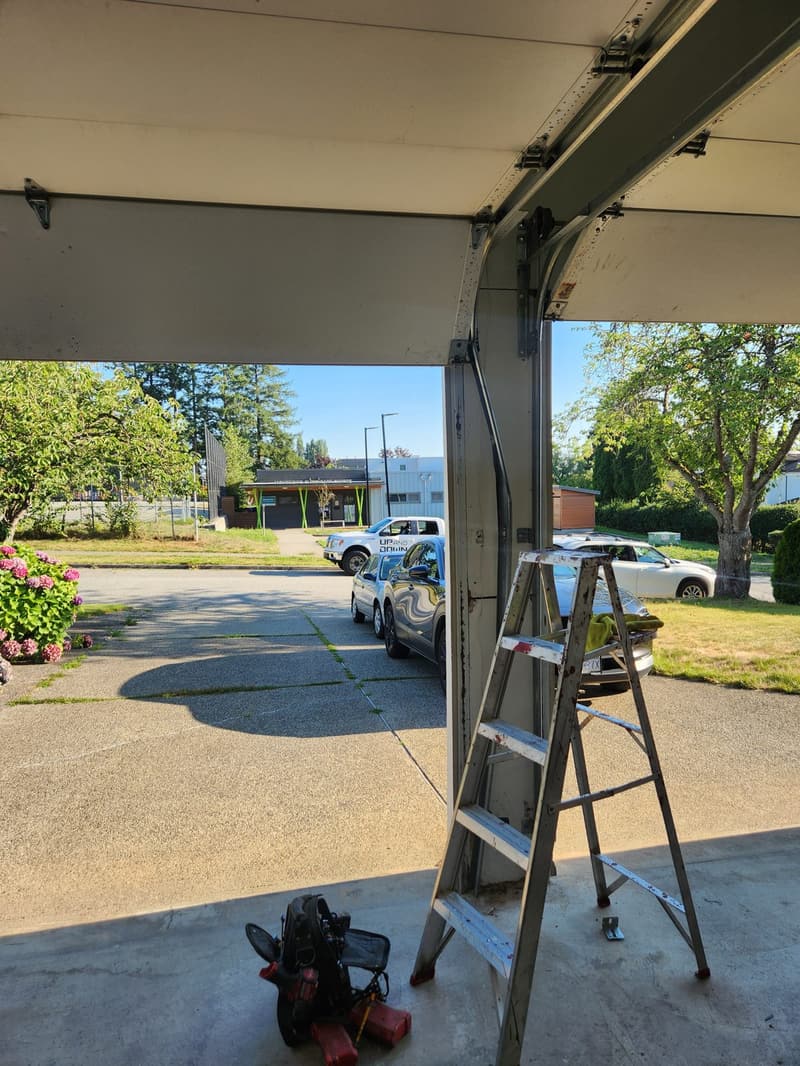
Amarr offers several residential door lines suited to Richmond’s climate and housing stock. The Classica line features 2-inch thick polystyrene-insulated panels with a steel backing, designed for detached homes in neighbourhoods like Steveston and Burkeville where salt air from the Fraser River estuary accelerates corrosion. The Hillcrest line uses 1-3/8-inch polyurethane insulation with a thermal break, better suited for attached garages in townhome complexes along No. 3 Road or Alderbridge Way where space is limited and noise transmission matters. Both lines use hot-dipped galvanized steel with a polyester topcoat to resist UV degradation and surface rust, common failure points in Richmond’s humid, marine-influenced winters. Panel joints incorporate a thermal break to reduce condensation, a critical detail for garages converted to living spaces in older homes near Gilbert Road.
Track and Roller System Compatibility
Proper installation of Amarr doors depends on matching the track system to the door’s weight and lift type. Amarr’s standard residential doors use 2-inch galvanized steel track with a 15-degree radius, appropriate for 7-foot high lifts in most Richmond single-family homes. For taller garage openings in newer builds along Garden City Road or near the Richmond Olympic Oval, a 2-inch track with a 20-degree radius accommodates high-lift configurations. Rollers must be nylon-sealed ball bearing types rated for the door’s weight; using undersized rollers causes premature wear on the track flange, leading to binding and uneven door travel. In Richmond’s coastal environment, salt-laden air accelerates corrosion on untreated steel rollers, so zinc-plated or stainless steel hardware is recommended for installations within 500 metres of the river or along Airport Road where marine exposure is higher.
Spring System Selection and Installation
Amarr doors are paired with either torsion or extension spring systems based on door height and headroom. Torsion springs, mounted on a steel shaft above the door, are standard for Amarr installations in Richmond due to smoother operation and better balance control. Extension springs, running parallel to the horizontal track, are only used in low-headroom scenarios, such as older garages in the Bridgeport industrial area where ceiling clearance is restricted. Incorrect spring sizing—either too strong or too weak—results in excessive strain on the opener, premature cable wear, or door drift. During installation, spring tension is calibrated using a torsion spring calculator that factors in door weight, wire size, and wind load ratings specific to Richmond’s Exposure B/C classification under the BC Building Code. Safety cables are mandatory with extension systems to contain broken springs, a requirement often overlooked in DIY attempts.
Weather Sealing and Threshold Protection
Richmond’s frequent rainfall and occasional flooding near the North Arm of the Fraser River demand effective weather sealing. Amarr doors include a vinyl bottom astragal with a dual-durometer design that compresses uneven concrete floors while maintaining flexibility in temperatures down to -30°C. The astragal must be installed with a 1/4-inch compression gap to allow for concrete slab movement, common in Richmond’s silty soil areas near Westminster Highway. Side and top weatherstripping uses flexible PVC with a pile liner to block wind-driven rain. In flood-prone zones like the Sea Island industrial corridor or along Gilbert Road near the river, a raised aluminum threshold is recommended to prevent water ingress during high tides or storm surges, a failure mode seen in older installations where the door sits directly on the slab without a break.
Opener Integration and Electrical Considerations
Amarr doors are compatible with most residential openers, but installation must account for door weight and cycle frequency. A 1/2-horsepower DC motor opener is sufficient for single-car Amarr Classica doors in typical Richmond homes, while double-car Hillcrest doors in newer developments along Cambie Road often require 3/4-horsepower units to handle the increased mass and daily use. The opener’s rail must be aligned precisely with the door’s centerline; even a 3/8-inch misalignment causes binding at the top roller, leading to premature wear on the arm bracket and opener gear sprocket. Electrical installations follow BC Safety Authority guidelines, requiring a dedicated 15-amp circuit with GFCI protection for garage outlets. In older homes along Maple Road where knob-and-tube wiring may still exist, a circuit upgrade is necessary before opener installation to prevent overload.