Up and Down Garage Doors supplies and installs precision-fit bottom seals, T-style retainers, perimeter stop seals, and threshold seals engineered for Metro Vancouver’s 1,600 mm annual rainfall and salt-air exposure across Richmond, Vancouver, Burnaby, and the North Shore.
Garage Door Weather Seal Guide
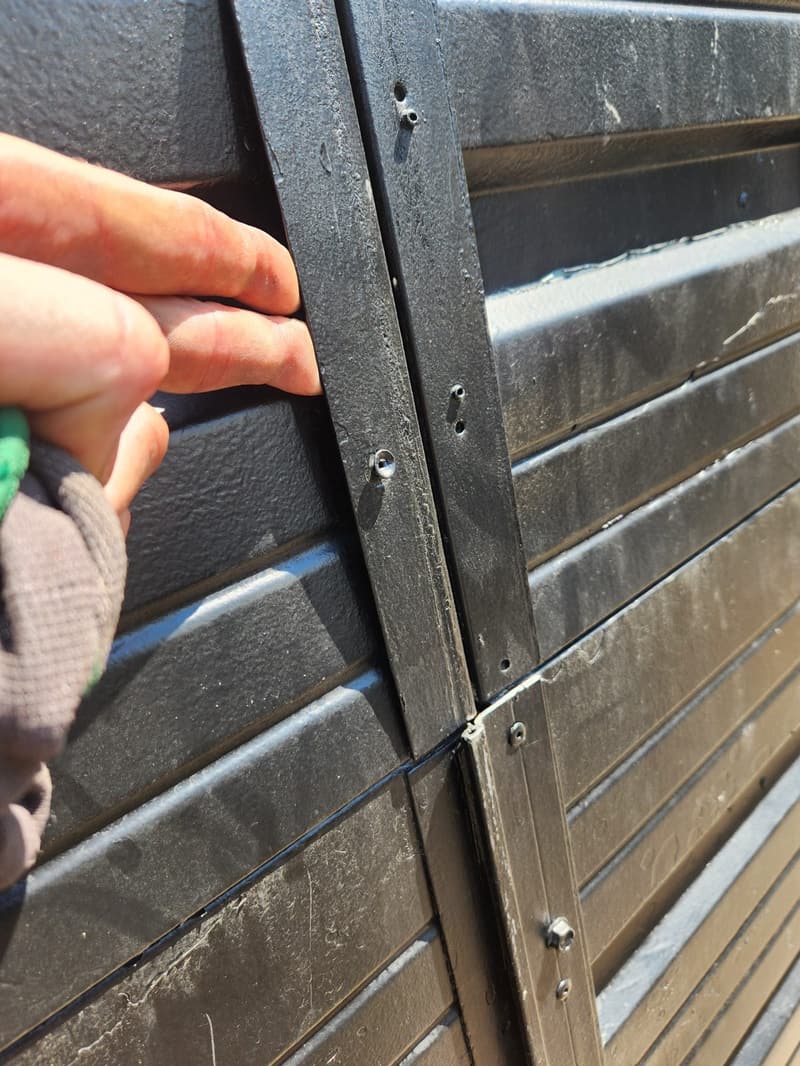
What retainer profile fits my existing door?
Most residential sectional doors in Metro Vancouver use one of three retainer channels. T-style (T-slot) retainers accept a T-shaped astragal with a ¼-inch (6.35 mm) wide flange and ⅜-inch (9.5 mm) bulb height — standard on Clopay, Amarr, and Wayne-Dalton doors built after 2005. Bead-style retainers use a round ⅜-inch (9.5 mm) bulb that snaps into a C-channel with a 0.125-inch (3.2 mm) lip; common on older Crawford and Raynor doors. P-channel retainers (1-inch / 25.4 mm deep) accept a hollow P-bulb with 0.062-inch (1.6 mm) wall thickness — typical on commercial-grade Hormann and Overhead Door 590 series. Measure the channel mouth width with calipers: 0.250 in = T-slot, 0.375 in round = bead, 1.000 in deep = P-channel.
Wire-reinforced vs solid EPDM bulbs for Vancouver rain
Wire-reinforced EPDM bulbs (0.041-inch / 1.04 mm diameter galvanized music wire ASTM A228) resist permanent compression set when doors sit closed for weeks during wet winters. Solid EPDM bulbs (60 ± 5 Shore A durometer) cost less but take a set after 18–24 months of constant 150–200 lb door weight on saturated concrete. For Southlands, Steveston, and West Vancouver waterfront homes, specify wire-reinforced ASTM D2000 M2BA610 compound — it maintains 85% recovery after 22 hrs at 70 °C per ASTM D395 Method B.
Perimeter Stop Seals: Vinyl vs Brush vs Dual-Durometer
Which stop seal stops wind-driven rain at the jambs?
Vinyl stop molding (0.080-inch / 2.0 mm wall, 1.5-inch / 38 mm leg) with integrated flexible fin (0.045-inch / 1.1 mm tip) seals ¼-inch gaps on wood jambs common in 1970s–1990s Kitsilano and Shaughnessy homes. Brush seals (0.006-inch / 0.15 mm polypropylene filaments, 1.25-inch / 32 mm trim height) accommodate ⅜-inch gaps on shifted concrete jambs in Delta and Ladner slab-on-grade garages. Dual-durometer extrusions (70A rigid base / 40A flexible lip) combine nail-holding strength with ⅛-inch deflection — specified for new-build Passive House projects in North Vancouver where air-tightness testing requires ≤0.6 ACH50.
Threshold Seals: Aluminum vs Composite vs PVC
What threshold handles standing water at the driveway apron?
Aluminum thresholds (6063-T5 alloy, ⅛-inch / 3.2 mm wall, 4.5-inch / 114 mm wide) with EPDM bulb (¾-inch / 19 mm height) span ⅝-inch driveway-to-slab offsets typical in Richmond and Burnaby where asphalt settles 10–15 mm annually. Composite thresholds (fiberglass-reinforced polyester, 3/16-inch / 4.8 mm wall) resist salt corrosion in Tsawwassen and White Rock marine air — no galvanic reaction with aluminum door bottoms. PVC thresholds (0.125-inch / 3.2 mm wall) suffice for interior garage-to-house doors but crack at -10 °C; avoid for exterior openings in Coquitlam and Maple Ridge where overnight lows hit -5 °C to -8 °C January–February.
Cycle Ratings & Material Specifications
How long do seals last under daily cycles?
Residential bottom seals: 25,000–35,000 cycles (10–14 years at 2×/day) for wire-reinforced EPDM; 15,000–20,000 cycles for solid EPDM. Perimeter vinyl stops: 50,000+ cycles (fin wears before base). Brush seals: 100,000+ cycles (filaments fatigue slowly). Threshold seals: no cycle rating — degradation is UV and chemical exposure. Replace bottom seals when bulb height loss exceeds ⅛-inch (3 mm) or compression set exceeds 50% per DASMA 108 visual inspection criteria.
Installation Specifics for Metro Vancouver Housing Stock
What changes on post-2010 insulated steel doors vs older wood doors?
Post-2010 insulated steel doors (Wayne-Dalton 9100, Clopay Intellicore, Amarr Olympus) have factory-punched retainer slots on 12-inch centers — use OEM T-style astragal with pre-punched holes, no field drilling. Pre-1990 wood doors (common in Kerrisdale, Dunbar, West End) require retrofit retainer: 16-ga galvanized steel C-channel (1.5-inch / 38 mm wide) screwed to door bottom rail with #10×1-inch self-tapping screws on 8-inch centers. Seal the screw heads with butyl tape (⅛-inch / 3.2 mm thick) to prevent water wicking into rail — critical in Vancouver’s 168 rainy days/year.
How does salt air affect hardware choices?
Within 500 m of salt water (Steveston, Ambleside, Dundarave, Crescent Beach), specify 316 stainless retainer screws and aluminum retainer channel (6063-T5 anodized 15 µm clear) — galvanized steel retainers show white rust at 18 months. EPDM compound must meet ASTM B117 500-hr salt spray; standard automotive EPDM fails at 200 hrs. Threshold: composite or 316 stainless only — aluminum pits at 3 years.
FAQ
Can I replace just the bulb without changing the retainer?
Only if the retainer channel is undamaged and matches the bulb profile exactly. T-slot bulbs are not interchangeable with bead or P-channel. Measure channel mouth width and depth before ordering — 0.010-inch mismatch causes immediate leak paths.
Why does my new seal leak at the corners?
Bottom seal ends must extend 1-inch past the vertical jamb seal contact point. On doors with radius bottom corners (common on Clopay Gallery and Amarr Classica), miter the bulb at 45° and bond with cyanoacrylate gel — straight cuts leave ⅛-inch gaps at each corner.
Do threshold seals work on sloped driveway approaches?
Yes — aluminum thresholds can be shimmed with ⅛-inch HDPE strips (not wood, which rots) to maintain full bulb contact across slopes up to 2° (¼-inch per foot). Steeper slopes require custom-fabricated tapered threshold or trench drain installation.
What’s the difference between residential and commercial bottom seals?
Commercial seals (DASMA 108 Class 2) use 0.062-inch (1.6 mm) wire diameter, 1-inch (25.4 mm) bulb height, and 100,000-cycle rating. Residential (Class 1) uses 0.041-inch wire, ⅜-inch bulb, 25,000-cycle. Commercial retainers are 12-ga steel vs 16-ga residential. Do not mix — commercial bulb won’t compress fully in residential channel.
How do I know if my perimeter seal is the right durometer?
Press thumbnail into the flexible lip — 40A durometer yields visible indentation with moderate pressure; 60A resists. For wood jambs with seasonal movement, 40A lip tracks better. For rigid aluminum jambs on new builds, 60A lip lasts longer. Dual-durometer extrusions stamp “40A/70A” on the rigid base every 12 inches.
When should I replace the entire retainer vs just the bulb?
Replace retainer if: channel mouth is bent >1/16-inch, screw holes are elongated, aluminum channel shows pitting >0.020-inch depth, or steel retainer has red rust (not white zinc oxidation). Cost difference: bulb-only $45–$75 installed; full retainer + bulb $120–$180 installed depending on door width and retainer type.
Need the right seal for your door and Metro Vancouver conditions?
Call 778-873-7282
Up and Down Garage Doors — Richmond, BC
Up and Down Garage Doors stocks OEM retainer channels and bulbs for Clopay, Amarr, Wayne-Dalton, Hormann, and Overhead Door. Vancouver service area includes UBC, Kitsilano, Shaughnessy, and South Vancouver. Richmond and Burnaby same-day service available. Get a quote for seal replacement or full weatherization package.