Services
Locations
📞 (778) 873-7282
Home / Blog / How to Adjust Garage Door Limit Switches When the Weather Seal Drags

How to Adjust Garage Door Limit Switches When the Weather Seal Drags

Learn how garage door limit switches work, why a dragging weather seal means they need adjustment, and what you can safely check. Call (778) 873-7282.

Call (778) 873-7282
Licensed & insured
Open 24 hours
Based in Richmond
5-star rated

If your garage door weather seal is scraping or bunching against the concrete floor when the door closes, the limit switches likely need adjustment. These switches tell the motor when to stop the door at the fully open and fully closed positions. When the close limit is set too far, the door keeps trying to descend after the seal hits the floor, causing the seal to compress, fold, or wear prematurely. You’ll notice this as a loud rubbing sound, visible bunching of the seal at the bottom, or the door reversing immediately after touching down because the safety sensor detects obstruction. The motor may also strain or hum longer than usual at the bottom of travel.

How to Adjust Limit Switches Garage Door Weather Seal
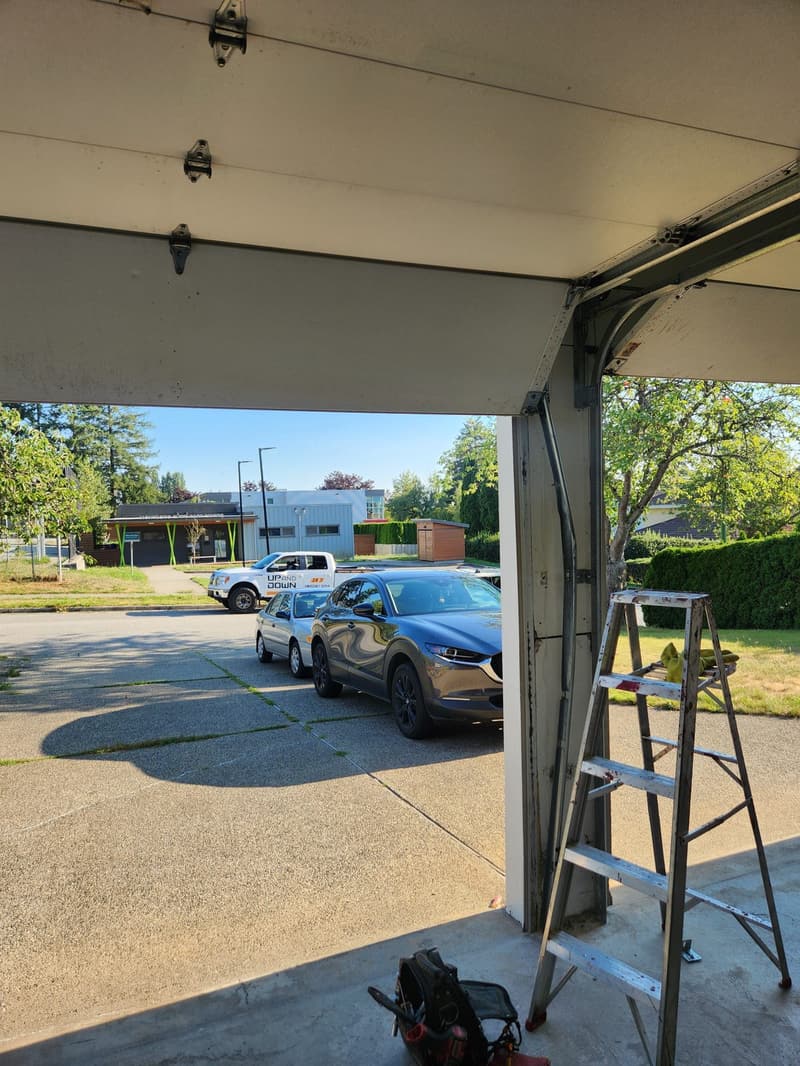
double residential garage door tune-up
How to Adjust Limit Switches Garage Door Weather Seal — real job photo, Up & Down Garage Doors.

What a Dragging Weather Seal Looks and Sounds Like
A properly adjusted door should have the weather seal lightly touching the floor with no compression or folding. When the limit is too far, you’ll see the seal buckle into waves or roll under the door as it presses into the concrete. Audibly, it’s a sustained scraping or squealing noise that continues for a second or two after the door appears stopped. The door may also trigger the auto-reverse feature if the downward force exceeds the safety threshold, causing it to bounce back up immediately after contact. Over time, this damages the seal, wears the bottom bracket rollers, and can strain the opener’s motor.

What You Can Check Yourself (Without Tools)
Start by closing the door and watching the seal where it meets the floor. If it’s visibly deforming or you hear prolonged rubbing, note how much extra travel seems to be happening. Disconnect the opener by pulling the emergency release cord and manually lower the door. It should sit with the seal just touching the floor, not pushed into it. If the door hangs above the floor when released, the limit is too high; if it forces the seal to compress, it’s too low. Check that nothing is obstructing the door’s path—rocks, ice, or debris can mimic limit issues. Also verify the door is balanced: it should stay put when lifted halfway and not drift up or down.

When Adjusting the Limit Switch Is a DIY Task
Adjusting the limit switch itself is generally safe for a homeowner to attempt, as it involves turning a small screw with a screwdriver—no disassembly of the opener or contact with springs. Make small adjustments (quarter-turn increments), then test the door fully. Reconnect the opener after each test and observe the seal. If the dragging stops and the door reverses reliably when obstructed (place a 2×4 flat on the floor), the adjustment is likely correct. Always consult your opener’s manual for the exact location and direction of the limit screws—models vary by Chamberlain, LiftMaster, Genie, etc.

Why You Should Not Touch Torsion Springs or Cables
The limit switch adjustment does not require interacting with the torsion spring system, which is under extreme tension and can cause serious injury or death if mishandled. Never attempt to adjust, remove, or repair torsion springs, cables, cones, or the spring anchor bracket unless you are a trained technician. These components store enough energy to launch metal parts like projectiles. If the door is unbalanced, springs are broken, or cables are frayed, adjusting the limit switch will not fix the underlying problem and may worsen wear. In such cases, stop and call a professional.

When the Problem Isn’t the Limit Switch
If adjusting the limit switch doesn’t resolve the dragging seal—or if the door still won’t close fully, reverses randomly, or the motor strains excessively—the issue may lie elsewhere. Worn sprockets, a stretched chain or belt, a failing motor gear, or misaligned safety sensors can all affect travel. A damaged or improperly installed weather seal (too long, wrong profile) can also cause dragging regardless of limit settings. Bottom brackets or rollers that are bent or seized can prevent the door from sitting flush. These require inspection and repair by someone familiar with garage door mechanics.

Frequently Asked Questions
### How do I know which screw is the close limit on my opener?
Refer to the label on the motor housing—it will usually mark ‘UP’ and ‘DOWN’ or ‘OPEN’ and ‘CLOSE’ limit adjustments. If unmarked, test by turning one screw slightly while watching the door move; the close limit affects only the downward travel.

Can I use the force adjustment screws to fix a dragging seal?
No. Force adjustment controls how much resistance the motor will tolerate before reversing—it does not change where the door stops. Misusing force settings to compensate for incorrect limits can disable safety features and increase risk of injury or damage.

What if the door hits the floor hard after adjusting the limit?
If the door bangs or reverses after closing, the limit is now set too high—back it off slightly (counterclockwise on most models) until the seal touches gently without compression or reversal.

Stuck door? Let's get it moving.

One call, a clear price, and the job done right — 24/7 across Metro Vancouver.

📞 Call (778) 873-7282