Services
Locations
📞 (778) 873-7282
Home / Blog / How Long Does Garage Door Weather Seal Last in BC

How Long Does Garage Door Weather Seal Last in BC

Learn how long garage door weather seals last in Metro Vancouver, what causes them to fail, signs to watch for, and when to replace them. Call (778) 873-7282.

Call (778) 873-7282
Licensed & insured
Open 24 hours
Based in Richmond
5-star rated

Garage door weather seals typically last between 5 and 10 years before needing replacement, depending on material quality, sun exposure, and how often the door cycles. In Metro Vancouver’s damp coastal climate, rubber and vinyl seals degrade faster from UV exposure and repeated wetting and drying cycles than in drier regions. The bottom seal, side stops, and top header seal each face different stresses, so they rarely wear at the same rate. You’ll know it’s time to replace them when you see cracks, gaps, or hear wind whistling through the door when it’s closed. This guide explains what wears out, why, and what you can safely inspect or replace yourself.

How Long Does Garage Door Weather Seal Last
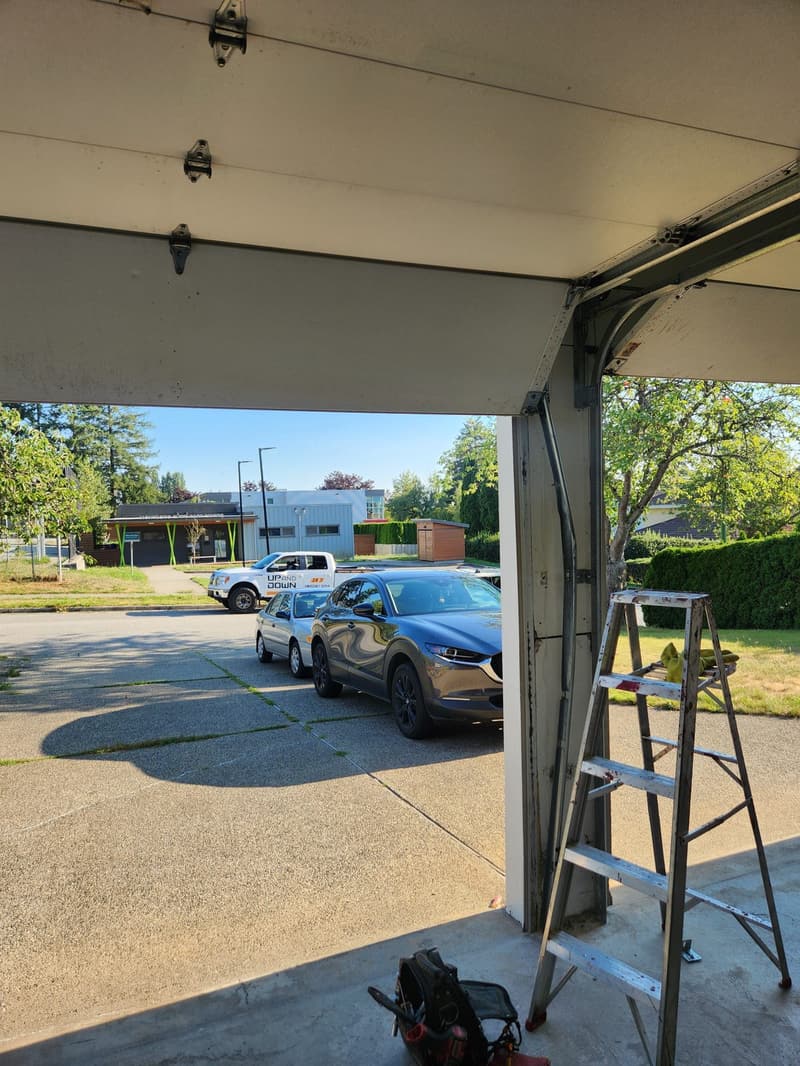
double residential garage door tune-up
How Long Does Garage Door Weather Seal Last — real job photo, Up & Down Garage Doors.

Why Seals Fail Faster in Metro Vancouver
Vancouver’s climate combines high rainfall, moderate temperatures, and significant seasonal sunlight—conditions that break down polymers faster than extreme cold or heat alone. Rubber seals absorb moisture, then dry out, causing surface cracking known as checking. Vinyl seals, while more UV-resistant, can become brittle and crack along stress points, especially where the door bends during cycling. The bottom seal also takes abrasion from dirt, gravel, and ice melt tracked in during winter. If your garage faces south or west, the seal gets more direct sun, speeding up UV degradation. North-facing doors may last longer but are more prone to moss and mildew buildup on the seal surface, which can hold moisture against the material and accelerate decay.

What Failure Looks and Sounds Like
Start by closing the door and looking for light leaks around the edges on a sunny day—or use a flashlight at night and have someone shine it from outside while you watch inside. A failing bottom seal often shows visible cracks, splits, or sections that have pulled away from the retainer. You might notice water pooling inside after rain, or dampness along the concrete floor. Side and top seals may allow drafts you can feel with your hand, or you might hear a whistling or rushing sound when wind blows against the garage. Pests like mice or insects finding easy entry is another sign. If the door vibrates or rattles more than usual in wind, it’s often because the seal isn’t holding it snug against the frame.

What You Can Check Yourself
You can inspect the seals safely without tools. Close the door and run a gloved hand along the bottom seal—feel for hard spots, cracks, or areas that don’t compress uniformly. Check the side stops for gaps where the seal doesn’t contact the door. Look at the top header seal for sagging or missing sections. If the seal is held in a retainer (common on newer doors), you can often slide a replacement strip in without removing the old one—just lift the lip and feed the new seal along the channel. For older doors with nailed-on seals, you’ll need to remove the fasteners. Never attempt to adjust or remove the door itself to access seals if it requires disconnecting cables or springs—those components are under extreme tension and can cause serious injury if mishandled.

When It’s a DIY Job and When It’s Not
Replacing the bottom, side, or top weather seal is generally a DIY-friendly task if you can work from a step ladder and handle basic hand tools. You’ll need a utility knife, measuring tape, and possibly a screwdriver or nut driver depending on the retainer type. Buy seals matched to your door’s make and model—universal kits often don’t fit properly, leading to poor compression or binding. However, if the seal failure is due to a warped door panel, rusted tracks, or misaligned hinges, those are signs of deeper issues. Any work involving the torsion spring system, cables, bottom brackets, or door balance is not a DIY job. Those components store enough energy to cause severe injury or death if released unexpectedly. If the door doesn’t stay closed, opens unevenly, or makes loud bangs during operation, stop and call a technician.

How to Extend Seal Life
Clean the seals every few months with mild soap and water to remove dirt and salt residue. Avoid petroleum-based lubricants or solvents—they degrade rubber and vinyl. A silicone-based protectant can help maintain flexibility, but apply it sparingly and wipe off excess. Keep the concrete floor clear of debris that could abrade the bottom seal. If you notice the seal is sticking to the floor in cold weather, it’s likely lost elasticity—this is a sign it’s nearing the end of its life. In shaded, damp areas, wipe down the seal occasionally to prevent mildew growth, which can pit the surface over time.

Frequently Asked Questions
### Can I paint my garage door weather seal to match the door?
No. Paint will crack and peel as the seal flexes, and solvents in the paint can degrade the material. Seals are designed to be black or gray to resist UV degradation—adding paint compromises their function and lifespan.

Will a thicker seal last longer?
Not necessarily. A seal that’s too thick may prevent the door from closing fully or cause the opener to strain. Seals are engineered to specific dimensions for proper compression and clearance—using the wrong size can cause operational issues or damage to the door or hardware.

Does insulating my garage door affect how long the seal lasts?
Indirectly. An insulated door is heavier, which can increase stress on the seals over time, especially if the door isn’t properly balanced. However, the insulation itself doesn’t degrade the seal—poor door balance or misalignment from added weight is the real concern if it leads to uneven sealing or binding.

Stuck door? Let's get it moving.

One call, a clear price, and the job done right — 24/7 across Metro Vancouver.

📞 Call (778) 873-7282