Services
Locations
📞 (778) 873-7282
Home / Blog / Garage Door Won’t Open Belt Drive Problem: Causes and Checks

Garage Door Wont Open Belt Drive Problem

Diagnose why a belt drive garage door won't open. Call (778) 873-7282.

Call (778) 873-7282
Licensed & insured
Open 24 hours
Based in Richmond
5-star rated

When a belt drive garage door won’t open, the issue is typically either a loss of drive tension or a disruption in the door’s mechanical path. The motor runs but the door doesn’t move, or it moves only a few inches before stopping. This happens because the belt, which transfers rotation from the motor’s sprocket to the door’s trolley, has either slipped, broken, or lost tension. Unlike chain drives, belts don’t stretch much but can degrade or disengage if the sprocket teeth wear or the belt itself cracks. Start by listening: if you hear the motor humming but the belt isn’t moving, the drive coupling or sprocket may be stripped. If the belt is visibly loose or frayed where it wraps around the motor sprocket or idler pulley, that’s a clear sign of failure. Check the emergency release cord—pull it and try to lift the door manually. If it moves freely, the problem is in the drive system, not the springs or tracks. If the door feels heavy or binds, stop; that points to spring or track issues, which require professional attention due to stored energy.

Garage Door Wont Open Belt Drive Problem
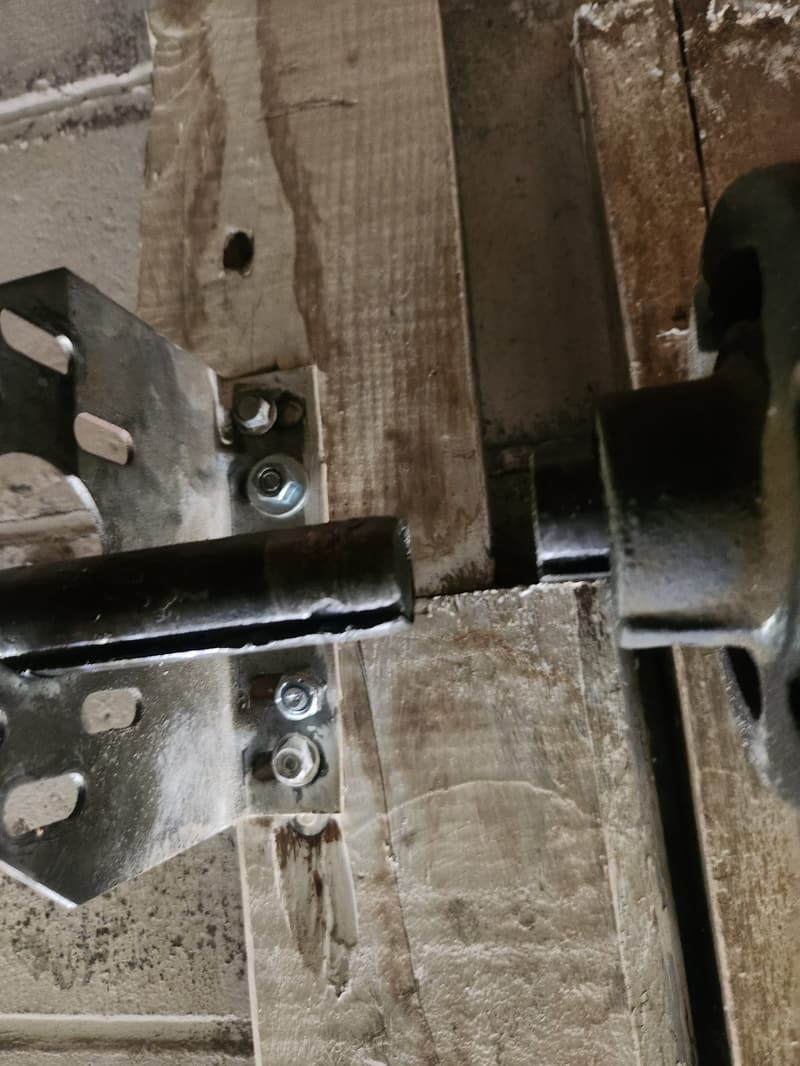
broken torsion spring showing the gap where it snapped
Garage Door Wont Open Belt Drive Problem — real job photo, Up & Down Garage Doors.

Common Failure Points in Belt Drive Systems
The most frequent issue is belt slippage at the motor sprocket. This occurs when the belt loses tension—either because the trolley has drifted, altering the loop length, or because the belt has elongated slightly from age and load. You might see the belt riding up on the sprocket teeth or notice rubber dust near the motor housing. Another common failure is a broken belt, which happens suddenly; the motor will spin freely with no resistance, and the trolley won’t move at all. Inspect the belt’s entire length for cuts, cracks, or separated strands. Pay attention to where the belt bends around the idler pulley; this is a stress point. Also check the sprocket for worn or hooked teeth—if the belt slips repeatedly, it damages the sprocket, creating a cycle of worsening slip.

What You Can Safely Check Yourself
First, disconnect power to the opener. Then, visually inspect the belt for damage, fraying, or missing teeth. Check that it’s properly seated in the sprocket groove and not riding over the edge. With power restored, operate the door and watch the belt’s path—it should stay flat and engaged. Listen for slapping or clicking, which indicates misalignment or looseness. Test the emergency release: if the door lifts easily by hand, the springs are likely intact and the problem is isolated to the drive. Never attempt to adjust belt tension by moving the motor unit unless the manufacturer’s manual explicitly allows it—some systems use a sliding motor mount, others rely on a fixed trolley position. If the belt is broken or the sprocket is stripped, replacement parts are specific to the opener model; using incorrect components risks further failure.

When the Problem Isn’t the Belt
If the belt is intact and tight but the door still won’t move, the issue may lie elsewhere. A seized trolley carriage—due to dirt, bent rails, or lack of lubrication on the rail—can prevent movement even with a functional belt. Similarly, a broken gear inside the motor head (common in older Chamberlain/LiftMaster units) will make the motor hum but not turn the sprocket. In these cases, the belt appears fine but isn’t being driven. Also, check for obstructions: a door jammed against the frame or a broken roller can trigger the opener’s force sensors, causing it to reverse or stop immediately. These mechanical blocks require inspection of the door’s moving parts, not just the opener.

Safety Limits: What Not to Touch
Never attempt to adjust or inspect torsion springs—they are under immense torque and can cause severe injury if mishandled. If the door won’t stay up when manually lifted, or if it crashes down when released, the springs are likely failed and require professional replacement. Similarly, if the cable is frayed or the drum is damaged, do not operate the door. These components store energy that can release suddenly. Belt drive systems are relatively safe for visual checks, but any work involving spring tension, cable integrity, or internal gear housing should be left to a technician. If you’re unsure whether a symptom points to the belt or something deeper, stop and seek advice.

Frequently Asked Questions
### Can a belt drive garage door opener work if the belt is loose but not broken?
It might move the door a few inches before slipping, but it won’t operate reliably. Loose belts skip teeth on the sprocket, causing jerking motion or stalling, and accelerate wear on both belt and sprocket.

How long does a belt drive belt typically last before needing replacement?
Under normal use, a steel-reinforced rubber belt lasts 10 to 15 years. Exposure to heat, sunlight, or chemicals can shorten this, while infrequent use may extend it slightly.

Why does my belt drive opener make a grinding noise but still move the door?
Grinding often indicates worn sprocket teeth or a misaligned belt rubbing against the rail housing. If the door moves, the belt is still engaged, but the noise means damage is progressing and should be addressed soon.

Reference
For assistance with belt drive garage door issues in Metro Vancouver, contact Up & Down Garage Doors at (778) 873-7282.

Stuck door? Let's get it moving.

One call, a clear price, and the job done right — 24/7 across Metro Vancouver.

📞 Call (778) 873-7282