Services
Locations
📞 (778) 873-7282
Home / Blog / Garage Door Reverses Before Closing: Chain Drive Diagnostics

Garage Door Reverses Before Closing: Chain Drive Diagnostics

Learn why chain-drive garage doors reverse before closing, how to check sensors and force settings, and when to call a technician for safe repair.

Call (778) 873-7282
Licensed & insured
Open 24 hours
Based in Richmond
5-star rated

A chain-drive garage door that reverses before closing is usually reacting to an obstruction signal from the safety system or excessive resistance in the door’s travel path. The opener’s logic board interprets either condition as a blockage and triggers the reverse function to prevent damage or injury. This is not normal operation and requires diagnosis before continued use.

Garage Door Reverses Before Closing Chain Drive Problem
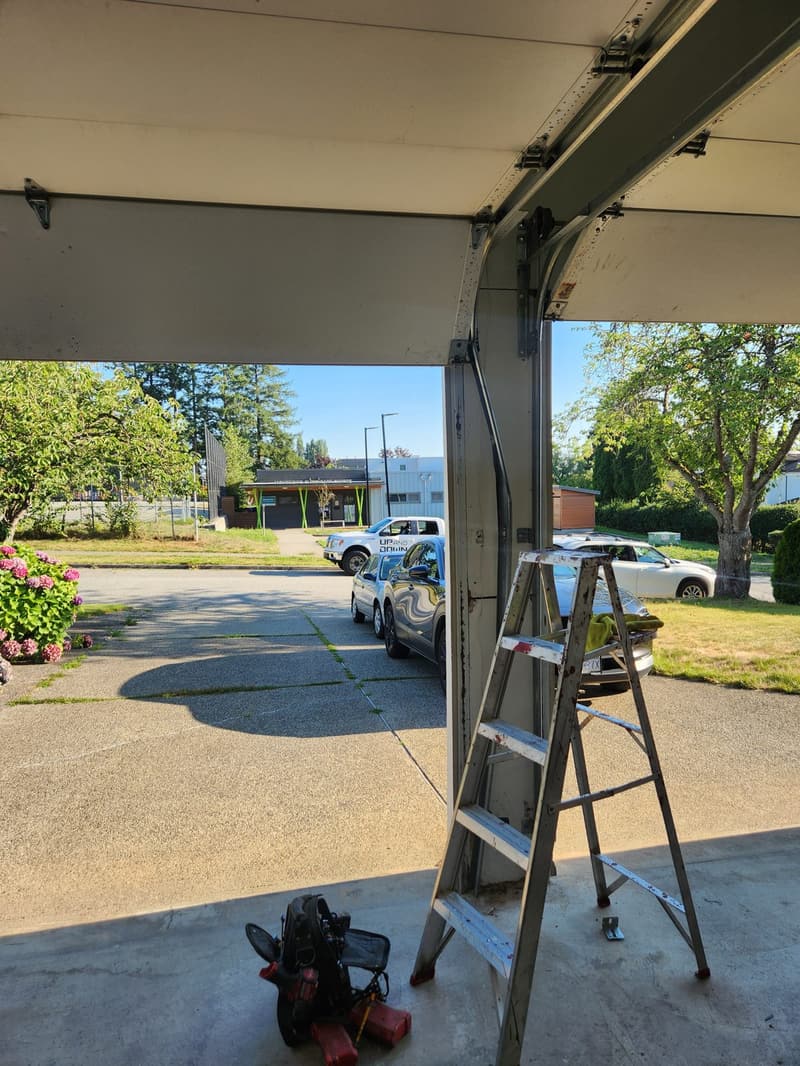
Garage Door Reverses Before Closing Chain Drive Problem — garage door technician on site
Garage Door Reverses Before Closing Chain Drive Problem — real job photo, Up & Down Garage Doors.

Force Adjustment Settings
Chain-drive openers have adjustable force settings that determine how much resistance the motor will tolerate before reversing. If the down-force setting is too low, normal friction from rollers, hinges, or a slightly binding track can trigger the reverse cycle. Locate the adjustment screws on the motor unit—usually labeled ‘Down Force’ and ‘Up Force’—and turn the down-force screw clockwise in quarter-turn increments to increase tolerance. Test after each adjustment by placing a 2×4 flat on the floor where the door would close; the door should reverse upon contacting the obstruction. If it does not reverse, the force is set too high and poses a safety hazard. Never bypass the force test; improper settings can fail to detect a person or object in the door’s path.

Track and Roller Condition
Inspect the vertical and horizontal tracks for dents, bends, or debris that could impede roller movement. A damaged track section can cause rollers to bind or jump track, creating sudden resistance the opener interprets as an obstruction. Look for gaps between the roller and track, or rollers that have shifted out of the track groove. Spin each roller by hand; they should turn freely without grinding or wobble. Nylon rollers are quieter and require less maintenance than steel, but both types can develop flat spots or bearing failure over time. Lubricate rollers, hinges, and pivot points with a silicone-based garage door lubricant—never use WD-40, as it attracts dust and degrades rubber seals. If tracks are bent or rollers are seized, those components need replacement; attempting to force the door closed can worsen the damage.

Chain Tension and Drive Mechanism
A loose or slack chain can cause jerky movement or slack that allows the trolley to lag, triggering the opener’s obstruction detection. The chain should have about 1/4 inch of deflection when pushed sideways at the midpoint between the motor and the trolley. Too tight increases wear on sprockets and bearings; too loose causes slapping noise and inconsistent engagement. To adjust, disconnect the opener from power, then loosen the mounting bolts on the motor unit slightly to shift the assembly and tension the chain. Retighten bolts once proper tension is achieved. If the chain is kinked, rusted, or has stiff links, it should be replaced. Inspect the drive sprocket on the motor shaft and the idler sprocket at the opposite end for worn or broken teeth—worn sprockets accelerate chain wear and reduce efficiency.

Door Balance and Spring System
Although this covers chain-drive openers, door balance directly affects how hard the motor must work. Disconnect the opener by pulling the emergency release cord and manually lift the door to waist height. A properly balanced door will stay in place when released; if it falls or rises, the springs are out of adjustment. Torsion springs (mounted above the door) and extension springs (alongside the tracks) store significant energy and must only be adjusted by a qualified technician. Attempting to adjust or repair springs yourself risks severe injury or death from sudden release of tension. If the door feels heavy or unbalanced, stop using the opener and schedule service.

Logic Board and Limit Settings
Less commonly, the opener’s logic board may misinterpret signals due to power surges, aging components, or incorrect limit settings. The down-limit switch tells the motor when to stop closing; if set too far, the motor may continue trying to close the door after it reaches the floor, triggering the reverse function due to perceived obstruction. Locate the down-limit adjustment (often a screw or knob on the motor unit) and turn it to reduce travel distance slightly. Test by observing where the door stops—it should sit evenly on the floor without straining the motor or leaving a gap. If the door reverses before reaching the floor, the limit is likely set too high; if it strains against the floor, it’s set too low. Limit adjustments interact with force settings, so test both after any change.

Frequently Asked Questions
### Can I lubricate the chain to fix reversing issues?
Lubricating the chain is not recommended and can attract dust and debris, accelerating wear. Chains should remain dry; lubrication is for rollers, hinges, and pivot points only. If the chain is noisy or stiff, inspect for damage or improper tension instead.

Why does my door reverse only in cold weather?
Cold temperatures can cause lubricant to thicken, increasing resistance in rollers and hinges, and may make rubber seals stiff, adding friction. Sensors can also accumulate frost or condensation, temporarily breaking the beam. Check sensor lenses for ice or moisture and ensure all moving parts are lubricated with a low-temperature silicone product.

Is it safe to disconnect the opener and close the door manually if it keeps reversing?
Yes, disconnecting the opener via the emergency release cord allows manual operation and is safe if the door is balanced and tracks are intact. However, if the door feels heavy, binds, or shows signs of spring damage, do not force it—contact a technician. Manual operation should only be used temporarily to secure the garage while awaiting repair.

Stuck door? Let's get it moving.

One call, a clear price, and the job done right — 24/7 across Metro Vancouver.

📞 Call (778) 873-7282