Services
Locations
📞 (778) 873-7282
Home / Blog / How Heavy Rain Affects a Garage Door Wall Button

How Heavy Rain Affects a Garage Door Wall Button

Heavy rain can cause garage door wall buttons to malfunction due to moisture ingress, wiring corrosion, or short circuits. Call (778) 873-7282.

Call (778) 873-7282
Licensed & insured
Open 24 hours
Based in Richmond
5-star rated

Heavy rain can disrupt the operation of a garage door wall button by allowing moisture to enter the electrical components, leading to intermittent function, complete failure, or erratic behavior. This occurs when water penetrates the button housing, corrodes internal contacts, or creates a short circuit in low-voltage wiring, especially in older installations or where seals have degraded. The failure often presents as the button not responding when pressed, working only sporadically, or triggering the door to activate on its own due to false signals from water-bridged circuits. You might hear a faint clicking from the motor unit without door movement, or notice the button feels sticky or unresponsive. Moisture can also migrate along wire strands to the opener’s logic board, causing broader control issues beyond just the wall station.

How Heavy Rain Affects Garage Door Wall Button
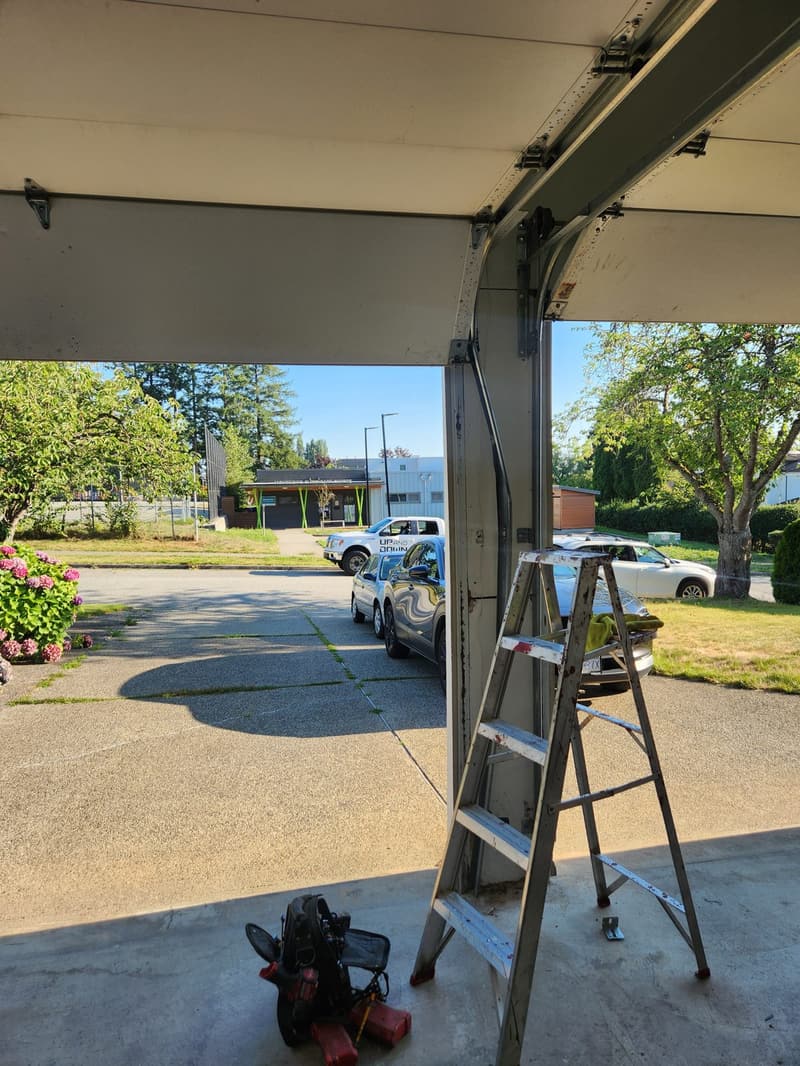
How Heavy Rain Affects Garage Door Wall Button — garage door technician on site
How Heavy Rain Affects Garage Door Wall Button — real job photo, Up & Down Garage Doors.

What Failure Looks and Sounds Like
A wet wall button may cause the garage door opener to behave unpredictably. Common symptoms include: no response when pressing the button, requiring multiple firm presses to activate; the door operating only when the button is held down; or the opener activating spontaneously without any input. You might hear the motor unit relay click repeatedly as the wet contacts make and break connection. In some cases, the button’s LED indicator (if present) may flicker, dim, or remain lit continuously. These symptoms often worsen during or immediately after rainfall and may temporarily resolve as the unit dries, only to return with the next storm.

What Homeowners Can Safely Check
Before assuming the button needs replacement, you can perform a few low-risk checks. First, inspect the button housing for visible cracks, gaps, or water stains around the edges. If safe to do so, turn off power to the opener at the circuit breaker, then remove the button cover (usually held by a small screw or snap tabs) and look for corrosion, white or green residue on contacts, or moisture inside. Use a dry cloth to gently wipe visible moisture — do not use sprays or solvents. If the contacts appear pitted or corroded, cleaning may restore function temporarily, but replacement is often more reliable. Check that the wires are securely fastened to the terminals and not frayed where they enter the button base. Never attempt to repair or bypass the low-voltage wiring if you’re unsure — incorrect handling can damage the opener’s control board.

When Moisture Affects the Wiring or Opener
Water doesn’t always stop at the button. In poorly sealed installations, moisture can travel along the outside of the low-voltage wires (a process called wicking) and reach the opener’s terminal block or circuit board. This is more common in older homes where wires were run through exterior walls without proper drip loops or conduit. Symptoms then expand beyond the wall button: the door might not respond to any input (remote, keypad, or wall button), or the opener’s lights may flash erratically. If you suspect water has reached the opener, do not open the motor unit cover — live voltage is present even on low-voltage sides during operation, and incorrect probing can cause damage or safety hazards.

Why This Is Usually a DIY-Friendly Fix (With Limits)
Replacing a garage door wall button is generally a safe DIY task for homeowners comfortable with basic electrical work. The circuit is low-voltage (typically 24V AC), posing minimal shock risk, and the wiring involves only two terminals. However, you must disconnect power to the opener at the breaker before touching any wires — never work on live low-voltage circuits assuming they’re harmless, as induced voltage or backfeed can occur. Use a button model compatible with your opener brand (Chamberlain, LiftMaster, Genie, etc.), and apply outdoor-rated silicone sealant around the mounting base to improve weather resistance. If the button is mounted in a location exposed to direct rain or runoff, consider relocating it to a more protected interior jamb during replacement.

When to Call a Professional Technician
If replacing the wall button does not resolve the issue, or if you observe corrosion at the opener’s terminal block, erratic behavior from multiple inputs, or signs of water inside the motor unit, stop further DIY attempts. Continued moisture exposure can degrade the opener’s logic board or relay circuits, requiring component-level repair or replacement. Additionally, if your garage door uses a torsion spring system, never attempt to adjust, remove, or inspect the springs, cables, or bottom bracket — these components store lethal amounts of energy and must be serviced only by trained technicians. A professional can diagnose whether the issue is isolated to the wall station or indicates a broader moisture intrusion problem requiring weatherproofing of wiring penetrations or opener relocation.

Frequently Asked Questions
### Can I use a regular indoor wall button as a replacement for an outdoor-exposed location?
No. Indoor-rated buttons lack the gasketing and UV-resistant materials needed for moisture-prone areas. Always use a button specifically designed for garage door applications, and consider applying a bead of silicone sealant behind the mounting plate to improve water resistance.

Will my garage door opener be damaged if the wall button shorts out from water?
Possibly. A sustained short can draw excess current and potentially damage the opener’s transformer or circuit board over time. Intermittent shorts are less likely to cause immediate harm but still indicate a failure point that should be corrected.

Should I cover the wall button with a plastic bag or tape during heavy rain?
No. Temporary covers can trap moisture against the button, worsen corrosion, and interfere with operation. They also create a false sense of security. Proper sealing during installation or relocation to a drier location is the only effective long-term solution.

Stuck door? Let's get it moving.

One call, a clear price, and the job done right — 24/7 across Metro Vancouver.

📞 Call (778) 873-7282