Garage door panels typically last 15 to 30 years depending on material, maintenance, and environmental exposure. Steel panels with proper coating resist rust longest in Metro Vancouver’s damp climate, while wood panels may show rot or warping within 10–15 years without regular sealing. Aluminum panels resist corrosion but dent easily, and fiberglass can become brittle after prolonged UV exposure. The lifespan ends when structural integrity fails—meaning the panel can no longer hold its shape under wind load or operational stress, or when surface degradation compromises weather sealing and security.
What Causes Garage Door Panels to Deteriorate
Panel degradation starts at the surface and progresses inward. For steel panels, the first sign is often micro-scratches in the paint or polyester coating that expose the substrate to moisture. Once rust begins, it spreads under the paint layer, causing blistering and eventual flaking. In wood panels, moisture absorption leads to swelling, followed by cracking as the wood dries unevenly. Fiberglass panels suffer from UV-induced resin breakdown, visible as chalking or surface fibers protruding. Repeated thermal cycling—common in BC’s seasonal shifts—causes expansion and contraction that fatigue joints and fasteners over time, especially at hinge and roller bracket attachments.
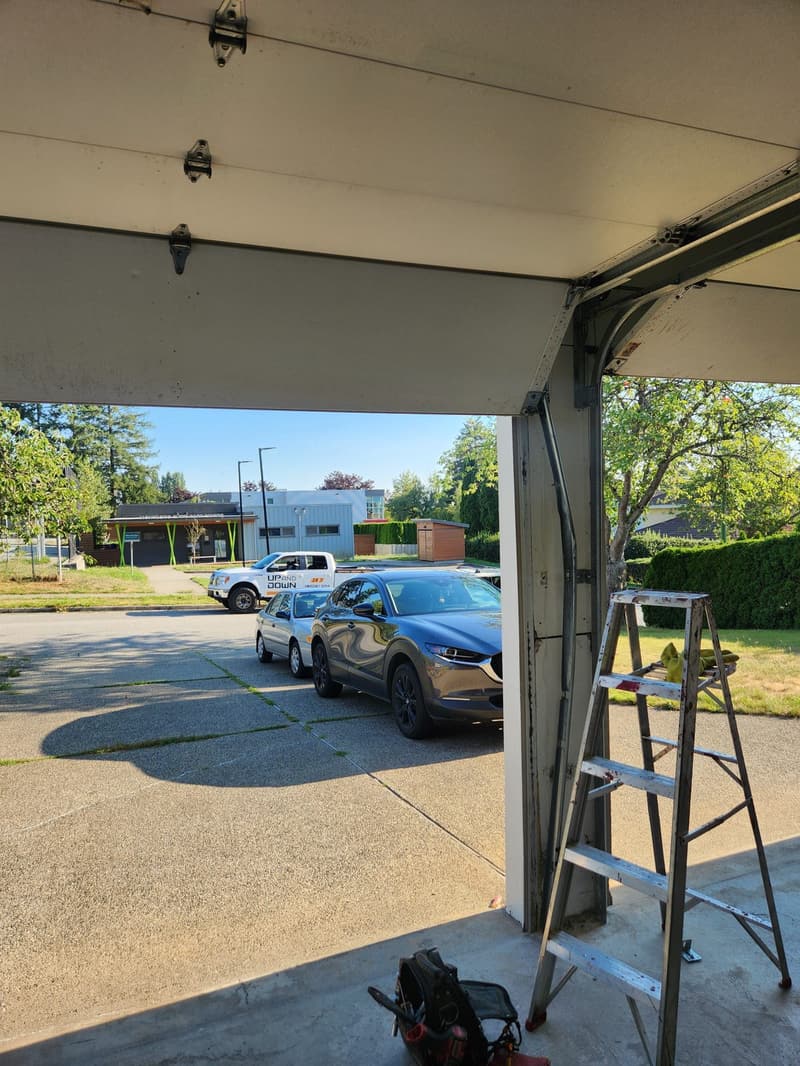
How to Spot Early Wear Before Failure
Homeowners can inspect panels monthly without tools. Look for bubbling or flaking paint on steel, which indicates active rust underneath. Run a hand along the bottom edge—if it feels rough or powdery, corrosion is advancing. For wood, probe soft spots with a screwdriver; if it sinks more than 5mm, rot is present. Check for gaps between panels when the door is closed; light showing through means warping has broken the seal. Listen during operation: creaking or groaning that wasn’t there before often signals panel flexing due to weakened internal ribs or delamination. Misalignment where one side drags or binds can also stem from a warped panel throwing off track geometry.
When Panel Damage Requires Replacement
Superficial scratches or small dents that don’t affect operation can often be left alone or filled with appropriate material (automotive body filler for steel, epoxy putty for wood). However, any crack that runs through the panel thickness, significant rust perforation, or delamination in fiberglass means the panel has lost structural rigidity. A panel that sags noticeably when the door is stopped mid-travel or shows visible bowing under wind pressure should be replaced. Attempting to reinforce a severely degraded panel with brackets or braces is not recommended—it adds weight and stress to other components without restoring original strength.
Why You Shouldn’t Replace Just One Panel (Often)
Garage door panels are designed to work as a unified system. Replacing a single panel in an older door often results in a visible mismatch due to fading of the surrounding panels’ finish. More critically, older panel profiles may be discontinued, making an exact match impossible. Even if a close match is found, differences in thickness or rib structure can cause uneven stress distribution during operation, leading to premature wear on hinges, rollers, or the opposite panel. For doors over 15 years old, full panel replacement frequently makes more sense than piecemeal repairs when multiple panels show wear.
Maintenance That Extends Panel Life
Wash panels twice a year with mild soap and water—avoid pressure washers, which can force water behind seals and damage coatings. For steel panels, apply a silicone-based car wax to the exterior surface annually to maintain water repellency. Wood panels need resealing with a penetrating exterior finish every 18–24 months; check the end grain especially, as it absorbs moisture fastest. Lubricate hinges and rollers with a silicone spray (not WD-40) twice yearly to reduce operational strain that can flex panels unnecessarily. Keep the bottom weather seal intact; a damaged seal allows water and debris to pool against the panel’s lowest edge, accelerating rot or rust.
Frequently Asked Questions
### Can I paint over rust on a garage door panel to stop it?
Painting over active rust only hides the problem temporarily. Rust continues to spread underneath the paint, causing further delamination and eventual paint failure. You must remove all rust back to bare metal using a wire brush or grinder, treat the surface with a rust converter, then prime and paint with exterior-grade metal paint.
Does insulating a garage door make the panels last longer?
Insulation itself doesn’t extend panel lifespan, but insulated doors often use thicker gauge steel or more rigid backing materials that resist denting and flexing better. The added mass can increase stress on hinges and rollers if not properly balanced, so ensure springs are adjusted for the door’s weight after adding insulation.
How do I know if my panel needs replacing or just the bottom weather seal?
If the damage is limited to the flexible rubber or vinyl seal at the bottom—cracking, tearing, or hardening—replacing just the seal is a valid DIY fix. However, if the panel material itself is rotted, rusted through, or warped at the bottom edge, the seal replacement won’t hold and the panel needs attention.
For professional assessment of garage door panel condition in Metro Vancouver, contact Up & Down Garage Doors at (778) 873-7282.