Off Track Garage Door Repair Vancouver — Why Garage Doors Come Off Track
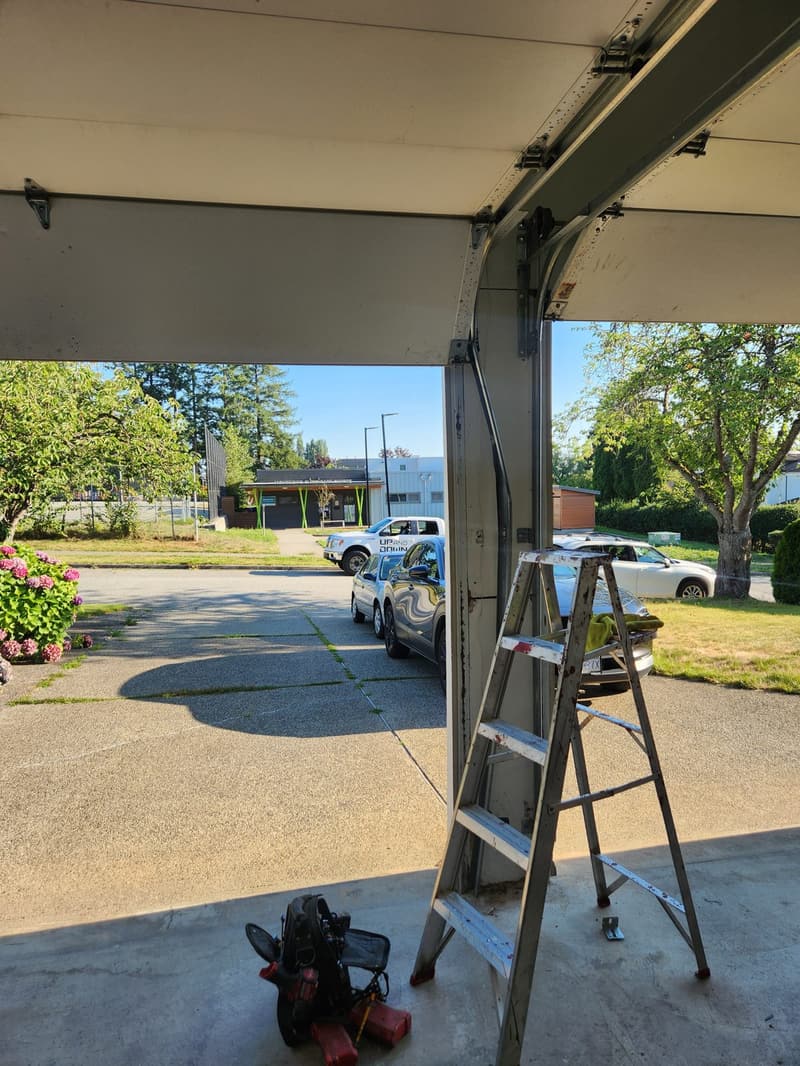
A garage door leaves its track when the rollers disengage from the vertical or horizontal guide rails. This commonly happens after impact—such as a vehicle bumping the lower panel—or when cables fray and lose tension, allowing the door to shift sideways. In older Vancouver homes, particularly in neighbourhoods like Kerrisdale or Shaughnessy where original 1970s steel doors remain, worn roller brackets can crack under stress, especially during freezing temperatures that make metal brittle. The horizontal track itself may bend if the door is forced open while obstructed by ice or debris, a frequent issue during coastal winter storms.
How We Diagnose the Problem
Our technicians begin by checking cable integrity on both sides. A snapped or loose cable allows one side of the door to drop, pulling the rollers clear of the track. We inspect the bottom brackets for rust-induced weakening—common in Richmond’s humid Fraser Valley air—and verify whether the horizontal track is properly aligned using a laser level. If the door has been manually lifted after coming off track, we examine the top rollers for flat-spotting caused by dragging across the concrete floor. In high-wind corridors like those near Vancouver International Airport, we also assess whether insufficient strut reinforcement allowed wind pressure to buckle the door panels, initiating the derailment.
The Repair Process Step by Step
First, we secure the door with locking pliers on the track to prevent further movement. Next, we relieve spring tension by clamping the torsion shaft—critical for safety, as improper release can cause sudden bar rotation. We then realign the vertical tracks using a track spreader to widen the gap just enough for roller reinsertion, taking care not to over-bend the galvanized steel. Rollers are cleaned of old grease and debris before being seated into the track with a rubber mallet. If the horizontal track is kinked, we use a track jack to restore its original contour. Finally, we recheck cable drums for proper spooling and adjust spring tension to balance the door within 5 pounds of neutral.
Common Failure Modes We See in Vancouver
In homes built before 2000, especially in East Vancouver’s Grandview-Woodland area, we frequently encounter nylon rollers that have shattered due to UV exposure and temperature cycling—these fail silently until the door jumps track. Galvanized steel tracks in coastal zones like Point Grey often develop white rust under the paint layer, creating rough surfaces that snag rollers. We also see cases where homeowners have over-lubricated the track with petroleum-based grease, attracting dirt that forms an abrasive paste. In newer constructions with insulated steel doors, we occasionally find that improperly installed bottom weather seals have allowed water to pool at the track base, accelerating corrosion of the track’s lower flange.
Preventing Future Off-Track Incidents
We recommend quarterly visual inspections of the rollers and cables, particularly after heavy snowfall or during the rainy season when moisture accelerates wear. Lubrication should be limited to silicone-based spray on the rollers, hinges, and bearing plates—never on the track itself, as it attracts particulates. If your door is over 15 years old, consider upgrading to nylon-coated steel rollers with sealed bearings, which resist corrosion better in Vancouver’s climate. For homes with single-car garages on narrow lots—common in Mount Pleasant—we advise installing vertical track guards to prevent accidental bumper contact during parking.
Frequently Asked Questions
Can I operate the door manually if it’s off track?
No. Attempting to lift or lower the door risks further damage to the panels, cables, or opener mechanism. The door’s weight is unevenly distributed when off track, creating pinch points that can cause serious injury. Disconnect the opener and leave the door in place until it’s professionally repaired.
What causes a garage door to come off track repeatedly?
Recurring issues usually indicate underlying problems like misaligned tracks, worn roller brackets, or failing cables. It can also stem from an unbalanced door due to incorrect spring tension, which allows one side to lag and drag. A full system inspection is needed to identify the root cause.
How long does a typical off-track repair take?
Repair duration varies based on the extent of damage, parts availability, and door complexity. Factors such as track straightening, cable replacement, or roller upgrades affect the timeline. We assess each situation on-site to determine the necessary steps for a safe, lasting repair.