Services
Locations
📞 (778) 873-7282
Home / Blog / Signs Your Garage Door Opener Needs Replacing

Signs Your Garage Door Opener Needs Replacing

Learn the clear signs your garage door opener is failing: unusual noises, slow response, intermittent operation, and safety risks. Know when to call a pro.

Call (778) 873-7282
Licensed & insured
Open 24 hours
Based in Richmond
5-star rated

Your garage door opener shows clear wear when it starts straining to lift the door, making grinding or squealing noises during operation, or responding inconsistently to the remote or wall button. These symptoms often point to internal gear wear, motor fatigue, or circuit board issues rather than simple fixes like lubrication or battery replacement. Ignoring them risks sudden failure, leaving the door stuck open or closed, or creating a safety hazard if the door drops unexpectedly.

Unusual Noises During Operation
Grinding, scraping, or loud squealing sounds when the door moves indicate worn internal gears or a failing motor bearing. The opener’s drive gear, typically made of nylon, strips over time from stress, especially if the door is unbalanced or the springs are weak. You might hear the motor run but the door barely moves or jerks. This is not normal operation—lubricating the chain or belt won’t fix stripped gears. If the noise is metallic and comes from the motor unit itself, internal components are likely damaged. Continuing to run it risks complete gear failure, leaving the door inoperable.
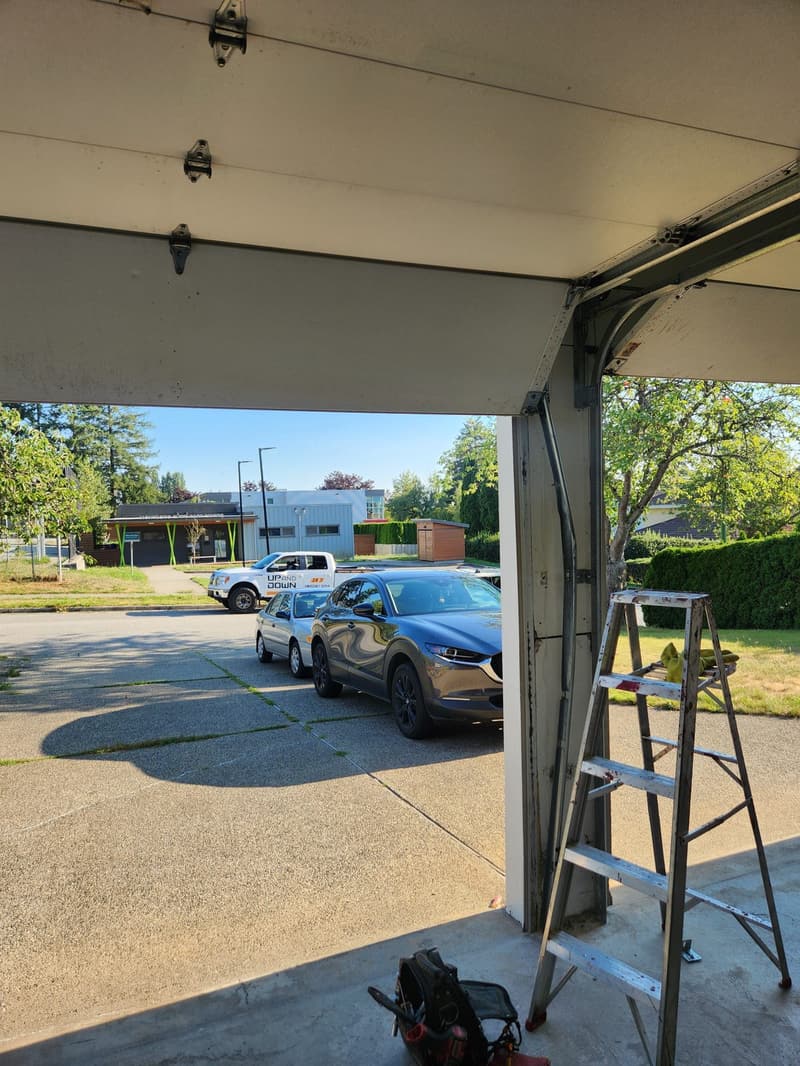
double residential garage door tune-up
Double residential garage door tune-up.

Slow or Straining Movement
If the door opens or closes noticeably slower than before, or the opener strains and hesitates mid-travel, the motor is losing torque. This happens as motor windings degrade or the capacitor weakens, reducing power output. You can test this by disconnecting the opener and manually lifting the door—if it moves smoothly by hand, the issue is likely the opener, not the door balance. A straining motor draws more current, overheating and shortening its lifespan. Prolonged strain can trip the thermal overload protector, causing intermittent shutdowns until it cools.

Intermittent Response to Controls
When the door responds only sometimes to the remote or wall button, or requires multiple presses, the problem is often in the opener’s receiver logic board or wiring. Loose connections, corrosion on terminals, or voltage drops can cause signal loss. Check the antenna wire on the motor unit—ensure it’s fully extended and not damaged. Replace the remote battery first; if that doesn’t help, try reprogramming the remote. If the wall button works but the remote doesn’t, the receiver may be failing. Intermittent operation is unreliable and unsafe—do not rely on it for regular use.

Door Reverses or Won’t Close Fully
If the door reverses immediately after hitting the floor or won’t close unless you hold the wall button, the close-force safety sensors may be misaligned or failing. However, if the sensors are aligned and the LED lights are steady, the issue could be the opener’s force adjustment settings drifting or the motor not sensing resistance correctly. Modern openers have force sensors that detect obstructions; if they’re faulty, the door may reverse falsely or fail to reverse when it should—a serious safety risk. Test by placing a 2×4 on the floor; the door should reverse on contact. If it doesn’t, disconnect the opener and do not use the door until repaired.

Visible Wear or Smoke
Burning smells, smoke, or visible arcing from the motor unit indicate electrical failure—stop using it immediately. This could stem from a shorted motor winding, failed capacitor, or damaged circuit board. Do not attempt to reset or reuse the unit. Similarly, if the trolley or carriage is cracked, or the rail is bent from impact, the opener’s mechanics are compromised. These are not DIY fixes—internal electrical and high-tension mechanical failures require professional assessment.

What You Can Check Yourself
Before calling, verify the basics: replace remote batteries, ensure the opener is plugged in and the outlet has power (test with a lamp), check that the lock button on the wall console isn’t engaged, and confirm the safety sensors are aligned and their lenses are clean. Lubricate the door’s rollers, hinges, and springs—but not the opener’s chain or belt unless specified in the manual. If the door is hard to lift manually, the springs may be the issue, not the opener. Never adjust or touch torsion springs—they store lethal tension and must be handled by a trained technician.

When to Call a Professional
If the opener makes grinding noises, fails to lift the door despite the motor running, shows electrical faults, or has intermittent operation after basic checks, it needs replacement. A technician will test the motor’s amp draw, inspect the drive system, and verify safety features. They’ll also check the door balance and spring condition—since a failing opener often masks underlying door issues. Up & Down Garage Doors serves Metro Vancouver and can assess whether repair or replacement is the right call. Contact us at (778) 873-7282.

Frequently Asked Questions
### Can I replace just the motor gear instead of the whole unit?
Sometimes, if the opener is relatively new and the only failure is a stripped nylon gear, a gear kit may be available. However, if the motor is weak or the circuit board is corroded, replacing the whole unit is more reliable and often similarly priced.

How long should a garage door opener last?
A typical chain or belt drive opener lasts 10-15 years with regular use and maintenance. Heavy use, poor door balance, or exposure to moisture can shorten this. Direct-drive and jackshaft models may last longer but are costlier to replace.

Is it safe to disconnect the opener and operate the door manually?
Yes, if the door is properly balanced and the springs are intact. Pull the emergency release cord and lift the door smoothly—it should stay open around waist height. If it falls or is hard to lift, do not operate it and call a professional for spring assessment.

Stuck door? Let's get it moving.

One call, a clear price, and the job done right — 24/7 across Metro Vancouver.

📞 Call (778) 873-7282