Broken Spring Repair Chilliwack
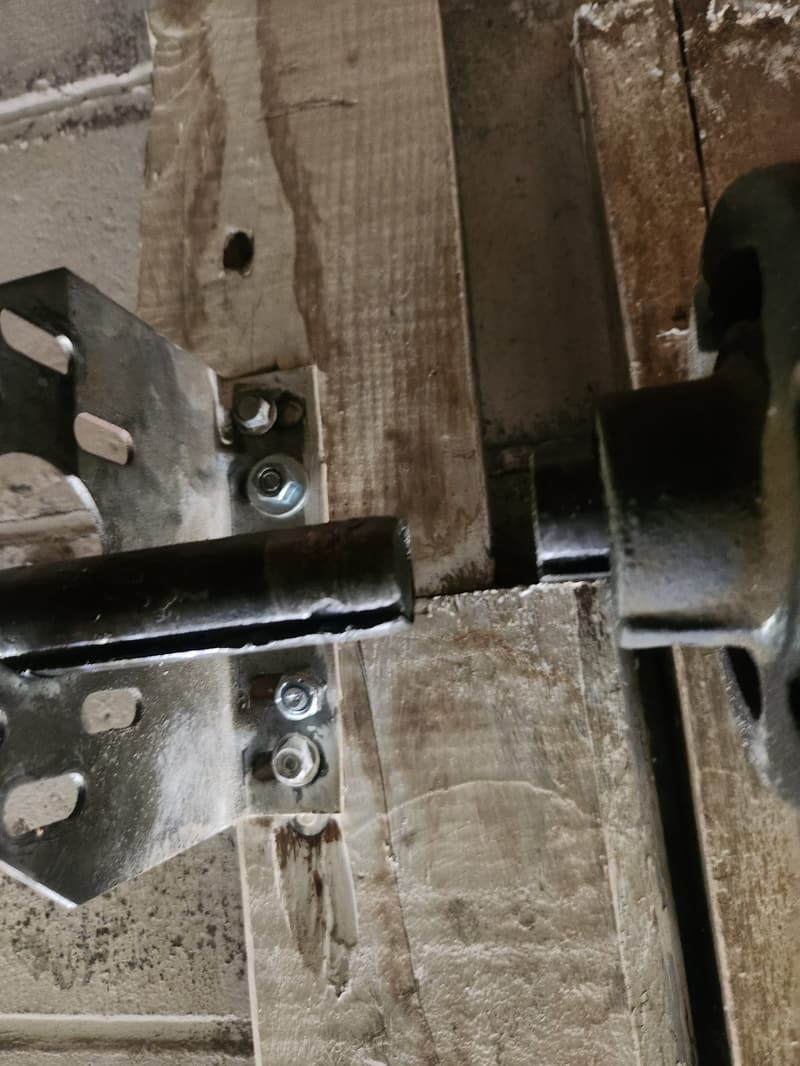
In Chilliwack’s older neighbourhoods like Promontory and Fairfield, many homes built in the 1980s and 1990s feature single-car garages with 8-foot or 9-foot doors using a single torsion spring mounted above the door opening. When this spring fails, it typically fractures at the stationary cone where the spring winds onto the shaft, or it unwinds completely due to metal fatigue from repeated cycling. The door becomes extremely heavy—often over 150 pounds—and cannot be lifted manually without risking injury. Attempting to operate the door with a broken torsion spring can bend the horizontal tracks, damage the door panels, or cause the opener motor to burnout as it strains against the uncontrolled weight. We see this failure most frequently in homes with original Wayne Dalton or Clopay doors where the springs have exceeded their 10,000-cycle lifespan.
Extension Spring Breakage in Double-Door Applications
Chilliwack’s newer developments in Vedder Crossing and Garrison commonly feature 16-foot wide double-car garage doors using a pair of extension springs—one on each side—running parallel to the horizontal tracks. These springs stretch and contract with door movement, and failure usually occurs when the spring hooks pull through the end brackets or the spring wire itself fractures mid-span due to corrosion from the Fraser Valley’s damp climate. When one extension spring breaks, the door becomes unbalanced, causing it to hang crookedly in the opening or jerk violently during operation. The intact spring then bears double the load, accelerating its own failure. Safety cables running through the center of each extension spring are critical—they prevent the broken spring from becoming a projectile—but if these cables are missing or detached, the sudden release of energy can cause serious injury or property damage.
Spring Fatigue from Cycling and Environmental Exposure
Garage door springs in Chilliwack endure unique stress from the region’s climate patterns. Frequent temperature swings between winter freezing and summer heat cause the steel to expand and contract, accelerating micro-fractures in the spring wire. Coastal-influenced humidity promotes surface rust, which acts as a stress concentrator, reducing the spring’s effective lifespan. A standard torsion spring rated for 10,000 cycles may only achieve 6,000 to 7,000 cycles in this environment if not properly maintained. We often find that lack of lubrication on the springs and bearings increases friction, causing the spring to bind and wear unevenly. Homes near the Vedder River or Chilliwack Lake Road experience higher moisture exposure, leading to faster corrosion rates than inland properties.
Risks of Operating with a Damaged Spring
Continuing to use a garage door with a compromised spring creates cascading mechanical failures. The door’s weight shifts unevenly onto the rollers and hinges, causing premature wear on the nylon rollers—common in many Chilliwack homes with builder-grade hardware—and potentially cracking the door sections at the stress points. The opener’s drive gear, whether chain, belt, or screw-driven, absorbs shock loads it wasn’t designed for, leading to stripped gears or motor burnout. In extension spring systems, a broken spring allows the door to fall rapidly if the release cord is pulled, posing a severe safety hazard. We’ve responded to calls in the Chilliwack Mountain area where homeowners attempted to lift the door manually after a spring failure, resulting in strained backs or pinched fingers from the door slipping in the tracks.
Spring Replacement and System Balancing Procedure
Repair begins with securing the door in the open position using locking pliers on the tracks to prevent collapse. We then measure the wire diameter, inside diameter, and length of the broken spring to determine the correct replacement specifications—critical because using an incorrect spring rate will cause the door to open too fast or not stay open. For torsion springs, we wind the new springs to precise tension using calibrated winding bars, checking balance by lifting the door to the halfway point—it should remain stationary without drifting. Extension springs require matching the pull force to the door weight and ensuring safety cables are correctly installed through the spring core and anchored to the track hangers. After installation, we lubricate the springs, bearings, and hinges with silicone-based grease to reduce friction and inhibit corrosion, then test the door through multiple cycles to verify smooth operation and proper opener force settings.
Frequently Asked Questions
How do I know if my garage door spring is broken?
Look for a gap in the torsion spring above the door or a visible separation in the extension springs along the tracks. The door will feel extremely heavy—often impossible to lift manually—and may hang unevenly or fall quickly when released from the opener.
Can I replace just one spring if the other looks okay?
No. Springs wear as a set. Replacing only one creates imbalance, causing the new spring to fail quickly under uneven load. Both springs should be replaced simultaneously to ensure proper door balance and longevity.
Is it safe to disconnect the opener and operate the door manually with a broken spring?
No. The door’s weight becomes uncontrolled and dangerous to handle. Manual operation risks injury from the door slipping or falling, and can damage tracks, panels, or the opener mechanism.