Garage Door Panel Replacement West Vancouver
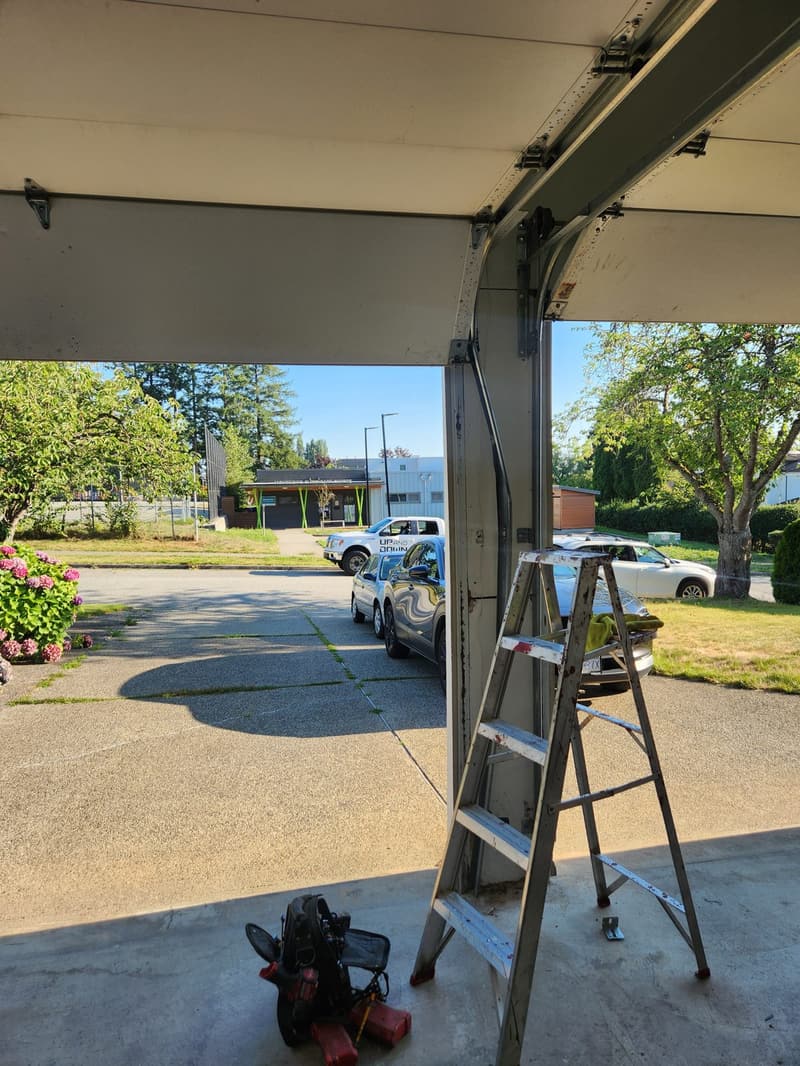
Garage door panels in West Vancouver fail for specific, observable reasons tied to the local environment and construction styles. Coastal moisture from Burrard Inlet and Howe Sound accelerates rust on steel panels, particularly along the bottom edges where water pools after rain. Older homes in neighbourhoods like Ambleside and Dundarave often have wood-panel doors that suffer from delamination or rot when exposed to persistent dampness and limited sun exposure on north-facing garages. Impact damage from vehicles, bicycles, or fallen tree branches during winter storms is another frequent cause, especially in areas with narrow driveways or overhanging foliage. Aluminum panels, while resistant to corrosion, can dent easily from hail or debris kicked up during windy periods common along the waterfront. These failure modes are not cosmetic; a compromised panel disrupts the door’s balance, strains the opener, and creates safety hazards if the door binds or drops unexpectedly.
How Panel Damage Affects Door Operation
When a garage door panel is damaged, it does more than look unsightly—it alters the door’s entire mechanical behaviour. A bent or cracked panel creates uneven weight distribution, forcing the rollers to bind in the tracks as the door moves. This increased friction wears out rollers and hinges prematurely and can cause the door to jerk or stall mid-cycle. In sectional doors, a damaged panel may no longer align properly with adjacent sections, leading to gaps that let in wind, rain, and pests—particularly problematic in West Vancouver’s damp climate. The door’s seal integrity fails, reducing insulation effectiveness and increasing energy loss. If the damage is near the top or bottom roller brackets, the door may come off track entirely during operation, posing a serious risk of collapse. Continuing to operate a door with a damaged panel significantly increases the likelihood of cable failure or spring overload, both of which require immediate professional attention.
Panel Replacement vs. Full Door Replacement: When Repair Makes Sense
Replacing a single panel is a viable option only when the damage is isolated and the rest of the door system remains structurally sound. This approach works best for steel or aluminum doors where the panel is a discrete, replaceable unit and the door is less than 15 years old. In West Vancouver, many homes built between the 1990s and early 2000s feature insulated steel doors with replaceable panels—common in developments near British Properties and Caulfeild. If the door’s springs, cables, rollers, and opener are functioning correctly, and the damage hasn’t spread to the stiles or hinges, a panel swap restores both appearance and function without unnecessary cost. However, if the door shows widespread rust, multiple damaged sections, or outdated hardware, replacing the entire door is often more economical long-term. We assess each door individually, considering material compatibility, wind load requirements for the local area, and the homeowner’s goals for insulation and appearance.
The Panel Replacement Process: What to Expect
Our panel replacement begins with a thorough inspection to confirm the door is safe to work on and that no underlying issues exist. We disconnect the opener and manually lift the door to relieve tension on the springs before removing the damaged panel. This step is critical—attempting to remove a panel while the door is under spring tension can cause sudden movement and injury. We then slide out the damaged section and insert the new panel, ensuring it aligns perfectly with the adjacent sections for smooth operation. All hinges, rollers, and brackets are checked and lubricated as needed. Once the new panel is secured, we reconnect the opener, test the door’s balance, and verify that it opens and closes evenly without binding or noise. We use only manufacturer-approved replacement panels that match the original door’s profile, thickness, and insulation value to maintain structural integrity and warranty compliance where applicable.
Material Matching and Local Considerations
Selecting the correct replacement panel requires attention to detail that generic suppliers often overlook. We match not only the panel’s dimensions and rib pattern but also its gauge, coating type (such as galvanized or painted steel), and insulation core ( polystyrene or polyurethane ) to preserve the door’s thermal performance and wind resistance. In West Vancouver, where homes range from older character houses in Hollyburn to modern infill projects near Park Royal, door styles vary significantly. A 1970s wood-carriage-style door requires a different panel than a contemporary flush steel door common in newer developments. We source panels from reputable distributors who carry OEM-spec components for major brands like Clopay, Wayne Dalton, and Overhead Door. This ensures the replacement panel fits precisely, operates smoothly, and maintains the door’s resistance to the region’s moisture and temperature fluctuations.
Why Local Expertise Matters for West Vancouver Garage Doors
Garage door systems behave differently depending on local conditions, and West Vancouver presents unique challenges. The combination of high humidity, frequent rainfall, and temperature swings near sea level demands doors and components that resist corrosion and maintain flexibility. Homes in elevated areas like British Properties or Cypress Park experience different wind loads than those near the waterfront, affecting door stress and panel longevity. We understand how these factors influence wear patterns and failure rates, allowing us to diagnose issues accurately and recommend solutions that last. Our familiarity with common door models installed in local neighbourhoods means we can often source matching panels faster and anticipate potential complications during replacement. This localized knowledge reduces downtime and ensures the repair integrates seamlessly with the door’s existing mechanics and the home’s architectural context.
Frequently Asked Questions
How do I know if I need a panel replacement or a new door?
We assess the extent of the damage, the age and condition of the door’s hardware, and whether the damage is isolated to one panel. If the springs, cables, rollers, and opener are in good shape and the door is less than 15 years old, replacing just the panel is usually appropriate. If there’s widespread rust, multiple damaged sections, or outdated components, a full door replacement may be more cost-effective.
Can you match the colour and style of my existing garage door panel?
Yes. We source replacement panels that match the original door’s profile, thickness, insulation, and finish. For painted steel doors, we can provide panels with factory-applied coatings that closely resemble the original colour. For wood or wood-look doors, we match the grain pattern and stain where possible, though natural wood may weather differently over time.
Is it safe to operate my garage door with a damaged panel?
No. A damaged panel can cause the door to bind, come off track, or drop unexpectedly due to uneven weight distribution. Continuing to use the door increases stress on the opener, springs, and cables, raising the risk of sudden failure. We recommend disconnecting the opener and avoiding use until the panel is replaced.