Common Garage Door Issues in Ladner Homes
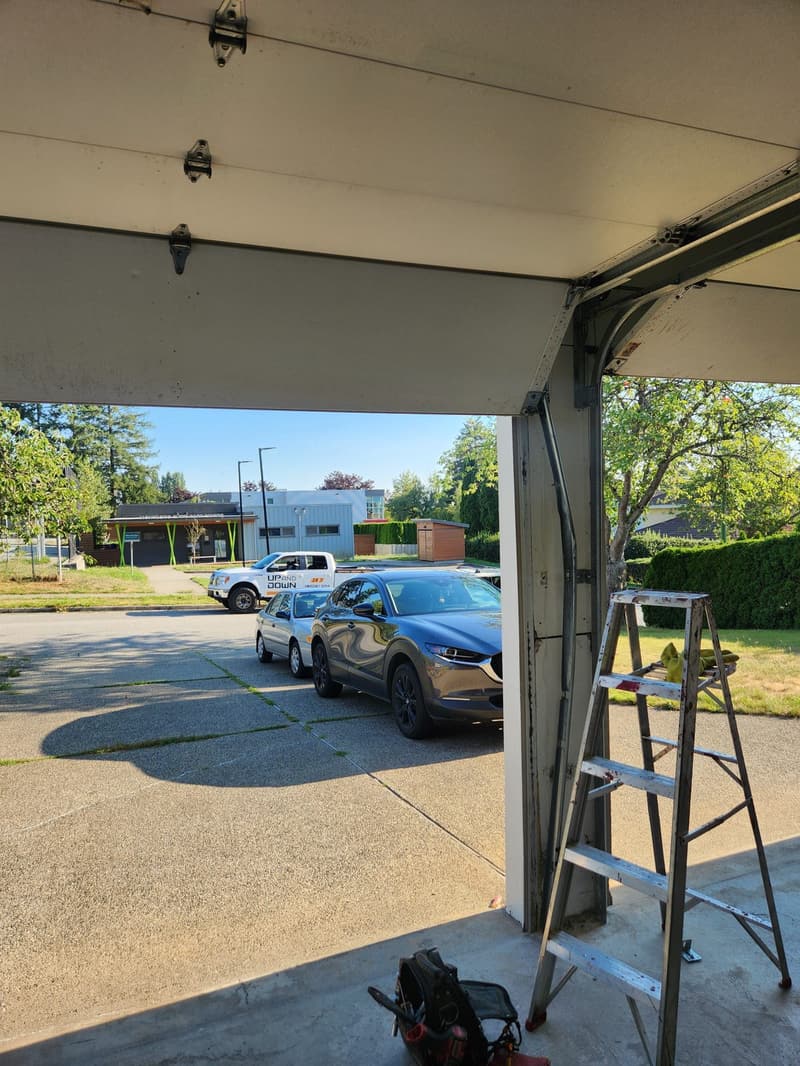
Ladner’s residential areas, from the tree-lined streets of Holly to the newer developments near River Road, feature a mix of older wood-frame homes and modern builds with attached garages. Many of these garages use standard sectional doors with torsion spring systems, which are prone to specific failure modes. The most frequent issue we encounter is broken torsion springs. These springs, mounted horizontally above the door, counteract the door’s weight and typically last 10,000 to 15,000 cycles. In Ladner’s coastal climate, moisture accelerates corrosion, especially in older springs that lack proper galvanization. When a spring breaks, the door becomes extremely heavy or won’t lift at all—attempting to operate it can damage the opener or bend the tracks.
Another common problem is frayed or snapped lift cables. These cables run from the bottom brackets to the drum and are under constant tension. In homes near the Fraser River or along 52nd Street, where salt air and humidity are higher, cables corrode faster. A broken cable causes the door to hang unevenly or jam mid-travel. We also see worn rollers, particularly in older nylon or steel rollers that seize up due to lack of lubrication or debris buildup from Ladner’s frequent wind-blown leaves and dust. Seized rollers increase friction, straining the opener and causing the door to shake or bind.
Diagnosing Spring and Cable Failures
When a garage door won’t open, the first step is checking the torsion spring. If the spring is intact but the door still won’t move, we inspect the cables for fraying or disconnection at the bottom bracket or drum. A loud bang during operation often indicates a spring rupture—this is a safety hazard and requires immediate attention. We never recommend attempting to manually lift a door with a broken spring; the sudden release of stored energy can cause serious injury.
For cable issues, we look for visible wear, kinks, or rust, especially where the cable wraps around the drum. Corrosion is common in Ladner’s damp evenings, particularly in garages that aren’t climate-controlled. If one cable fails, the other often follows soon after due to uneven load distribution. We replace both cables as a set to ensure balanced tension and prevent premature failure of the new part.
Opener malfunctions are also frequent, especially in homes with older chain-drive units. If the motor runs but the door doesn’t move, the issue may be a stripped gear inside the opener or a disconnected trolley. In Ladner’s newer subdivisions near Arthur Drive, where belt-drive openers are more common, we see wear on the belt teeth or misalignment of the safety sensors. These sensors, mounted near the floor on either side of the door, prevent closure if obstructed—but dirt, spider webs, or misalignment from foundation settling can trigger false positives.
Track and Roller Problems in Coastal Conditions
Ladner’s proximity to water and frequent winter storms means garage doors face more environmental stress than inland areas. Salt-laden air accelerates rust on steel tracks, especially along the bottom where water pools. Rust causes rollers to bind or jump the track, leading to noisy operation or complete jamming. We inspect both vertical and horizontal tracks for bends, gaps, or corrosion. A track that’s pulled away from the wall—often due to impact from a vehicle or improper anchoring—will cause the door to rub or bind during travel.
Rollers themselves degrade over time. Steel rollers with unsealed bearings collect grit and fail prematurely, while nylon rollers can crack or chip. In Ladner’s older neighborhoods, many homes still have original 1980s or 1990s doors with low-cycle rollers. We recommend upgrading to sealed-bearing nylon rollers for quieter, smoother operation and better resistance to moisture.
We also check the bottom weather seal. In Ladner’s rainy climate, a cracked or missing seal allows water to pool inside the garage, leading to rust on the door’s bottom panel and corrosion of hardware. Replacing the seal is a simple but effective preventative measure.
Opener and Sensor Troubleshooting
Modern garage door openers in Ladner homes vary from legacy chain-drive models to newer belt-drive and jackshaft units. Common electrical issues include faulty wall switches, dead remotes, or intermittent operation due to voltage fluctuations—common during Ladner’s winter storms when power flickers. We test the opener’s logic board, check wiring for rodent damage (a known issue in garages near fields or wooded areas), and verify the safety sensor alignment.
Sensors are often knocked out of alignment by storage items, garden tools, or even pets. If the door reverses immediately after closing or won’t close at all, we check the sensor LEDs—both should be solidly lit. Flickering or off lights indicate misalignment or wiring issues. We clean the lenses with a microfiber cloth and realign the sensors using a level, ensuring they face each other precisely.
For older openers lacking rolling-code technology, we sometimes recommend upgrades for security and reliability, especially in Ladner’s rural-adjacent zones near 64th Avenue where detached garages are more common.
Preventative Maintenance for Ladner Garages
Given Ladner’s climate, we advise homeowners to lubricate moving parts every six months with a silicone-based spray—never WD-40, which attracts dust. Focus on hinges, rollers, springs, and the opener rail. Inspect cables and springs visually for rust or fraying; if you see any signs of wear, call a professional. Test the door’s balance monthly: disconnect the opener and lift the door halfway—it should stay put. If it falls or rises, the springs are out of tension.
Keep the tracks clean of debris and check for loose bolts on the brackets and opener mounting. Ladner’s occasional windstorms can vibrate hardware loose over time. Finally, ensure the emergency release cord is accessible and not tangled—this is critical during power outages or mechanical failures.
We service all makes and models, including Clopay, Wayne Dalton, Amarr, and Genie, and carry common replacement parts for same-day repairs in Ladner, Tsawwassen, and Boundary Bay.
Frequently Asked Questions
How do I know if my garage door spring is broken?
If your door won’t lift manually or only opens a few inches before stopping, and you heard a loud bang from the garage recently, the torsion spring is likely broken. Do not attempt to operate the door—call a technician immediately.
Can I replace just one garage door cable if the other looks fine?
No. Cables wear evenly under tension; replacing only one creates imbalance and risks sudden failure of the old cable. We always replace both cables as a pair for safety and longevity.
Why won’t my garage door close even when nothing is blocking it?
This is usually caused by misaligned or dirty safety sensors. Check that both sensor lights are solid and clean the lenses with a dry cloth. If the issue persists, the wiring or sensor itself may need replacement.