Services
Locations
📞 (778) 873-7282
Home / Blog / Garage Door Reverses Before Closing: Roller Problem Diagnosis

Garage Door Reverses Before Closing: Roller Problem Diagnosis

Learn why a garage door reverses before closing due to roller issues. Understand the mechanism, symptoms, and safe DIY checks. Know when to call a pro.

Call (778) 873-7282
Licensed & insured
Open 24 hours
Based in Richmond
5-star rated

If your garage door starts to close but reverses back up before fully shutting, the issue is often related to roller function or track alignment. This reversal is a safety feature triggered when the opener detects excessive resistance, which worn or damaged rollers can create by binding in the tracks. The door may move a few inches downward, then jerk back up, sometimes accompanied by a grinding or squeaking noise from the rollers straining against the track. Inspect the rollers visually for cracks, flat spots, or seized bearings; metal rollers may show rust or missing ball bearings, while nylon rollers can chip or deform. Check that the rollers sit properly in the track and are not tilted or popped out. Lubrication with a silicone-based spray can temporarily improve movement if the rollers are dry but intact, though it won’t fix physical damage. Misaligned tracks or loose mounting brackets can also cause rollers to bind, producing similar reversal symptoms—look for gaps between the roller and track or uneven spacing along the vertical track. Never attempt to adjust or remove rollers connected to the lift cables or torsion spring system, as these components are under extreme tension and can cause serious injury if released unexpectedly. DIY checks are limited to visual inspection, lubrication of accessible rollers, and verifying track alignment with a level; any repair involving spring tension, cable adjustment, or track realignment requires professional tools and training. If rollers are damaged, tracks are bent, or the door binds intermittently despite lubrication, the problem likely needs part replacement or track correction beyond basic maintenance. Continuing to operate the door under these conditions risks further damage to the opener, panels, or safety sensors. For roller replacement, track adjustment, or a full system inspection in Metro Vancouver, contact Up & Down Garage Doors at (778) 873-7282.

Garage Door Reverses Before Closing Roller Problem
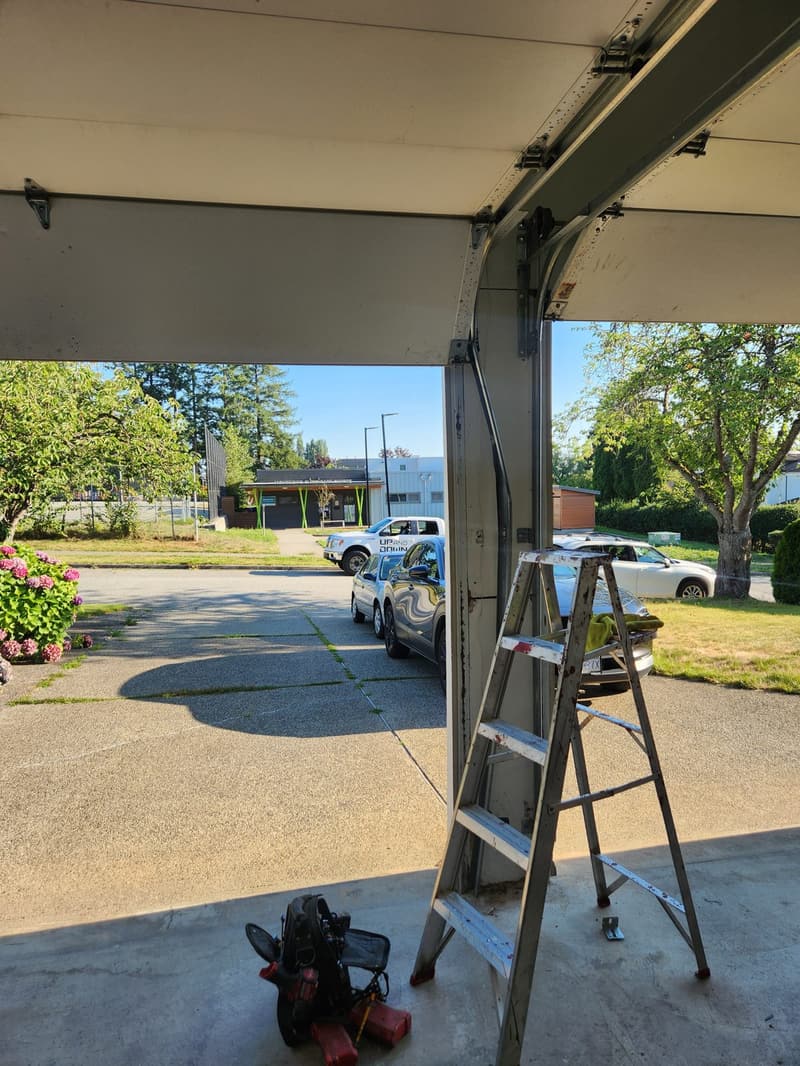
Garage Door Reverses Before Closing Roller Problem — garage door technician on site
Garage Door Reverses Before Closing Roller Problem — real job photo, Up & Down Garage Doors.

Track Misalignment and Roller Binding
Even intact rollers can cause reversal if the track is bent, loose, or incorrectly spaced. The vertical track must be plumb and parallel to its counterpart; if it leans inward or outward, rollers will pinch against the flange. Check the track bolts securing it to the jamb—loose fasteners allow shifting during operation. Use a level on the inside face of the track; deviation beyond 1/4 inch over six feet indicates misalignment. The horizontal track should slope slightly toward the back of the garage to assist roller return, but excessive slope can cause rollers to jump the track. Look for shiny scrape marks on the track’s inner surface, which signal roller contact due to misalignment.

Lubrication Limits and Proper Maintenance
Lubricating rollers is a routine maintenance task, but it has limits. Use only a silicone-based or lithium garage door lubricant—avoid WD-40 or oils that attract dust and gum up. Apply lubricant to the roller bearing and the stem where it contacts the hinge, not the nylon tread itself. Spin the roller by hand after application; it should turn freely without grinding. Lubrication quiets noisy rollers and improves movement, but it cannot restore a cracked roller or correct a bent track. If lubrication eliminates the reversal symptom temporarily but it returns within days, the underlying mechanical issue remains. Over-lubrication can drip onto the garage floor or attract debris that accelerates wear.

When Roller Issues Indicate Bigger Problems
Persistent roller problems often point to systemic issues like track damage, hinge wear, or cable tension imbalance. If multiple rollers show similar wear patterns, the track may be bent or the door may be dragging due to misaligned hinges. A door that sags on one side puts uneven load on rollers, accelerating failure. Inspect the hinges for elongated holes or cracks—worn hinges allow rollers to tilt, increasing edge load. Frayed or loose lift cables can cause the door to hang unevenly, indirectly stressing rollers. These interconnected systems mean roller replacement alone may not resolve the reversal if the root cause is structural.

Safety Risks of DIY Roller Work
Replacing rollers on the bottom bracket is especially hazardous because this roller is attached to the lift cable under full spring tension. Attempting to remove it without proper tools can cause the cable to slip, releasing the spring’s energy violently. Even top rollers should only be handled when the door is fully open and secured with clamps or a C-clamp on the track to prevent drop. Never disconnect cables or adjust torsion springs to access rollers—these tasks require winding bars and professional expertise. If you cannot safely reach a roller with the door in the open position and the tension system intact, do not proceed. The risk of injury from sudden tension release far outweighs the cost of a service call.

Frequently Asked Questions
### Can I replace just one roller, or should I do them all?
Replace rollers in pairs on the same side if they show similar wear, as uneven roller performance can cause tracking issues. However, if only one roller is damaged due to impact and the others are intact, replacing just that one is acceptable after verifying adjacent rollers and hinges for secondary damage.

Will a garage door opener sensitivity adjustment fix roller-related reversal?
Increasing the close force sensitivity to override reversal is dangerous and masks the underlying problem—it does not fix roller binding and increases the risk of injury or damage if the door encounters a real obstruction. Sensitivity adjustments should only compensate for minor friction changes, not mechanical failure.

How often should garage door rollers be inspected?
Inspect rollers visually every six months during routine maintenance, listening for noise and checking for smooth operation. In coastal or high-humidity areas of Metro Vancouver, or where roads bring abrasive debris, increase frequency to quarterly checks due to accelerated corrosion or wear.

Stuck door? Let's get it moving.

One call, a clear price, and the job done right — 24/7 across Metro Vancouver.

📞 Call (778) 873-7282