Humidity causes steel garage door struts to corrode over time, especially in Metro Vancouver’s damp climate. This corrosion weakens the strut’s ability to resist bowing, leading to misalignment, uneven door movement, and increased strain on other components like rollers and hinges. In severe cases, a corroded strut can crack or detach, creating a safety hazard and preventing the door from operating smoothly.
What a Garage Door Strut Does
A strut is a rigid steel bar, typically 1.5 to 2 inches wide, mounted vertically on the inside of a garage door section. Its primary function is to prevent the door panel from flexing or bowing under wind pressure or its own weight, especially on wide double-car doors. Struts are not load-bearing like springs or cables; they are stiffeners that maintain panel geometry. Most residential doors use one or two struts per section, depending on width and wind load requirements.
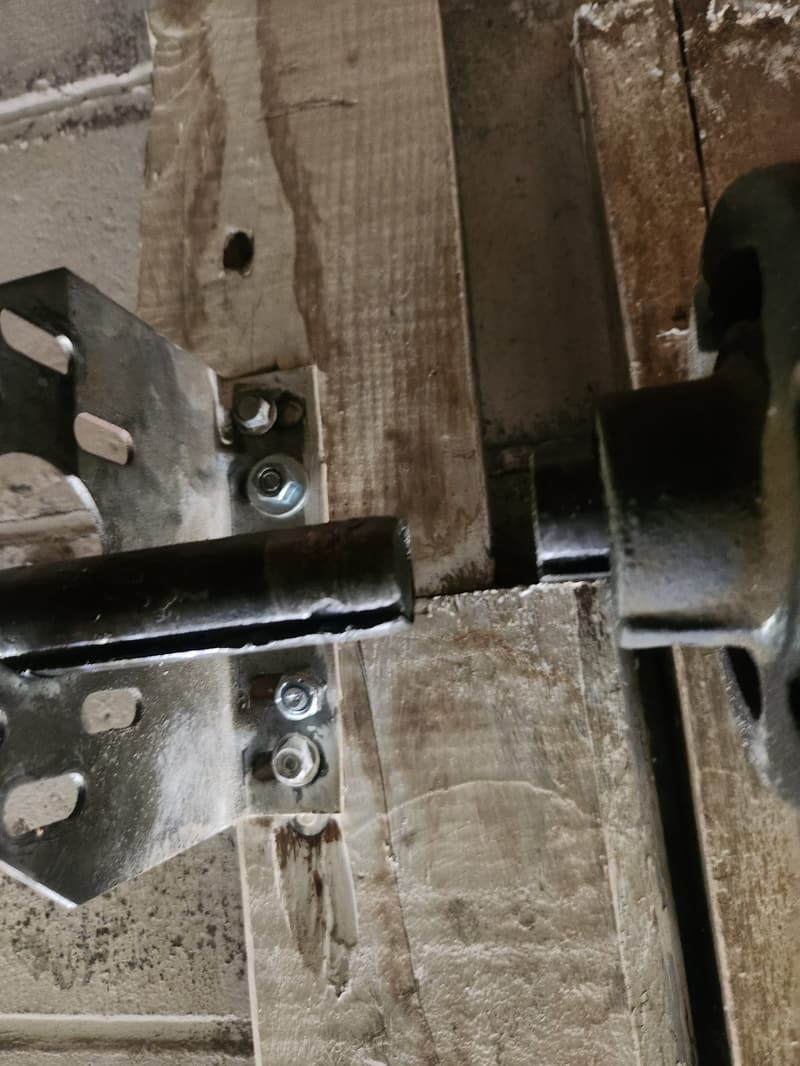
How Humidity Triggers Corrosion
Coastal British Columbia experiences high relative humidity year-round, with frequent rain and salt-laden air near the ocean. When moisture lingers on steel surfaces, it initiates electrochemical corrosion, particularly if the strut’s protective coating (paint or galvanization) is scratched or degraded. Rust forms as iron oxide, which expands and flakes away, exposing fresh metal to further attack. Over time, this reduces the strut’s cross-sectional thickness and tensile strength.
What Corrosion Looks and Sounds Like
Early signs include orange-brown staining along the strut’s edges or mounting holes. As corrosion progresses, the metal may feel pitted or flaky to the touch. You might notice the door rubbing against the frame on one side or requiring more force to operate manually. Audible clues include creaking or groaning during movement, especially when the door transitions from vertical to horizontal tracks — this indicates the panel is flexing because the strut can no longer hold its shape.
What Homeowners Can Safely Check
You can inspect struts visually from inside the garage with the door closed. Use a flashlight to look for rust, especially where the strut attaches to the door section with bolts or rivets. Check for loose fasteners — if you can wiggle the strut by hand, it’s compromised. Listen for unusual noises during manual operation (disconnect the opener first by pulling the emergency release cord). Never attempt to adjust or remove a strut while the door is under tension.
When Corrosion Requires Professional Help
If rust has penetrated the metal, caused visible deformation, or damaged mounting points, the strut must be replaced. This involves removing the door section from the tracks, which requires supporting the door’s weight safely — a task for trained technicians. Attempting this without proper equipment risks sudden door collapse. Struts are under no spring tension, but the door itself weighs 150–300+ pounds and can fall if not properly braced.
Why DIY Replacement Is Risky
While struts aren’t under torsional load like springs, replacing them involves handling heavy door sections. If the door is not fully supported during removal, it can shift or drop, causing injury or damage. Additionally, incorrect reinstallation — such as misaligned struts or improperly torqued fasteners — can lead to premature wear on rollers, hinges, or the track system. Professionals use door jacks and know the correct sequence to maintain alignment throughout the process.
Frequently Asked Questions
### Can I paint over rust on a garage door strut to stop corrosion?
Surface rust can be cleaned and primed, but if the metal is pitted or weakened, painting only masks the problem. A compromised strut will continue to degrade internally and may fail unexpectedly. Replacement is the only reliable solution when structural integrity is lost.
Does lubricating a garage door strut help with humidity issues?
Lubrication applies to moving parts like hinges, rollers, and springs — not struts. Struts are fixed components; oiling them attracts dust and debris, which can accelerate corrosion by trapping moisture against the steel. Keep struts dry and inspect them regularly instead.
Are some strut materials better suited for BC’s climate?
Galvanized or stainless steel struts resist corrosion better than standard steel in humid environments. When replacing struts, ask about corrosion-resistant options, especially if you live near the ocean or in a consistently damp area like the Fraser Valley or Vancouver Island.
Up & Down Garage Doors (778) 873-7282