Services
Locations
📞 (778) 873-7282
Home / Blog / How Cold Weather Affects a Garage Door Panel: What Happens and What to Check

How Cold Weather Affects a Garage Door Panel: What Happens and What to Check

Cold temperatures cause garage door panels to contract, stiffen, and crack. Call (778) 873-7282.

Call (778) 873-7282
Licensed & insured
Open 24 hours
Based in Richmond
5-star rated

Cold weather directly impacts garage door panels by causing the materials to contract and lose flexibility. Steel, aluminum, wood, and composite panels all respond to temperature drops, but the effects vary by material and construction. When temperatures fall below freezing, the metal or wood fibers tighten, reducing the panel’s ability to flex during operation. This stiffness increases stress on hinges, rollers, and tracks, and can lead to visible damage if the door is forced. Understanding the physical changes helps homeowners distinguish between normal seasonal behavior and signs of developing problems.

How Panel Contraction Increases Operational Stress
As temperatures drop, garage door panels shrink slightly in length and width. This contraction is uneven across the panel’s surface, especially in insulated models where the core and outer skins contract at different rates. The resulting warping or twisting creates misalignment between the panel and the frame. When the door opens or closes, the rollers must now travel a slightly altered path, increasing friction against the tracks. You may hear grinding or scraping noises that weren’t present in warmer months. The door may also hesitate mid-cycle or require more force from the opener to move, indicating the system is working against increased resistance.
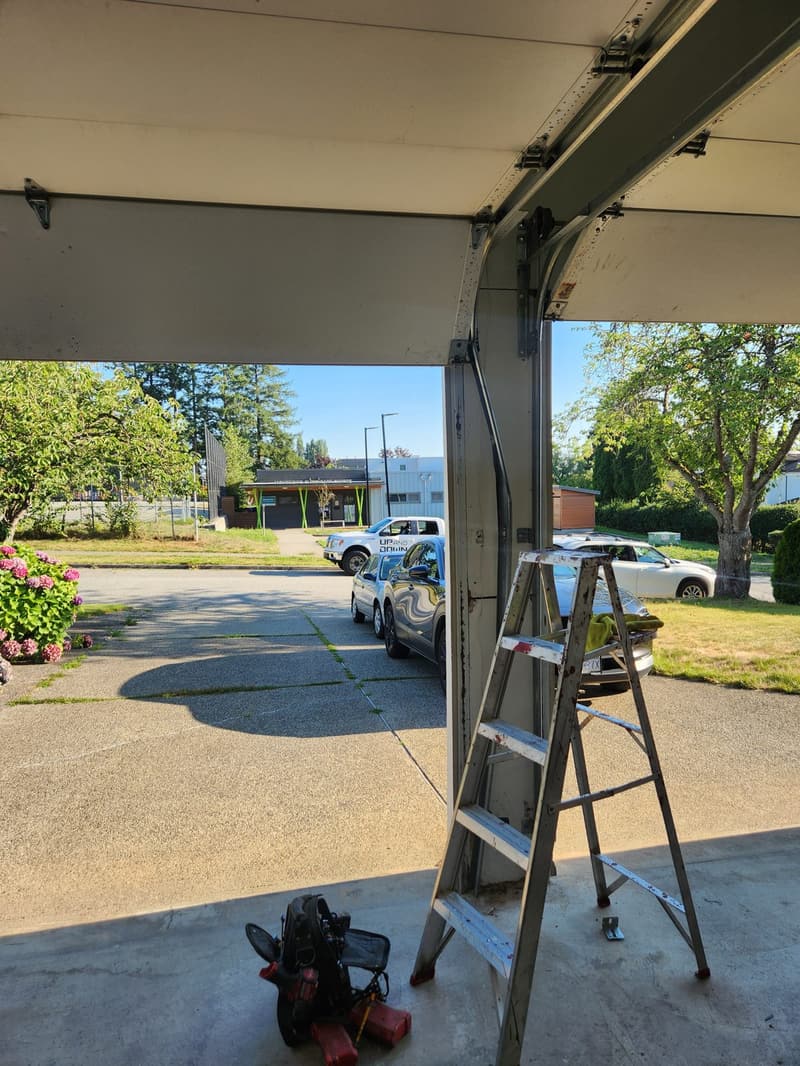
garage door technician on a ladder servicing a home door
Garage door technician on a ladder servicing a home door.

Material-Specific Responses to Cold
Steel panels, the most common type, become brittle in extreme cold. While they don’t crack easily from cold alone, existing micro-scratches or dents can propagate into cracks under stress. Aluminum panels are more flexible but prone to denting, and cold reduces their ability to absorb impact, making them more susceptible to damage from accidental bumps. Wood panels absorb less moisture in cold, dry air, but if they’ve previously taken on moisture, freezing can cause the water inside to expand, leading to splitting or delamination. Composite panels, often made with wood resins, can experience delamination between layers when frozen moisture expands internally.

What Failure Looks and Sounds Like
Visible signs of cold-related panel stress include hairline cracks along the seams or near fastener holes, especially on the interior face where insulation meets the skin. You might notice the panel no longer sits flush against the frame—gaps appear at the top or bottom when the door is closed. Audibly, listen for new creaking, popping, or loud snapping sounds during operation, particularly at the start of the cycle. These noises often come from the panel shifting suddenly as it overcomes frozen stiffness or from fasteners loosening due to differential contraction. A door that suddenly feels heavier to lift manually may indicate panel warping is binding the rollers.

What Homeowners Can Safely Check Themselves
Before assuming a serious issue, perform a few visual and tactile checks. With the door closed, inspect the interior and exterior panels for cracks, warping, or separation between layers. Run your hand along the edges—if you feel ridges or unevenness where the panel meets the weather seal, it may have shifted. Disconnect the opener and manually lift the door halfway; it should stay in place without drifting up or down. If it falls or rises, the springs may be losing tension, but note that spring adjustment is dangerous and not a DIY task. Lubricate metal hinges, rollers, and tracks with a silicone-based spray—avoid WD-40—as cold thickens grease and increases friction.

When to Stop and Call a Professional
Any sign of structural damage to the panel—cracks longer than an inch, deep dents that affect alignment, or delamination—requires professional assessment. Do not attempt to straighten a bent panel or reinforce a cracked one with screws or adhesive; this can create weak points that fail catastrophically under tension. If the door binds severely, refuses to move, or makes loud bangs during operation, disconnect the opener and do not force it. These symptoms may indicate the panel is interfering with the track system or that spring tension has become uneven. Remember: torsion springs store enough energy to cause serious injury. Adjusting, removing, or repairing them is not a DIY job under any circumstances.

Preventive Steps for Winter Resilience
Prepare your garage door for cold weather in the fall. Clean the tracks of debris and old lubricant, then apply a low-temperature silicone lubricant to all moving parts. Check the weather stripping at the bottom of the door—if it’s cracked or hard, replace it to prevent ice buildup that can freeze the door to the floor. Ensure the garage is adequately ventilated to minimize moisture condensation on panels, which can freeze and exacerbate stress. Inspect cable drums and lift cables for fraying; cold makes steel more brittle, increasing break risk. These steps reduce strain on the panels and help the system operate smoothly despite temperature swings.

Frequently Asked Questions
### Can cold weather cause a garage door panel to crack outright?
Cold alone rarely causes cracking in sound panels, but it reduces material flexibility and makes existing minor damage more likely to propagate under operational stress. Cracks usually appear at stress points like fastener holes or panel seams where contraction creates uneven tension.

Is it normal for my garage door to make louder noises in winter?
Some increase in noise is expected due to lubricant thickening and metal contraction increasing friction. However, new loud bangs, sharp snaps, or grinding sounds indicate abnormal stress and should be inspected, as they may signal panel warping or hardware fatigue.

Should I insulate my garage door further to protect panels from cold?
Adding insulation can help stabilize panel temperature, but only if done correctly—poorly installed insulation can trap moisture against the skin, leading to freezing and delamination. Consult a professional about compatible insulation kits for your specific door model to avoid unintended consequences.

Stuck door? Let's get it moving.

One call, a clear price, and the job done right — 24/7 across Metro Vancouver.

📞 Call (778) 873-7282