Garage door chain drive wear in wet climates like Metro Vancouver is primarily caused by moisture mixing with dirt and old lubricant to form an abrasive paste that grinds against chain links and sprocket teeth. This accelerates metal fatigue, leads to stiff links, and can cause the chain to jump or derail during operation. The process is worsened by temperature swings that cause condensation inside the garage, especially in uninsulated doors common to older homes. Salt-laden air from nearby coastal areas can also contribute to surface corrosion on steel components.
How Moisture Damages the Chain and Sprocket
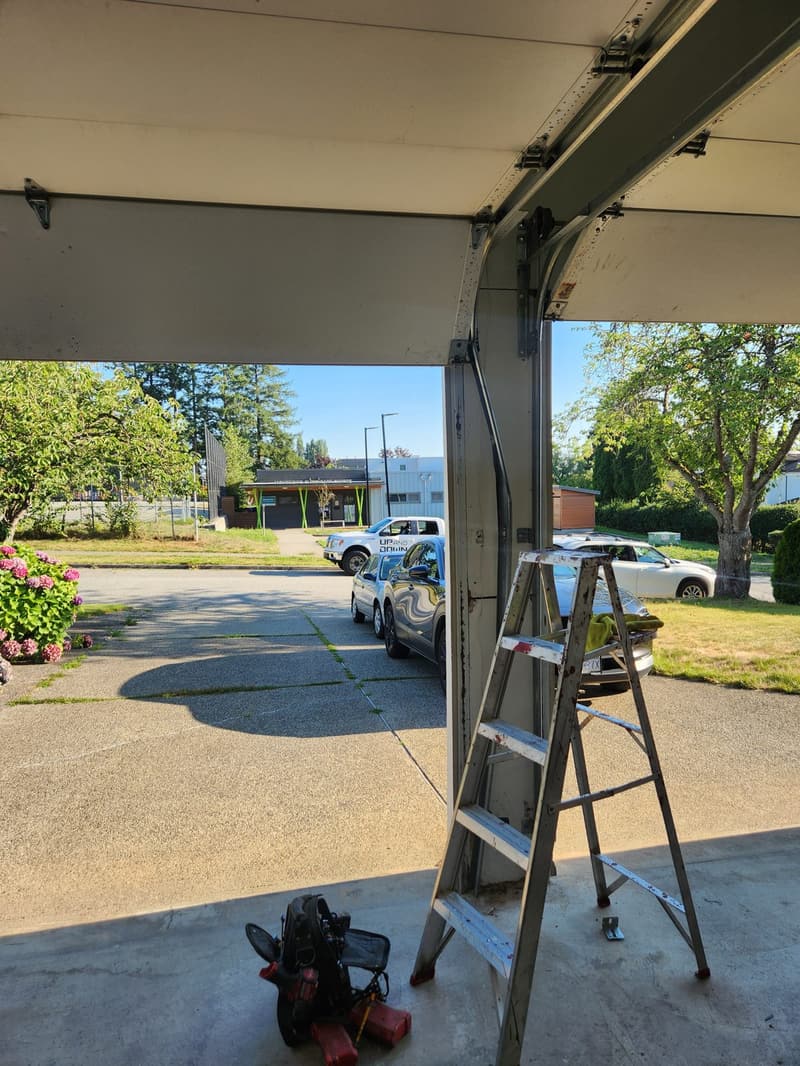
In a wet climate, rain, fog, and high humidity allow water to seep into the garage through gaps around the door, vents, or poor seals. When this moisture contacts the chain drive system, it displaces factory lubricant and mixes with accumulated dust, pollen, and road grime. The resulting slurry acts like sandpaper on the chain’s pins, rollers, and the sprocket teeth. Over time, this wear elongates the chain, making it loose and prone to skipping. You’ll notice this as a jerky motion when the door opens or closes, often accompanied by a clanking or rattling sound near the motor unit.
Signs of Chain Wear You Can See and Hear
Visual inspection reveals the first signs: look for rust on the chain links, especially where they bend around the sprocket. Stiff links that don’t flex smoothly indicate internal corrosion or dried lubricant. A chain that sags more than 1/2 inch when pulled sideways at the midpoint is likely stretched beyond spec. Audibly, a healthy chain drive produces a steady, low hum. Worn chains create intermittent clicking, grinding, or slapping noises—particularly when the door reverses direction or under load. If the noise changes with temperature or humidity, moisture-related wear is likely involved.
Why Lubrication Fails Faster in Wet Conditions
Lubricant doesn’t just wash away—it breaks down chemically when exposed to water and temperature fluctuations. In Metro Vancouver’s damp winters, conventional greases can emulsify, turning milky and losing their viscosity. This leaves metal surfaces unprotected. Even silicone-based sprays, while water-resistant, attract dust that then bonds to the wet surface, forming a grinding compound. Reapplying lubricant monthly during rainy seasons is necessary, but over-lubricating worsens the problem by dripping onto the door track or floor, creating slip hazards and attracting more debris.
What You Can Safely Check Yourself
Homeowners can inspect the chain drive with the door closed and the opener unplugged. Wipe a section of the chain with a clean rag—if it comes away black or gritty, cleaning and re-lubricating is due. Check sprocket teeth for sharking (hooking on one side), which indicates misalignment or advanced wear. Test chain tension by lifting a mid-span link; it should deflect no more than 1/4 inch. Listen for uniform sound during manual operation—any binding or catching means the chain is stiff or the sprocket is damaged. Never adjust tension while the door is under spring load.
When It’s Not a DIY Job
Replacing the chain or sprocket requires releasing tension from the trolley system, but the real danger lies elsewhere: the torsion spring above the door stores enough energy to cause serious injury if mishandled. Adjusting or replacing springs, cables, or the spring anchor bracket is not a DIY task under any circumstances. If the chain has jumped the sprocket, the door is likely misaligned, and forcing it open or closed can bend panels or damage the opener gearbox. These issues require professional assessment to avoid creating a hazard or worsening the damage.
How Preventive Maintenance Reduces Wear
In wet climates, maintenance frequency must increase. Clean the chain with a citrus-based degreaser and a stiff nylon brush every two to three months, then dry thoroughly before applying a PTFE-based lubricant designed for garage doors. Avoid grease or oil—they attract and hold contaminants. Inspect the door’s weather seal at the bottom and sides; replacing worn seals reduces water ingress. Keep the garage interior ventilated to lower condensation. If your opener is over 15 years old, consider upgrading to a belt or screw drive system, which are less sensitive to moisture.