Common Mechanical Issues in Strata Garage Doors
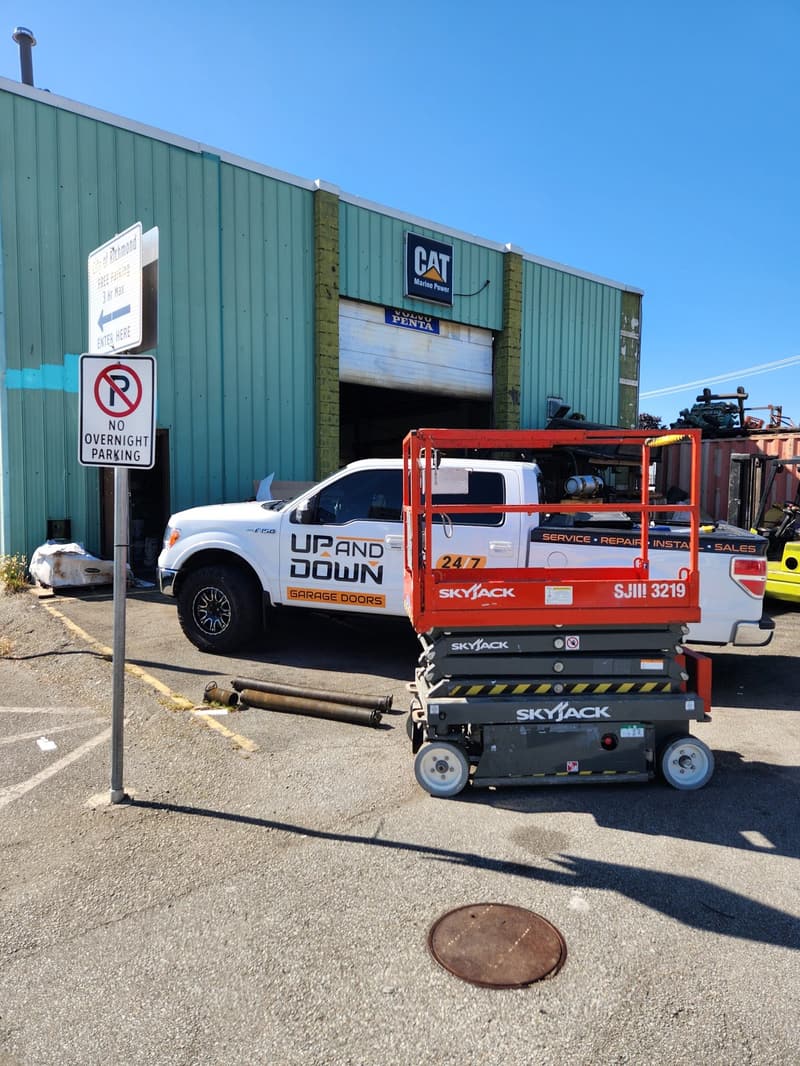
Strata properties in Chilliwack—particularly in neighbourhoods like Garrison Crossing, Promontory, and the Vedder Road corridor—often feature attached or detached garage units with sectional overhead doors. These systems endure higher cycle counts than single-family homes due to shared access points and frequent resident use. The most frequent failure modes involve torsion spring fatigue, where repeated winding and unwinding eventually causes the spring to lose tension or fracture. A broken spring prevents the door from opening manually or via operator, and attempting to operate it risks cable damage or sudden door drop.
Worn rollers and hinges are another prevalent issue. Nylon rollers degrade over time, especially when exposed to road salt tracked in during winter months or debris from nearby agricultural zones. Steel rollers may seize if bearings lack lubrication, causing binding in the tracks. Hinges connecting panel sections can crack under stress, particularly on wider double-car doors common in strata townhouses. Misalignment from impact—such as a vehicle bumping the door frame—can bend tracks or dislodge rollers, leading to uneven movement and increased motor strain.
Operator and Control System Failures
Garage door operators in strata buildings often run more cycles daily than residential units, accelerating wear on internal components. Chain drives may stretch or jump sprockets; belt drives can fray or snap under load. Screw-drive operators, while less common, are prone to thread stripping if the drive sleeve lacks proper lubrication. Control boards in older units may fail due to voltage fluctuations from shared electrical panels, especially in buildings with outdated wiring or insufficient surge protection.
Remote control and keypad malfunctions frequently stem from signal interference. In Chilliwack’s river valley topography, certain areas experience intermittent RF disruption from nearby BC Hydro substations or high-voltage lines along the Trans-Canada Highway corridor. Wall-mounted consoles may develop loose wiring connections from vibration, particularly if mounted on studs adjacent to laundry rooms or mechanical closets where appliances generate oscillation.
Safety sensor misalignment is a recurring service call. Photo-eye sensors mounted near the floor can be knocked out of alignment by storage items, floor cleaning equipment, or pets. Dust accumulation on lenses—common in units near gravel driveways or construction zones—reduces infrared transmission, triggering false obstruction signals that prevent door closure.
Track and Hardware System Integrity
Vertical and horizontal tracks must remain plumb and parallel for smooth operation. In strata settings, tracks can shift due to building settlement, especially in older wood-frame constructions along the Chilliwack Creek floodplain where soil moisture varies seasonally. Lag bolts anchoring tracks to jambs may loosen over time from vibration, allowing lateral movement. If the track radius where the vertical meets the horizontal section becomes worn or deformed, rollers can bind or jump the track during transit.
Bottom brackets, which secure the lifting cables, are critical failure points. Cable fraying often begins here due to abrasion against the bracket or drum. If a cable snaps, the door can become unbalanced, causing one side to drop faster than the other—a hazardous condition that risks panel damage or injury. Drum wear, particularly on the cable grooves, accelerates when cables are not properly tensioned or when rust develops from moisture ingress in uninsulated garages.
Preventive Maintenance for Multi-Unit Properties
Regular maintenance is essential in strata environments to avoid cascading failures. Lubrication of springs, hinges, rollers, and bearings with a silicone-based or lithium grease product reduces friction and wear. Spring tension should be checked and adjusted by a qualified technician—torsion springs store significant energy and require proper tools for safe handling. Track alignment must be verified using a level and string line; shims may be needed behind brackets to correct minor shifts.
Safety systems demand routine testing. Photo-eye sensors should be cleaned with a soft cloth and checked for alignment by blocking the beam with a solid object—door reversal should occur immediately. The emergency release cord must operate freely; if seized, it prevents manual operation during power loss. Battery backups in operators, where installed, should be tested quarterly to ensure functionality during outages.
For properties with shared access corridors or underground parking, ventilation and moisture control affect door longevity. High humidity promotes rust on springs and cables; dehumidifiers or improved airflow can mitigate this. In buildings near industrial zones along Yale Road West or the CP rail line, particulate buildup on moving parts necessitates more frequent cleaning.
Strata-Specific Considerations and Coordination
Servicing garage doors in strata properties requires coordination with property managers, strata councils, or individual owners depending on the bylaws. Some corporations classify garage doors as limited common property, making the strata responsible for maintenance and repairs. Others treat them as part of the individual unit, placing responsibility on the owner. Clear documentation of service work—including parts replaced, adjustments made, and safety tests performed—supports accountability and future planning.
Access logistics matter in tight underground parking or narrow driveways common in infill developments along Five Corners or the downtown core. Service vehicles need adequate space to maneuver, and technicians may require access to electrical panels or storage areas for testing. Communication with residents about scheduled maintenance minimizes disruption, especially in buildings with limited visitor parking or strict quiet hours.
Environmental factors unique to Chilliwack’s location influence maintenance schedules. The proximity to the Fraser Valley’s agricultural activity means pollen and dust levels peak in spring and summer, increasing the need for sensor and track cleaning. Winter freeze-thaw cycles can cause concrete floor heaving, subtly altering door clearance and requiring periodic threshold adjustments.
Frequently Asked Questions
How often should strata garage doors be inspected?
Inspection intervals depend on usage and door age, but a minimum of twice yearly is recommended for strata properties—once before winter and once after. High-cycle doors in buildings with underground parking or shared access may benefit from quarterly checks. Focus on spring tension, cable condition, roller wear, and safety system function during each visit.
Can one faulty door affect others in a strata building?
While garage doors operate independently, shared electrical circuits or voltage fluctuations from a malfunctioning operator can impact nearby units. More commonly, deferred maintenance on one door leads to residents using alternative entrances, increasing wear on other doors or common area doors. Addressing issues promptly prevents uneven load distribution across the building’s access points.
What safety features are required on strata garage doors?
All modern garage doors must have photo-eye sensors and an automatic reverse mechanism compliant with CSA and UL standards. Older doors lacking these should be upgraded or replaced, as they pose entrapment risks. Manual release mechanisms must remain accessible and functional, and door panels should be free of cracks or delamination that could compromise structural integrity during operation.